Last Updated: October 21, 2026
Two of the most overlooked numbers in fishkeeping are general hardness (GH) and carbonate hardness (KH). Together they decide how stable your pH stays and whether your fish, shrimp, and plants feel at home. Soft-water species like cardinal tetras and many shrimp suffer in hard water, while African cichlids and snails need plenty of minerals. A good hardness test kit removes the guesswork so you can match your water to your livestock and stop chasing mysterious pH swings. Below are five reliable GH and KH test kits, what each does best, and how to read the results.

API GH & KH TEST KIT Freshwater Aquarium Water Test Kit, 2.5 oz.
Included for '4 Best Aquarium Water Hardness Test Kits (GH & KH)' as a representative aquarium product in this roundup; selection reflects the product set returned for this topic.
View on Amazon
API 5-IN-1 TEST STRIPS Freshwater and Saltwater Aquarium Test Strips 100-Count Box
Included for '4 Best Aquarium Water Hardness Test Kits (GH & KH)' as a representative aquarium product in this roundup; selection reflects the product set returned for this topic.
View on Amazon
Fresh/Salt Carbonate Test Kit
Included for '4 Best Aquarium Water Hardness Test Kits (GH & KH)' as a representative aquarium product in this roundup; selection reflects the product set returned for this topic.
View on Amazon
API 5-in-1 Test Strips Freshwater and Saltwater Aquarium Test Strips 25-Count Box
Included for '4 Best Aquarium Water Hardness Test Kits (GH & KH)' as a representative aquarium product in this roundup; selection reflects the product set returned for this topic.
View on Amazon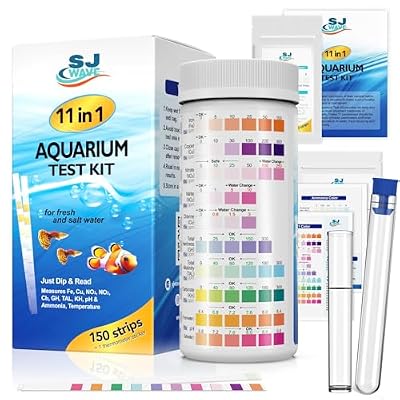
11 in 1 - Aquarium Test Strips | 950 Tests - 150 Strips | Fish Tank Aquariums Water Test Kit & ebook | Aquarium Thermometer | Fish Tank Water Testing Kit Includes 50 Ammonia Strips | Versatile Usage
Included for '4 Best Aquarium Water Hardness Test Kits (GH & KH)' as a representative aquarium product in this roundup; selection reflects the product set returned for this topic.
View on Amazon
AAwipes 8-in-1 Aquarium Test Kit for Fish Tanks - Quick & Accurate Water Testing Strips for Aquariums & Ponds. Tests pH, Ammonia, Alkalinity, Hardness, Chlorine, etc. (K02-50)
Included for '4 Best Aquarium Water Hardness Test Kits (GH & KH)' as a representative aquarium product in this roundup; selection reflects the product set returned for this topic.
View on Amazon
API 5-in-1 Test Strips (4 Count) Freshwater or Saltwater Aquarium Testing | Just Dip & Read Colors - Measures pH, Nitrite, Nitrate, Carbonate & General Hardness - Regular Care or Water Problem Solving
Included for '4 Best Aquarium Water Hardness Test Kits (GH & KH)' as a representative aquarium product in this roundup; selection reflects the product set returned for this topic.
View on Amazon
10 in 1 - Aquarium Test Strips | 100 Fast & Accurate Strips | Fish Tank Aquariums Water Test Kit & ebook | Aquarium Thermometer | Fish Tank Water Testing Kit for Fresh & Saltwater | Versatile Usage
Included for '4 Best Aquarium Water Hardness Test Kits (GH & KH)' as a representative aquarium product in this roundup; selection reflects the product set returned for this topic.
View on AmazonTop Picks Reviewed
1. API GH & KH Test Kit
A staple liquid titration kit that measures both general hardness (GH) and carbonate hardness (KH) in freshwater tanks. You count drops until the color changes, and each drop equals one degree, so it is easy to read and lasts for hundreds of tests. Check it on Amazon
2. Salifert Carbonate Hardness & Alkalinity (KH/Alk) Test Kit
A reef-keeper favorite that reads KH and alkalinity in small, precise steps with a sharp color change at the endpoint. It is one of the more accurate hobby-grade KH kits and stretches to 100 to 200 tests per box. Check it on Amazon
3. Salifert Freshwater GH Test Kit
A dedicated general hardness kit built for freshwater tanks where mineral content matters, such as shrimp and livebearer setups. It is fast-acting and reliable, making it a strong companion to a separate KH kit. Check it on Amazon
4. Nutrafin Carbonate and General Hardness Test Kit
A single box that covers both KH and GH for fresh and saltwater aquariums. It is a budget-friendly all-in-one option for hobbyists who want both hardness readings without buying two separate kits. Check it on Amazon
5. sera kH-Test
A focused carbonate hardness kit aimed at growers who watch KH closely to keep pH stable. The compact bottle is simple to use and ideal as a quick KH check between full water tests. Check it on Amazon
What to Look For in a Hardness Test Kit
The most important choice is whether you need GH, KH, or both. General hardness measures dissolved calcium and magnesium, which matters most for shrimp, snails, and livebearers. Carbonate hardness measures the water’s buffering capacity, which controls how easily your pH can crash. Most keepers benefit from testing both, so a combo kit is the simplest starting point.
- Liquid titration vs. strips: Drop-based liquid kits like the ones above are far more accurate than dip strips and cost less per test over time.
- Test count: Reef-grade kits such as Salifert offer 100 or more tests, which is better value for frequent testers.
- Units: Kits report results in degrees (dGH/dKH) or ppm. One degree equals roughly 17.9 ppm, so know which scale your kit uses.
How to Test and Interpret GH and KH
Liquid hardness kits work by adding drops to a fixed sample of tank water until the color changes. You then count the drops, and each drop equals one degree of hardness. It takes under a minute once you get the hang of it. For context, most community freshwater fish do well between 4 and 12 dGH and 3 and 8 dKH, but always check your specific species.
If your KH is very low (under 3 dKH), your pH can drop suddenly between water changes, which stresses fish. Raising KH with crushed coral or a buffer fixes this. If your GH is too high for soft-water species, mixing in RO/DI water lowers it. For a deeper dive into adjusting your numbers, see our guide on how to safely raise and lower aquarium pH, since pH and KH are closely linked.
How Often Should You Test?
For an established tank, testing GH and KH once a month is usually enough unless you keep sensitive species or run a planted or shrimp tank, where weekly checks are wise. New tanks should be tested more often while you dial in parameters. Pair hardness testing with a full water panel so you see the whole picture, and always retest after large water changes or when adding mineral supplements.
Frequently Asked Questions
What is the difference between GH and KH?
GH (general hardness) measures calcium and magnesium, which affect the health of shrimp, snails, and many fish. KH (carbonate hardness) measures buffering capacity, which keeps your pH stable. They are separate values, and a tank can be high in one and low in the other.
Do I really need both GH and KH kits?
If you keep shrimp, plants, or breed fish, yes. GH affects molting and growth while KH protects against pH crashes. A combo kit like the API or Nutrafin option covers both in one box.
Are liquid kits better than test strips?
Generally yes. Liquid titration kits are more accurate and have a clearer endpoint than dip strips, and they cost less per test over their lifespan. Strips are convenient for a quick glance but should not be your only tool.
How do I raise low KH safely?
Add crushed coral to your filter or substrate, or use a dedicated KH buffer, and raise it gradually over several days. Sudden large changes stress fish, so test frequently while adjusting.
Can low KH cause my pH to crash?
Yes. KH is your buffer against acid buildup. When KH falls too low, organic acids from waste can push pH down sharply, which is a common cause of sudden fish loss. Keeping KH in a healthy range prevents this.
Want the full picture of your water chemistry? Hardness is just one piece. Read our roundup of the best aquarium water test kits for ammonia, nitrite, and nitrate, learn how pH and hardness interact in our aquarium pH guide, and avoid early disasters with our article on new tank syndrome. Stable hardness also makes routine water changes safer, and shrimp keepers should pair this with our cherry shrimp care guide.
Best Aquarium Planting Tweezers in 2026: Compared and Ranked
Best Beneficial Bacteria Supplement for Aquarium: A Guide