Last Updated: October 9, 2026
- How Aquarium UV Sterilizers Work
- Top Aquarium UV Sterilizers
- UV Sterilizer Wattage vs. Tank Size Reference
- Flow Rate: The Variable Most Aquarists Ignore
- UV Sterilizers for Disease Prevention vs. Algae Control
- Quartz Sleeve Maintenance: The Overlooked Step
- Installation: Inline vs. Hang-On vs. Submersible
- Frequently Asked Questions
- Related Articles
- Related Guides
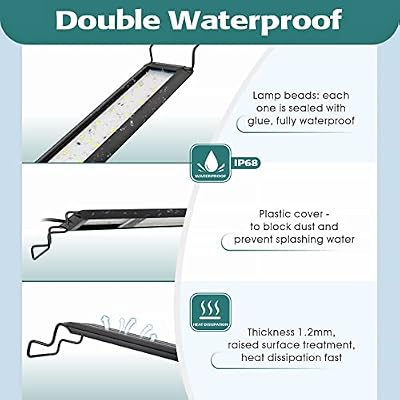
- Top Pick: DaToo LED Aquarium Clean Light 3 W Fish Tank LED U-V Lamp for Green Water and Algae with Protective Shield and Timer for 5-25 Gallon Freshwater & Saltwater Fish Tanks
- Best Value: hygger 3W Aquarium U-V Light with Timer for 2-15 Gallon Fish, Turtle Tanks
- Premium Choice: JAHEA Aquarium Clean Light,3 W mini &13W Submersible Light with UV Test Card,Aquarium Water Clean Green Clear Waterproof Clean Lamp for Pond,Swimming Pool,Indoor (3W MINI)

TL;DR: Match UV sterilizer wattage to tank volume: roughly 1 watt per 3–4 gallons for disease prevention, 1 watt per 1–2 gallons for green water elimination. Flow rate through the UV unit matters as much as wattage — slower flow = longer contact time = better kill rate.
Aquarium UV Sterilizer Wattage Guide: Size It Right for Your Tank
A UV sterilizer is one of the few aquarium tools with a documented, measurable effect: it kills free-floating pathogens, bacteria, algae spores, and parasites by exposing them to ultraviolet light at 254 nm wavelength. The challenge is sizing. An undersized unit accomplishes nothing — pathogens pass through too fast for lethal UV exposure. An oversized unit wastes money and can stress certain light-sensitive organisms. This guide gives you the exact numbers to size correctly the first time.
As an Amazon Associate we earn from qualifying purchases at no extra cost to you.


🛒 Best Price Today on Amazon
Prime members get fast, free shipping on everything above, plus member-only deals. New members get a 30-day free trial — cancel anytime.
Start 30-Day Prime Free Trial →See Today’s Amazon DealsHow Aquarium UV Sterilizers Work
Water is pumped past a UV bulb enclosed in a quartz sleeve inside the sterilizer chamber. Ultraviolet light at the germicidal wavelength damages the DNA of microorganisms, preventing reproduction. The bulb never touches the water — the quartz sleeve separates them, allowing UV transmission while keeping the bulb dry and at operating temperature.
Three variables determine effectiveness: wattage (UV output), flow rate (contact time), and water clarity (UV penetration). Turbid water absorbs UV before it reaches pathogens. This is why UV sterilizers work best after mechanical filtration — install filter floss upstream and the UV unit downstream for maximum efficiency.
Top Aquarium UV Sterilizers




As an Amazon Associate we earn from qualifying purchases. Product prices and availability are accurate as of the date/time indicated.



As an Amazon Associate we earn from qualifying purchases. Product prices and availability are accurate as of the date/time indicated.


As an Amazon Associate we earn from qualifying purchases. Product prices and availability are accurate as of the date/time indicated.
UV Sterilizer Wattage vs. Tank Size Reference
| Tank Size | Disease Prevention | Green Water Elimination | Max Flow Rate |
|---|---|---|---|
| 10–20 gallons | 5W | 9W | 80–100 GPH |
| 20–40 gallons | 9W | 13W | 150–200 GPH |
| 40–75 gallons | 13W | 18W | 250–300 GPH |
| 75–125 gallons | 18W | 25W | 400–500 GPH |
| 125–200 gallons | 25W | 36W | 600–700 GPH |
| 200–300 gallons | 36W | 55W | 800–1000 GPH |
| 300+ gallons | 55W+ | 2× 36W units | 1200+ GPH |
GPH = gallons per hour. Flow rates are maximum values for effective sterilization — reduce by 30–50% for heavily stocked or disease-outbreak tanks.
Flow Rate: The Variable Most Aquarists Ignore
Wattage gets all the attention, but flow rate kills your sterilizer’s effectiveness just as surely as low wattage. UV dose is a function of irradiance (W/cm²) multiplied by contact time (seconds). Double the flow rate and you halve the contact time — which can drop pathogen kill rates from 99.9% to below 50%.
Use a dedicated pump for the UV circuit rather than the main return pump. A small 100–300 GPH powerhead plumbed in series with the UV unit gives precise flow control. Never run a UV sterilizer on a variable-speed pump set to maximum — the water blasts through with near-zero contact time.
UV Sterilizers for Disease Prevention vs. Algae Control
UV sterilizers serve two distinct purposes, and the setup parameters differ for each. Understanding which goal you are optimizing for determines your flow rate and wattage decisions.
For disease prevention (ich, velvet, bacterial infections): The goal is to reduce the free-swimming reproductive stage of parasites and the free-floating bacterial load. These organisms are larger than algae cells and require less UV exposure for lethal effect. Higher flow rates are acceptable — up to the maximum values in the table above. Run the UV continuously in fish-only or community tanks as a prophylactic measure, particularly in systems that receive new fish regularly. Quarantine tanks benefit especially from UV, where the pathogen pressure from new arrivals is highest.
For green water elimination (algae bloom): Free-floating algae cells require significantly higher UV exposure — approximately 4× the dose needed to kill bacteria. This means you must run the flow rate at 30–50% of the disease-prevention maximum. For a 75-gallon tank, instead of running 400 GPH through the UV unit, slow it to 150–200 GPH. Visible improvement appears within 3–5 days; full clearance typically takes 7–10 days. Once the green water clears, you can increase flow back to normal disease-prevention rates.
Quartz Sleeve Maintenance: The Overlooked Step
The quartz sleeve protecting the UV bulb is the most overlooked maintenance point in UV sterilizer ownership. Over months of operation, calcium and magnesium deposits (from hard water) and biofilm accumulate on the quartz surface. This coating blocks UV transmission — a sleeve with moderate scale can reduce effective UV output by 30–50% without any change in the bulb’s apparent brightness.
Clean the sleeve every 3 months: disconnect the unit, carefully remove the sleeve, and soak it in a 1:10 white vinegar solution for 30–60 minutes to dissolve mineral deposits. Rinse thoroughly with distilled water and dry before reassembly. Never use abrasive pads on quartz — scratches scatter UV and permanently reduce output. If the sleeve is cracked or has visible pitting, replace it — a compromised sleeve is a water leak waiting to happen inside the electrical housing.
Installation: Inline vs. Hang-On vs. Submersible
Inline units connect directly to canister filter tubing — the cleanest installation with no visible hardware in the tank. Best for aquascaped tanks where aesthetics matter. Requires matching tubing diameter (12/16mm or 16/22mm are standard).
Hang-on units clip to the tank rim with a self-contained pump. Easy setup, no plumbing required, but visible and limited to smaller tank sizes. Good starter option for tanks under 55 gallons.
Submersible units sit inside the sump or display tank. Simple installation but harder to service — the bulb must be accessed underwater. Suitable for sump-based systems where the sterilizer can sit in the last sump chamber before the return pump.
For maximum UV effectiveness, ensure upstream mechanical filtration is solid. Our filter floss guide covers pre-filter setup. If you are also battling persistent cloudiness from particle suspension, our water clarifier guide explains how flocculants and UV sterilizers address different cloudiness types and can be used together safely.
Frequently Asked Questions
How many watts does an aquarium UV sterilizer need per gallon?
For disease prevention in a freshwater community tank, plan on approximately 1 watt per 3–4 gallons. For eliminating green water algae blooms or treating active disease outbreaks, increase to 1 watt per 1–2 gallons and reduce flow rate by 40%. Saltwater reef tanks typically require slightly higher wattage due to the higher density of free-floating organisms in marine systems.
How often should I replace my aquarium UV sterilizer bulb?
UV bulbs degrade before they burn out. Most manufacturers recommend replacement every 6–12 months of continuous use. A bulb that appears lit may be producing insufficient UV output — the visible blue glow is not a reliable indicator of germicidal effectiveness. Keep a replacement bulb on hand and replace on schedule, not when the bulb fails.
Will a UV sterilizer kill beneficial bacteria in my aquarium?
Only free-floating bacteria passing through the unit are affected. Nitrifying bacteria (Nitrosomonas, Nitrobacter) colonize porous surfaces — filter media, substrate, decoration — and are not suspended in the water column in significant numbers. UV sterilizers do not harm established biological filtration. Run the unit continuously without concern for your nitrogen cycle.
Can I use a UV sterilizer in a planted aquarium?
Yes, with one caveat: UV breaks down certain chelated iron compounds used in liquid fertilizers. Dose iron-rich fertilizers in the evening with the UV unit off or on a timer, allowing several hours for plant uptake before the unit switches back on. All other fertilizers and CO2 injection are unaffected. UV sterilizers are widely used in high-tech Dutch aquascapes and Nature Aquarium-style tanks without issues.
Why is my UV sterilizer not clearing green water?
Three common causes: flow rate too high (water moves through too fast for lethal UV exposure), bulb past its service life (replace at 6–12 months regardless of visible output), or water too turbid upstream (suspended particles block UV penetration — install filter floss before the UV unit). Green water typically clears within 3–5 days of correct UV operation. If it persists beyond a week, check all three variables systematically. Also see our aquarium silicone sealant guide if sump leaks are causing constant water level drops that disrupt UV pump operation.
Ready to decide? Our #1 pick for 2026 is the 10–20 gallons.
Live price & availability on Amazon.
Related Reviews & Guides


Aquarium Glass Canopy Cover Top
Best Aquarium Smart Plug With App Control: Proven Safe Picks