Last Updated: October 4, 2026
- How Aquarium Water Clarifiers Work
- Top Aquarium Water Clarifiers
- Clarifier Types and Use Cases
- Dosing and Application
- Diagnosing Cloudiness Before You Dose
- Clarifier in Reef and Saltwater Tanks
- When Clarifier Is Not the Answer
- Building a Long-Term Water Clarity Strategy
- Frequently Asked Questions
- Related Articles
- Top Pick: CrystalClear RapiClear Liquid Pond Flocculant, 16 Ounce
- Best Value: The Pond Guy RapidClear Flocculant, Water Garden Clarifier Treatment, Clear Cloudy Outdoor Koi Fish Ponds & Fountains, Plant & Animal Safe, 1 Gallon
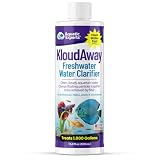
- Premium Choice: KloudAway Freshwater Aquarium Water Clarifier – Clears Cloudy Water, Water Clarifier for Fish Tank, Made in USA, Aquatic Experts, (500 ml)

TL;DR: Aquarium water clarifiers and flocculants bind fine suspended particles into clumps large enough for your filter to catch, clearing cloudy water in 24–48 hours. Safe for fish and plants when used as directed — but fix the root cause of cloudiness or it returns.
Aquarium Water Clarifier and Flocculant: Clear Cloudy Tank Water Fast
Cloudy aquarium water has three causes: bacterial bloom (new tank cycling), suspended fine particles (disturbed substrate, overfeeding), or tannins from driftwood. Water clarifiers and flocculants address the second category — they do not kill bacteria or remove tannins, but they are the fastest tool available for particle-induced cloudiness. Used correctly alongside good filtration, a single dose clears the water column within a day.
As an Amazon Associate we earn from qualifying purchases at no extra cost to you.



🛒 Best Price Today on Amazon
Prime members get fast, free shipping on everything above, plus member-only deals. New members get a 30-day free trial — cancel anytime.
Start 30-Day Prime Free Trial →See Today’s Amazon DealsHow Aquarium Water Clarifiers Work
Most commercial clarifiers use a polymer flocculant — a positively charged molecule that attracts negatively charged fine particles (clay, silt, micro-debris). The particles clump together into masses large enough to be caught by filter floss or to sink to the substrate for vacuum removal. Some products also use enzyme blends to break down dissolved organics, doubling as a mild clarifier for lightly tannin-stained water.
For planted aquascapes, clarifiers are particularly valuable after a substrate rescape or hardscape repositioning — activities that suspend years of accumulated sediment. A single dose restores the pristine water column that showcases carefully placed plants and hardscape.
Top Aquarium Water Clarifiers



As an Amazon Associate we earn from qualifying purchases. Product prices and availability are accurate as of the date/time indicated.



As an Amazon Associate we earn from qualifying purchases. Product prices and availability are accurate as of the date/time indicated.


As an Amazon Associate we earn from qualifying purchases. Product prices and availability are accurate as of the date/time indicated.
Clarifier Types and Use Cases
| Type | Mechanism | Best For | Safe For Inverts? |
|---|---|---|---|
| Polymer flocculant | Charge-based particle aggregation | Fine particle cloudiness | Yes (most brands) |
| Enzyme clarifier | Organic breakdown | Dissolved organics, mild tannins | Yes |
| Alum-based | Chemical coagulation | Pond use, not aquariums | No — toxic to shrimp |
| Carbon filtration | Adsorption | Tannins, yellowing | Yes |
| UV sterilizer | Kills free-floating bacteria | Bacterial bloom cloudiness | Yes |
Dosing and Application
Follow the manufacturer’s dose exactly — overdosing polymer clarifiers can cause oxygen depletion as clumped particles decompose on the substrate. Standard dose is typically 1 ml per 10 gallons. After dosing:
- Increase surface agitation to maintain oxygen levels — clumping particles temporarily stress the water column.
- Leave all mechanical filtration running. The clumps must reach the filter to be removed.
- Do not perform a water change for 24 hours — this dilutes the flocculant before it can work.
- After 48 hours, vacuum the substrate to remove settled clumps and perform a 25% water change.
- Rinse or replace filter floss — it will be heavily loaded with captured particles.
Diagnosing Cloudiness Before You Dose
Reaching for a clarifier before diagnosing the cloudiness type wastes money and delays the real fix. Here is a quick visual diagnosis guide:
- Milky white, uniform haze: Bacterial bloom from a new cycle or after a filter crash. Clarifier will not help. Wait out the cycle or add nitrifying bacteria supplement.
- Green tint, worsening near lights: Algae bloom (green water). Requires UV sterilizer or blackout, not flocculant.
- Yellow or brown tint, no particulate: Tannins from driftwood. Use activated carbon in the filter, not clarifier.
- Grayish, slightly hazy after water change or rescape: Fine particle suspension — this is exactly what water clarifier treats effectively.
- Cloudy in spots near substrate: Anaerobic gas pockets or decaying matter in the substrate. Requires substrate maintenance, not surface treatment.
When in doubt, do a water test first. Elevated ammonia or nitrite indicates a biological problem — adding clarifier to a tank mid-cycle can clump beneficial bacteria floating in the water column and reduce their colonization of new media. Resolve any parameter emergencies before using flocculants.
Clarifier in Reef and Saltwater Tanks
Most polymer flocculants marketed for freshwater are also safe in saltwater, but verify the label explicitly states marine compatibility before dosing a reef tank. Saltwater systems have additional sensitivity: coral polyps and filter-feeding invertebrates (clams, feather dusters, sponges) can be temporarily stressed by large quantities of clumped particles raining down on them after a flocculant treatment. In reef tanks, run the protein skimmer on full speed for 24 hours after dosing to remove the coagulated matter from the water column before it settles on corals. Increase flow in low-circulation areas to ensure no dead zones collect clumps.
When Clarifier Is Not the Answer
Bacterial bloom cloudiness (new tank syndrome) is a whitish, milky haze caused by free-floating heterotrophic bacteria during the nitrogen cycle. Flocculants do not kill bacteria and will not resolve this. Solutions for bacterial bloom: allow the cycle to complete naturally (2–6 weeks), dose with nitrifying bacteria supplements, or install a UV sterilizer — see our UV sterilizer wattage guide. Green water caused by algae blooms also requires UV, not flocculant.
For mechanical filtration upstream of clarifier use, our filter floss and polish pad guide explains how to set up the final polishing stage that catches flocculant clumps efficiently. If tank leaks are disrupting your water quality by requiring constant top-offs and disturbances, see our aquarium silicone sealant guide.
Building a Long-Term Water Clarity Strategy
Water clarifier works best as part of a layered strategy rather than a standalone fix. Think of it as the emergency tool in a three-tier approach to water quality: mechanical filtration catches the bulk of solid waste, biological filtration processes dissolved organics, and clarifier handles the fine particle fraction that escapes both. When all three tiers are working correctly, you rarely need clarifier at all — it becomes an occasional tool for post-rescape cleanup rather than a weekly necessity.
Here is a practical maintenance stack that minimizes clarifier dependency:
- Coarse pre-filtration: A large sponge or filter sock catches visible debris before it breaks into finer particles. Clean every 7–10 days.
- Filter floss polishing stage: Fine polyester floss as the last mechanical stage captures 5–20 micron particles before they recirculate. Replace every 2–4 weeks. See our filter floss guide for sizing and placement details.
- Regular feeding discipline: Remove uneaten food within 2–3 minutes. Overfeeding is the single largest driver of fine particle cloudiness in home aquariums.
- Weekly 20–25% water changes: Dilutes dissolved organics that resist filtration and maintains the ionic balance that supports flocculation if you do need to dose.
- UV sterilizer for biological cloudiness: When bacterial blooms occur despite good filtration, a properly sized UV unit clears the tank without chemicals. See our UV sterilizer wattage guide for sizing help.
Aquarists who build this stack rarely need to reach for clarifier more than once or twice per year — typically only after a major disturbance like a full rescape or equipment failure. That is the standard to aim for: clarifier as an occasional tool, not a crutch for insufficient filtration.
Frequently Asked Questions
Is aquarium water clarifier safe for shrimp and snails?
Most polymer-based aquarium clarifiers are labeled safe for invertebrates at recommended doses. However, alum-based products used in ponds are toxic to shrimp and should never be used in aquariums. Always read the label. When in doubt, do a 48-hour test in a separate container with one shrimp before treating the display tank.
How long does it take for aquarium water clarifier to work?
Most clarifiers show visible improvement within 2–6 hours and achieve full clarity in 24–48 hours with active filtration. Without adequate mechanical filtration to capture the clumps, particles may settle briefly and then re-disperse. Always ensure your filter media is clean before dosing.
Can I use water clarifier in a planted aquarium?
Yes. Polymer flocculants do not affect plants, beneficial bacteria, or CO2 levels. They are used routinely in high-tech planted tanks after rescapes. Avoid overdosing — excess polymer can coat plant leaves with a light film, marginally reducing light absorption, though this clears within 24 hours as the material is filtered out.
Why is my aquarium still cloudy after using clarifier?
If water remains cloudy 48 hours after dosing, the cloudiness is likely bacterial (milky white) or algae-based (green) — not particle-based. Bacterial blooms require cycling time or a UV sterilizer. Green water requires UV or blackout treatment. Also check that your filter is not bypassing media (a common issue with clogged filter floss causing water to flow around rather than through media).
How often can I dose aquarium water clarifier?
Most manufacturers recommend waiting 48–72 hours between doses and limiting use to 2–3 treatments per problem event. Repeated dosing without addressing the root cause (overfeeding, poor filtration, overstocking) just cycles the particles without resolving the underlying issue. Use clarifier as a tool while fixing the cause, not as a permanent water-management strategy.
Ready to decide? Our #1 pick for 2026 is the Polymer flocculant.
Live price & availability on Amazon.
Related Reviews & Guides


Aquarium Filter 20 Gallon: Top Picks Compared in 2026
Best RODI System for a 125 Gallon Tank: Top Expert Guide