Last Updated: October 4, 2026
- Top Pick: hygger Small Aquarium Betta Heater, Submersible Fish Tank Heater 10W/25W/50W/100W with LED Digital Display, Suitable for Marine Saltwater and Freshwater up to 5/10/16/26 Gallon
- Best Value: hygger Mini Fish Tank Submersible Heater 20W for 1-5 Gallons Desktop Betta Aquarium Heater with Digital Display Controller Adjustable Temperature
- Premium Choice: Novique 50W Aquarium Heater Adjustable Temperature Submersible Fish Tank Heater Water Thermostat with Thermometer for Freshwater and Saltwater Tanks
🛒 Best Price Today on Amazon
Prime members get fast, free shipping on everything above, plus member-only deals. New members get a 30-day free trial — cancel anytime.
Why Your Betta Needs a Heater
Betta fish are tropical fish native to the warm, shallow waters of Southeast Asia. They require a stable water temperature between 76–82°F (24–28°C) to stay healthy and active. Without a heater, most home aquariums drop below this range — especially in air-conditioned rooms or during cooler months. Cold water slows a betta's metabolism, suppresses its immune system, and makes it lethargic and susceptible to disease. A reliable heater is not optional; it is essential equipment.
As an Amazon Associate we earn from qualifying purchases at no extra cost to you.


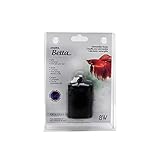
For small betta tanks of 5–10 gallons, a compact submersible heater with a built-in thermostat works best. Look for heaters with easy temperature adjustment and an auto-shutoff feature to prevent overheating if the water level drops. Reliability and accuracy are more important than price — a heater failure can be fatal to your fish.
Fluval M50 Submersible Heater
The Fluval M50 is a 50-watt submersible heater ideal for tanks up to 15 gallons. It features a reflective technology that distributes heat evenly throughout the tank, preventing cold spots. The dial is easy to adjust, and the unit maintains temperature within 0.5°F of the set point — impressive accuracy for the price. It includes suction cups for secure mounting and has a wide operating range. This is a top-tier pick for any betta keeper.
Eheim Jager Aquarium Heater 25W
Eheim Jager heaters are legendary in the aquarium hobby for their durability and precision. The 25-watt version is perfect for 5–7 gallon betta tanks. Made from shock-resistant laboratory glass, the Jager features a recalibration feature that lets you fine-tune the thermostat to match an external thermometer. It also has a dry-run safety shutoff. These heaters routinely last 5+ years with proper use, making them excellent value over time.
Hygger Submersible Mini Aquarium Heater
For nano tanks of 1–5 gallons, the Hygger Mini Heater is a popular budget-friendly option. It is extremely compact, nearly invisible in the tank, and comes with a separate digital thermometer for monitoring. The fixed temperature versions (set at 78°F) are especially reliable since there's no dial to drift. The Hygger Mini is a solid choice for small betta tanks where a full-size heater would be too powerful or too bulky.
What to Look For in a Betta Fish Heater
- Correct wattage: Use roughly 5 watts per gallon as a starting guideline (e.g., 25W for a 5-gallon tank).
- Adjustable thermostat: Allows you to dial in the exact temperature your betta prefers.
- Auto shutoff: Protects against overheating if the water level drops during maintenance.
- Temperature accuracy: Check reviews for heaters that hold within 1°F of the set point.
- Always use a thermometer: Never rely solely on the heater's built-in reading — use a separate thermometer to verify.
- Submersible vs. hang-on: Submersible heaters are more accurate and better for small tanks.
What Size and Wattage Heater Your Betta Needs
Bettas are tropical fish that thrive in stable water between 76 and 82°F (24–28°C), so a thermostatically controlled heater is essential in all but the warmest rooms. A useful rule of thumb is roughly 5 watts of heating per gallon of water, so a 5-gallon betta tank is well served by a 25-watt heater, while a 10-gallon tank does better with a 50-watt unit. Undersized heaters run constantly and struggle to keep up on cold nights, while a heater that is sized correctly cycles on and off comfortably and holds a steady temperature.
For the small tanks bettas usually live in, a compact preset or adjustable submersible heater is the most practical choice. Adjustable models let you dial in the exact temperature, which is valuable because the difference between 76 and 80°F can noticeably affect a betta’s activity and appetite. Always pair any heater with an independent aquarium thermometer rather than trusting the heater dial alone, since dials are often a degree or two off. Avoid keeping bettas in unheated bowls; chronically cool water suppresses their immune system, dulls their color, and makes them lethargic.
Heater Placement and Safety for Betta Tanks
Position the heater near the filter outflow or in an area of gentle water movement so warmed water circulates evenly instead of forming hot and cold pockets. Most submersible heaters mount horizontally low in the tank for the best mixing, but always follow the manufacturer’s orientation guidance. Keep the heater fully submerged to its marked water line at all times, and never unplug or remove a glass heater from the water while it is hot, as the sudden temperature change can crack the tube.
Because bettas are curious and can rest directly against surfaces, a heater guard or a model with a shut-off feature adds a margin of safety against burns. When doing water changes, switch the heater off and let it cool for several minutes before lowering the water level past it. Check your thermometer daily during the first week with any new heater, and watch for a heater that fails to switch off, which signals a stuck thermostat that should be replaced immediately. Stable, gentle heat is one of the simplest ways to keep a betta vibrant and healthy.
Frequently Asked Questions
What temperature should a betta tank be?
Bettas do best in stable water between 76 and 82°F (24–28°C). Sudden swings are more harmful than the exact number, so aim for a consistent reading in that range with a reliable heater and thermometer.
Do betta fish really need a heater?
Yes. Bettas are tropical fish and need warm, stable water; room temperature alone usually drops too low or fluctuates too much. An unheated tank weakens their immune system and dulls their color over time.
What wattage heater do I need for a 5-gallon betta tank?
A 25-watt heater is generally ideal for a 5-gallon betta tank, following the rough guideline of about 5 watts per gallon. A 10-gallon tank is better matched with a 50-watt heater.
Can a betta tank get too hot?
Yes. Temperatures above the mid-80s°F reduce dissolved oxygen and stress the fish. If your heater pushes the tank too warm, switch to an adjustable model and verify the setting against a separate thermometer.
Where should I place the heater in a betta tank?
Place it near gentle water flow, such as by the filter outflow, so heat circulates evenly. Keep it fully submerged to its water line and avoid spots where the betta could press directly against the hot surface.
Final Thoughts
A quality heater is a one-time investment that protects your betta's health every single day. The Fluval M50 and Eheim Jager are premium picks built to last, while the Hygger Mini is a great budget option for nano tanks. Whichever you choose, pair it with a reliable thermometer and check the temperature daily until you trust the equipment. A warm, stable environment is the foundation of a thriving betta.
Related Reviews & Guides


Best Aquarium Air Stone for Fine Bubbles: Buyer’s Guide
Best Canister Filter Spray Bar and Inlet Upgrade: Smart Buy