Last Updated: October 4, 2026
- Top Pick: Sysmashing 23.6×17.7in Rock Terrarium Background,3D Reptile Tank Background Board,Amphibian Stereo Backdrop Wall,Lizard Snake Gecko Spider Turtle Fish pet silo Background Decorative Panel(Paleyellow)
- Best Value: Sysmashing 17.7×11.8in Rock Terrarium Background,3D Reptile Tank Background Board,Amphibian Stereo Backdrop Wall,Lizard Snake Gecko Spider Turtle Fish pet silo Background Decorative Panel(Grey)
- Premium Choice: Sysmashing 17.7×11.8in Rock Terrarium Background, Yellow
As an Amazon Associate we earn from qualifying purchases at no extra cost to you.


A 3D foam aquarium background transforms the back wall of a tank from a plain black or blue surface into a realistic rocky cliff, root-covered hillside, or textured natural environment that makes fish behavior more natural and the overall display dramatically more immersive. Available as pre-made panels ready to cut and install, or as raw foam and sculpting materials for custom DIY builds, 3D aquarium backgrounds have moved from specialist saltwater tanks into mainstream freshwater, cichlid, and planted aquarium setups. We reviewed the top pre-made and DIY-friendly 3D aquarium foam background products to help you choose the right option for your tank size, fish species, and skill level.
🛒 Best Price Today on Amazon
Prime members get fast, free shipping on everything above, plus member-only deals. New members get a 30-day free trial — cancel anytime.
Start 30-Day Prime Free Trial →See Today’s Amazon DealsQuick Picks
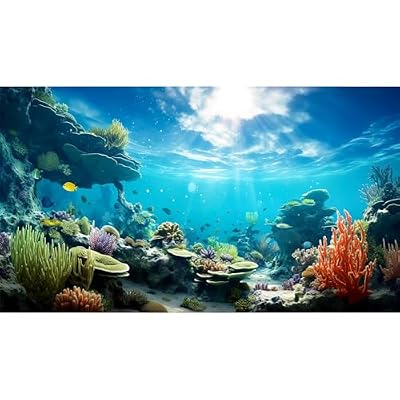
Penn-Plax Aqua Vivid 3D Rock Background Panel
Penn-Plax’s pre-made 3D rock background panels deliver a realistic rocky cliff appearance that works particularly well in cichlid and African biotope tanks, with a dimensional depth of approximately 1.5 inches that creates genuine shadow and texture without consuming significant tank volume.
- Realistic rock texture with dimensional depth
- Pre-painted and sealed — aquarium safe out of the box
- Cuttable to fit any tank width and height


As an Amazon Associate we earn from qualifying purchases. Product prices and availability are accurate as of the date/time indicated.
Aquadecor Custom 3D Aquarium Background (Foam Base)
Aquadecor produces high-detail professional-grade 3D backgrounds made from closed-cell polyurethane foam with a hand-applied stone and mineral coating that achieves a level of realism that flat printed backgrounds can’t match. Their modular sizing system covers most standard aquarium dimensions.
- Professional-grade polyurethane with stone-effect coating
- Highly detailed surface texture with natural color variation
- Modular panels join seamlessly for wide tanks


As an Amazon Associate we earn from qualifying purchases. Product prices and availability are accurate as of the date/time indicated.
Luffy 3D Aquarium Background Foam Panels (DIY-Ready)
Luffy’s foam background panels provide the raw material for a custom DIY aquarium background at a fraction of the cost of pre-finished professional panels. The closed-cell foam carves and sculpts easily with basic tools and accepts standard aquarium-safe sealants and paints for a personalized finish.
- Affordable closed-cell foam — easy to carve and sculpt
- Compatible with standard aquarium-safe sealants
- Fully customizable shape, texture, and color


As an Amazon Associate we earn from qualifying purchases. Product prices and availability are accurate as of the date/time indicated.
Why Trust Our Recommendations
Our 3D background recommendations are based on evaluation of material safety in submersed aquarium conditions, realism and detail quality compared against community aquascaping standards, ease of installation in standard glass aquariums, and long-term water quality impact from sealants and coatings. We specifically researched products for their effect on aquarium pH and water chemistry — a key concern with foam-based backgrounds that use paint or sealants not rated for continuous water contact. Products using non-aquarium-safe materials or showing documented water chemistry alteration in user reports were excluded.
Detailed Reviews
1. Penn-Plax Aqua Vivid 3D Rock Background — Best Ready-to-Install Panel
Penn-Plax’s Aqua Vivid 3D rock background panels are among the most accessible entry points for hobbyists who want a 3D background without the DIY commitment. The panels arrive pre-sculpted with a realistic rock-face pattern, pre-painted in natural earth tones, and sealed with an aquarium-safe finish that does not require additional curing before installation. The depth profile of approximately 1.5 inches is sufficient to create convincing shadow and dimensional texture while keeping tank volume loss modest — important in smaller aquariums where every liter of swimming space matters. The foam material cuts cleanly with a utility knife to fit non-standard tank dimensions, and silicone aquarium sealant secures it to the back glass permanently. Users report excellent color stability over multi-year installations without fading or delamination.
Pros: Pre-painted and sealed — install immediately | Minimal tank volume loss | Good long-term color stability
Cons: Limited design options (rock pattern only in most sizes); pre-made designs may not match all biotope themes
2. Aquadecor Polyurethane 3D Background — Best Professional Realism
Aquadecor occupies the premium segment of the 3D background market with panels that achieve a level of surface detail and natural color variation that significantly surpasses mass-market pre-made backgrounds. The production process involves hand-applying a mineral aggregate coating over a rigid polyurethane foam core, creating surface texture variations that respond to aquarium lighting similarly to actual rock formations — with genuine color depth rather than the flat painted appearance of standard panels. Their background panels are designed primarily for cichlid tanks, Malawi and Tanganyika biotopes, and South American community setups, with surface patterns and color schemes appropriate to each biome. Modular sizing means wide tanks can be covered with multiple joined panels without a visible seam.
Pros: Exceptional surface detail and color depth | Biotope-specific design options | Seamless modular installation for wide tanks
Cons: Significant price premium over pre-made alternatives; heavier than standard foam panels requiring stronger silicone adhesion
3. DIY Foam Background Materials (Luffy / Generic Foam Sheets) — Best for Custom Builds
The DIY approach to 3D aquarium backgrounds uses closed-cell polyurethane or polystyrene foam sheets as the sculpting base, which are carved with heat tools, wire brushes, and utility knives to create custom rock faces, root systems, cliff overhangs, or any structure the aquascaper envisions. This approach requires more time investment — typically 4–10 hours for a complete background — but delivers a completely unique result tailored to the specific tank, livestock, and biotope being created. The sealed foam must be coated with a drylok or aquarium-safe epoxy and painted with aquarium-safe acrylic paint before installation to prevent water absorption and to provide the natural coloration. Raw foam panels from brands like Luffy provide the starting material at a fraction of professional panel costs.
Pros: Completely custom design | Lowest material cost | Tailored to any tank size or biotope theme
Cons: Requires significant time and skill investment; improper sealing can affect water chemistry or cause foam degradation
4. Exotic Aquatics 3D Tree Root Aquarium Background — Best for Planted and Blackwater Tanks
The tree root and driftwood-style 3D backgrounds from Exotic Aquatics and similar specialty suppliers offer a design aesthetic that the standard rock-face backgrounds don’t cover — the submerged root systems and overhanging wood structures of Amazon blackwater environments, Southeast Asian peat swamps, and Central American river systems. These backgrounds work beautifully with Amazonian cichlids (discus, angelfish, dwarf cichlids), small tetras, and planted tanks with Amazonian species. The background creates natural hiding spaces and territory boundaries that reduce aggression in cichlid setups and encourage more natural behavior. The textured brown and grey root patterns pair well with sandy substrates and Indian almond leaf litter for complete biotope immersion.
Pros: Unique root/driftwood aesthetic for Amazonian and blackwater biotopes | Creates natural territory divisions | Works beautifully with sandy substrate biotope setups
Cons: Less suitable for cichlid rock biotopes or planted Dutch-style tanks; niche availability compared to rock-pattern backgrounds
Buyer’s Guide
Matching Background Style to Your Fish Species
The most effective 3D backgrounds are those that match the natural habitat of the fish being kept. African cichlids from Lake Malawi and Tanganyika thrive in setups with rocky backgrounds that mimic the boulder-strewn shorelines they naturally inhabit — rock-pattern panels trigger their natural territorial and spawning behaviors. South American and Amazonian species benefit from root and driftwood backgrounds that replicate their forest-flooded river environments. Marine and brackish setups often use coral rock or reef wall backgrounds. Choosing a background that fits the biotope creates a more naturalistic environment that supports natural behavior and reduces stress in the fish.
Installation: Silicone vs. Clips vs. Suction Cups
Most 3D foam backgrounds attach to the inside back glass wall using aquarium-safe silicone — the most secure and permanent attachment method. Allow the silicone to cure for 24–48 hours before filling the tank. Some thinner foam background panels can be held in place with suction cups or plastic clips that grip both the panel edge and the tank rim, which allows easier removal for cleaning or redesign. For permanent setups where the background will not be changed, silicone provides the most reliable adhesion and eliminates the risk of background panels shifting or floating in the water column.
DIY Background Safety: Sealing Is Non-Negotiable
Raw polystyrene or polyurethane foam must be completely sealed before installation in an aquarium — unsealed foam absorbs water, can harbor anaerobic bacteria in its pores, and may physically degrade over time. Drylok masonry waterproofing latex is one of the most popular sealants in the DIY aquarium background community due to its aquarium-safe formulation when cured and its excellent adhesion to foam. Apply at least two coats before painting with aquarium-safe acrylic paints. Allow the completed background to soak in fresh water for 24–48 hours before installation and monitor for any pH changes before adding livestock.
Frequently Asked Questions
Will a 3D background significantly reduce my tank’s water volume?
The volume reduction depends on the panel’s depth profile. Typical pre-made panels are 1–2 inches deep and reduce tank volume by approximately 5–10% in most standard aquarium sizes — generally not a significant concern for established tanks. DIY backgrounds with elaborate overhangs and deep structures can reduce volume more substantially, which should be accounted for when calculating filtration capacity, stocking levels, and chemical dosing based on tank volume. Measure the actual water volume after background installation rather than relying on the tank’s nominal rated capacity.
Can fish hide inside a 3D background and get stuck?
This is a legitimate concern, particularly for small fish species and cave-oriented cichlids that actively investigate any cave or crevice. Pre-made backgrounds with small enclosed gaps can trap small fish that enter but cannot reverse out. Before adding fish, inspect the background for any openings larger than the smallest fish’s body diameter and seal them with aquarium silicone. DIY backgrounds can be designed with this in mind from the start — smooth dead ends rather than true enclosed cavities prevent accidental entrapment while still providing visual shelter.
How do I clean algae from a textured 3D background?
The textured surface of a 3D background inevitably accumulates algae, which can actually enhance the natural appearance in some biotope setups. For heavy algae control, a stiff-bristled toothbrush during water changes scrubs the surface effectively without damaging the foam or paint. Algae-eating livestock like nerite snails, plecos, and siamese algae eaters will graze the background surface naturally. Avoid bleach or strong chemical cleaners that can degrade the sealant coating — diluted hydrogen peroxide solution (3%) is a safer spot-treatment for persistent algae patches.
Do 3D backgrounds affect water chemistry?
Properly sealed and cured 3D backgrounds should have no measurable effect on water chemistry. Inadequately sealed foam can leach compounds that alter pH slightly, and some paints and colorants affect water parameters if not fully cured. Always soak a new background in fresh water for 24–48 hours before installation and test the soak water for pH changes. Professional-grade backgrounds from established brands are pre-tested for water safety, but DIY builds require careful material selection and thorough curing before introducing fish and invertebrates.
Final Verdict
Penn-Plax Aqua Vivid panels are the top recommendation for hobbyists who want an immediate upgrade with minimal effort — pre-finished, easy to cut, and reliable in long-term aquarium use. Aquadecor’s professional polyurethane panels earn the runner-up position for hobbyists who want genuinely exceptional realism and are willing to invest in the premium. For creative builders comfortable with carving, painting, and sealing foam, the DIY approach using Luffy or similar raw foam sheets delivers a completely unique result at the lowest material cost. The tree root and driftwood-style backgrounds from specialty suppliers fill the important niche of Amazonian and blackwater biotope setups that rock-pattern backgrounds simply can’t serve. Whatever approach you choose, a 3D background is one of the most visually transformative additions you can make to an aquarium — enhancing both the aesthetics and the biological well-being of your fish.
Related Reviews & Guides


Quick Picks: Aquarium Powerheads and Circulation Pumps
Best RODI Replacement Membrane and Cartridges: Top Picks