Last Updated: October 6, 2026

Homoyoyo10Pcs Fish Egg Collector Spawning Mop, Replacement Breeder Mop Floating Aquarium Breeding Tool for Betta Guppy Killifish Egg Laying Species Fish Tank Aquarium Fry Hiding Decorations Green
Included for 'Aquarium Breeding Mop Spawning Review' as a relevant option in this category; details come from the product listing.
View on Amazon
BaoZqua Medaka Spawning Mop Kit, 10 Floating Egg Collectors with Hatch Box
Included for 'Aquarium Breeding Mop Spawning Review' because the listing specifies 10 Floating Egg Collectors with Hatch Box, details this guide uses to compare options.
View on Amazon
Toddmomy 10pcs Aquarium Fish Breeding Spawning Mops, Shrimp Accessories, Floating Fish Tank Spawning Hideout for Fry Protection and Egg Laying, Aquarium Accessory
Included for 'Aquarium Breeding Mop Spawning Review' because the listing specifies Shrimp Accessories and Aquarium Accessory, details this guide uses to compare options.
View on Amazon
Garneck 10Pcs Fish Breeding Spawning Mops for Aquarium: Green Yarn Breeding Grass Shrimp Shelter Egg Hatching Hideout Fry Nursery Decor for Killifish Fish Tank Hatchery Supplies
Included for 'Aquarium Breeding Mop Spawning Review' as a relevant option in this category; details come from the product listing.
View on Amazon
Nisolxxofa Spawning Mop Handmade Fish Breeding Grass Fish Tank Breeding Mop Decorative Aquarium Plants Floating Green Aquarium Decor for Securing Eggs and Protecting New Fry
Included for 'Aquarium Breeding Mop Spawning Review' as a relevant option in this category; details come from the product listing.
View on Amazon
MYRIONT 1PCS Fish Spawning Mop,Fish Breeding Mops Floating for Egg Laying,Decorative Aquarium Grass (1PCS)
Included for 'Aquarium Breeding Mop Spawning Review' because the listing specifies Fish Breeding Mops Floating for Egg Laying and Decorative Aquarium Grass (1PCS), details this guide uses to compare options.
View on Amazon
XFJYMXDM 1 PCS Fish Spawning Mops, Fish Breeding Grass Mops, Floating Fish Spawn Breeding Mop for Fish Tank (Green)
Included for 'Aquarium Breeding Mop Spawning Review' because the listing specifies Fish Breeding Grass Mops and Floating Fish Spawn Breeding Mop for Fish Tank (Green), details this guide uses to compare options.
View on Amazon
ARSTBETY Fish Spawning Mop Fish Spawn Breeding Mop (2 Pack Sinking)
Included for 'Aquarium Breeding Mop Spawning Review' as a relevant option in this category; details come from the product listing.
View on Amazon
An aquarium breeding mop is one of the most effective and low-tech tools for successfully breeding egg-scattering fish species, providing a safe, natural-looking spawning site that protects eggs from being eaten by adult fish or swept away by filtration currents. Used extensively by breeders of killifish, tetras, danios, goldfish, and many other egg-scattering species, breeding mops mimic the fine-leafed aquatic plants and moss clusters these fish naturally deposit eggs in. We reviewed the top aquarium breeding mops and spawning nest options on the market — covering both commercial products and quality DIY-style materials — to help you choose the right spawning medium for your fish and breeding goals.
Quick Picks
Aquarium Arts Handmade Acrylic Yarn Breeding Mop
Handmade acrylic yarn breeding mops remain the gold standard among serious killifish and tetra breeders for their safe, soft, non-toxic fiber strands that closely mimic fine aquatic vegetation. A quality commercial yarn mop provides consistent strand density and floatation setup that DIY versions can take time to master.
- Soft acrylic yarn — safe for egg adhesion without damage
- Floating cork top keeps mop at the correct water depth
- Dense strand count maximizes egg-catching surface area
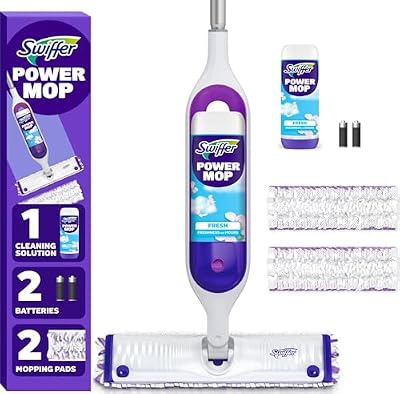
Swiffer PowerMop Mopping Kit for Floor Cleaning, Set Includes 1 Power Mop, 2 Replacement Pads, 1 Liquid Solution Refill, 2 Batteries, No Bucket Needed Electric Spray Cleaner, Multi-Surface and Wood
Included for 'Aquarium Breeding Mop Spawning Review' because the listing specifies Set Includes 1 Power Mop and 2 Replacement Pads, details this guide uses to compare options.
View on AmazonAquaneat Artificial Aquarium Spawning Mop Set
Aquaneat’s commercially packaged spawning mop set offers a ready-to-use solution with multiple mop sizes in a single purchase, covering both floating and bottom-resting configurations suited to different breeding species. Consistent build quality and quick delivery make this ideal for breeders who want reliable performance without crafting their own mops.
- Multiple sizes included — suits different tank setups
- Both floating and bottom-resting configurations included
- Easy to rinse and reuse between breeding sessions

Swiffer Hair Magnet Deluxe Starter Kit with Collapsible Pole, 9 Hair Magnet Dry Cloths, 2 Bonus Mop & Go Wet Cloths
Included for 'Aquarium Breeding Mop Spawning Review' because the listing specifies 9 Hair Magnet Dry Cloths and 2 Bonus Mop & Go Wet Cloths, details this guide uses to compare options.
View on AmazonJuvale Artificial Moss Ball Spawning Nest Pack
Artificial moss ball spawning nests provide an alternative egg-scattering medium that works particularly well for goldfish, danios, and species that prefer a rounded, enclosed spawning site. At a low per-unit price, you can stock multiple breeding tanks simultaneously without significant cost.
- Rounded shape mimics natural moss ball spawning sites
- Soft synthetic fibers safe for egg adhesion
- Affordable enough to dedicate one per breeding pair

Swiffer Duster Kit with 6 ft Super Extendable Handle, Heavy Duty Starter Kit with 8 Refills, Lemon Scent
Included for 'Aquarium Breeding Mop Spawning Review' because the listing specifies Heavy Duty Starter Kit with 8 Refills and Lemon Scent, details this guide uses to compare options.
View on AmazonWhy Trust Our Recommendations
Our aquarium breeding mop recommendations are based on feedback from experienced fish breeders across killifish, tetra, danio, and goldfish communities, combined with analysis of material safety research regarding acrylic and nylon fibers in aquatic environments. We evaluated egg adhesion success rates, ease of egg harvesting, reusability, and impact on water parameters. Products that leach dyes, shed excessive fibers, or alter water chemistry were excluded from consideration regardless of price or popularity.
Detailed Reviews
1. Acrylic Yarn Breeding Mop (Floating Style) — Best for Killifish and Tetras
The traditional acrylic yarn floating breeding mop has been the preferred spawning medium for killifish breeders for decades, and its continued dominance in the hobby is well-earned. Acrylic yarn is chemically inert in water, does not leach dyes at typical aquarium temperatures, and the individual strand texture is ideal for egg adhesion without the sharp surfaces that could damage delicate eggs or injure fish during spawning. A well-made commercial floating mop typically has 40–60 strands of yarn attached to a buoyant cork or foam float, suspended just below the water surface where most egg-scattering species prefer to spawn. Egg collection is straightforward — remove the mop, gently squeeze out excess water, and inspect strand by strand under good lighting for fertilized eggs which can then be moved to a hatching container.
Pros: Proven decades-long track record with egg-scattering species | Chemically inert acrylic fiber | Easy egg harvesting
Cons: Floating mops not suitable for bottom-spawning species; requires careful rinsing between uses
2. Aquaneat Spawning Mop Set — Best Ready-to-Use Commercial Set
Aquaneat’s spawning mop set solves the most common beginner problem with breeding mops — not knowing which configuration to use for which species — by including both floating and bottom-resting mop styles in a single package. The floating mops are pre-assembled with a foam buoy, while the bottom mops include a small weighted base that keeps them standing upright on the substrate. The synthetic fibers used are soft enough not to damage eggs but dense enough to provide good egg-catching coverage. Rinsing between breeding sessions is simple, and the fibers maintain their shape and density after repeated cleanings. For breeders just starting out with egg-scattering species, this set provides a practical introduction without requiring any DIY assembly.
Pros: Both floating and bottom configurations included | No DIY assembly needed | Good fiber density for egg catching
Cons: Synthetic fiber color may not appeal to natural-aesthetic planted tank breeders; medium strand count vs. premium hand-tied mops
3. Artificial Moss Ball Spawning Nest — Best for Goldfish and Danios
Goldfish and danios are broadcast spawners that distribute eggs somewhat randomly through aquatic vegetation, and the rounded, voluminous shape of an artificial moss ball spawning nest captures eggs effectively across a larger three-dimensional surface than a linear mop strand design. The soft synthetic material doesn’t damage the sticky eggs that goldfish produce, and the compact shape makes it easy to remove and transfer to a hatching tank without disturbing the egg distribution. Multiple units can be placed in a breeding tank to maximize coverage during a single spawning event, which is particularly important for goldfish who may release thousands of eggs in a single session. At budget price points, replacing worn units is economically painless.
Pros: Three-dimensional structure captures randomly scattered eggs | Works well for goldfish and danios | Very affordable for multi-unit use
Cons: Harder to inspect for individual eggs than strand-style mops; less precise for selective egg harvesting
4. Natural Java Moss Clump for Spawning — Best Natural Option
Live java moss is the most natural spawning medium available for egg-scattering fish and is widely used by breeders who maintain planted breeding tanks. The intricate structure of java moss provides countless tiny spaces for eggs to lodge and be protected from adult fish predation, and the live plant contributes to water quality through oxygen production and nitrogen processing. Java moss works particularly well for small egg-scattering species like ember tetras, celestial pearl danios, and microrasboras whose tiny eggs are difficult to harvest from synthetic mops. The main trade-off is that egg harvesting is virtually impossible — you typically transfer the entire moss clump with eggs attached to a separate hatching tank and let nature take its course.
Pros: Most natural spawning environment | Contributes to water quality | Excellent egg protection from adult predation
Cons: Cannot inspect or selectively harvest individual eggs; requires healthy growth conditions to maintain
Buyer’s Guide
Matching Mop Style to Your Species
Floating mops positioned just below the water surface work best for species that prefer to spawn in the top third of the water column — most killifish, many livebearers, and surface-oriented tetras. Bottom mops weighted to rest on the substrate suit species that spawn lower in the water column or burrow briefly before depositing eggs, including certain corydoras and bottom-oriented egg-scatterers. For species that scatter eggs randomly throughout aquatic vegetation at all water levels, a combination of a floating mop and a bottom mop in the same breeding tank maximizes egg capture efficiency.
Caring for Breeding Mops Between Sessions
After use, rinse breeding mops thoroughly in dechlorinated water — never tap water, which contains chlorine and chloramines that can damage the fibers and potentially harm future eggs. Squeeze out excess water gently and allow the mop to air dry completely before storage to prevent mold growth. If breeding mops develop a biofilm or slimy coating, soak them briefly in a mild bleach solution (1 teaspoon per gallon), then rinse extremely thoroughly in dechlorinated water and allow to dry fully. Replace mops that show significant fiber breakdown, discoloration, or persistent odor that doesn’t clear after cleaning.
Egg Collection and Hatching Setup
After a successful spawning session, remove the mop carefully and inspect it over a shallow white dish filled with tank water. Fertilized eggs are typically firm, clear to slightly amber, and round; unfertilized eggs often appear white and cloudy within 24 hours. Use a pipette or turkey baster to transfer collected eggs to a separate hatching container with gentle aeration and a small dose of methylene blue to prevent fungal infection. Remove any visibly fungused (white, cottony) eggs promptly to prevent the fungus from spreading to healthy eggs nearby.
Frequently Asked Questions
What yarn is safe to use for a DIY breeding mop?
100% acrylic yarn without metallic threads, glitter, or antibacterial treatments is the standard recommendation from experienced breeders. Avoid wool (can harbor bacteria), nylon (can be too stiff for delicate eggs), and any yarn with added treatments or coatings. Dark green and black colors are most popular as they resemble natural aquatic vegetation and are less visible to fish, potentially reducing spawning inhibition. Rinse new yarn thoroughly in hot water before creating a mop to remove any manufacturing residues.
How do I know if my fish have actually spawned in the mop?
The most reliable method is to remove the mop after a confirmed spawning event (you observed spawning behavior such as chasing and the female releasing eggs) and inspect it carefully in good lighting over a white or light-colored background. Fertilized eggs of most egg-scattering species are 0.5–2mm in diameter, relatively transparent, and slightly adhesive — they cling to mop strands when gently moved. Killifish eggs are among the larger and easier to spot; tetra and danio eggs are significantly smaller and require closer inspection.
Can I leave breeding mops in the tank permanently?
Yes, breeding mops can remain in the tank as a permanent spawning site, though you should inspect and collect eggs frequently if you want to raise the fry — adult fish will eat eggs and fry given the opportunity. Permanent mops also accumulate debris and biofilm over time, so rinse them during routine maintenance. Some breeders prefer to add mops only during specific conditioning and spawning periods rather than leaving them in year-round.
Do breeding mops affect water quality?
Quality acrylic yarn and synthetic fiber breeding mops do not measurably affect water chemistry when properly prepared and rinsed before use. New mops should always be soaked and rinsed in dechlorinated water before introduction to confirm no dye bleeding occurs. Mops left in tanks for extended periods can accumulate detritus and contribute to organic loading — regular rinsing during water changes prevents this from becoming a water quality issue in smaller breeding tanks.
Final Verdict
For most egg-scattering fish breeding applications, a quality floating acrylic yarn mop remains the most reliable and versatile choice — decades of proven use by serious breeders speaks to its effectiveness. Aquaneat’s commercial spawning mop set is the ideal starting point for breeders new to egg-scattering species, providing both floating and bottom configurations without requiring DIY work. Artificial moss ball nests fill a valuable niche for goldfish and broadcast-spawning species that benefit from a three-dimensional spawning medium. For the most natural approach in a planted breeding tank, live java moss provides unmatched ecological authenticity. Match your spawning medium to your target species, maintain clean mops between sessions, and have a hatching setup ready — breeding success follows preparation.
Related Guides
- Quick Picks: Best Aquarium Internal Filters for Small…
- Best Aquarium Chillers: Keeping Your Tank Cool for Cold Water Fish
- Quick Picks: Best Aquarium Auto Top-Off (ATO) Systems
- Best Aquarium Canister Filter: Top Picks & Reviews
- Aquarium Uv Sterilizer Inline Review
Related Reviews & Guides


Quick Picks: Best Aquarium Sponge Filters for Small and…
Aquarium Heater vs Inline Heater: Which One Should You Pick