Last Updated: October 9, 2026
- Why Aquarium-Safe Silicone Matters
- Top Aquarium Silicone Sealants
- Application Specs at a Glance
- Step-by-Step: Resealing a Leaking Tank Corner
- Choosing Between Clear and Black Silicone
- Common Mistakes That Cause Silicone Failure
- Silicone for Aquascaping: Rock and Wood Bonding
- Silicone vs. Epoxy: Which to Use and When
- Related Guides
- Frequently Asked Questions
- Related Articles
- Top Pick: 4 Pack Aquarium Silicone Clear Sealant, High Elasticity, Safe for Fish,Fast Curing Waterproof Aquarium Safe Silicone,10 Fl Oz Non-Toxic Fish Tank Safe Sealant,Strong Adhesion
- Best Value: Threlaco 4 Pcs Clear Aquarium Silicone Sealant 120ml Underwater Sealant
- Premium Choice: 1 Pack Aquarium Silicone Clear Sealant, High Elasticity, Safe for Fish,Fast Curing Waterproof Aquarium Safe Silicone,10 Fl Oz Non-Toxic Fish Tank Safe Sealant,Strong Adhesion

TL;DR: Aquarium silicone sealant bonds glass panels, patches leaks, and attaches rock structures without leaching toxins. Choose 100% silicone with no mold-inhibitors, cure fully before adding water, and your tank stays watertight for years.
Best Aquarium Silicone Sealant: Aquarium-Safe Options for Glass Tanks
A single bad bead of silicone can flood your living room — or slowly poison every fish you own. Aquarium silicone sealant is not a commodity; the wrong product releases fungicide byproducts that kill livestock within days. This guide cuts through the confusion so you pick the right sealant, apply it correctly, and never worry about leaks again.
As an Amazon Associate we earn from qualifying purchases at no extra cost to you.




🛒 Best Price Today on Amazon
Prime members get fast, free shipping on everything above, plus member-only deals. New members get a 30-day free trial — cancel anytime.
Start 30-Day Prime Free Trial →See Today’s Amazon DealsWhy Aquarium-Safe Silicone Matters
Standard bathroom caulks contain mold-inhibiting biocides — effective for showers, lethal for fish. True aquarium-grade silicone is 100% pure silicone acetoxy or neutral-cure formula with no additives. It remains flexible under constant water pressure, resists algae adhesion, and bonds glass to glass with shear strength exceeding 200 psi when properly cured.
For planted and aquascaped tanks, silicone also anchors hardscape: pressing lava rock against the back wall, gluing driftwood baseplates, or sealing in-tank filter boxes. The flexibility matters here — a rigid adhesive cracks under glass expansion from temperature swings.
Top Aquarium Silicone Sealants




As an Amazon Associate we earn from qualifying purchases. Product prices and availability are accurate as of the date/time indicated.

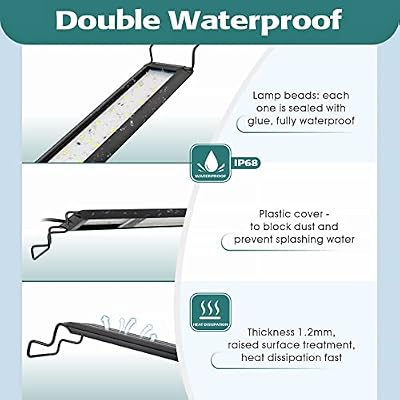


As an Amazon Associate we earn from qualifying purchases. Product prices and availability are accurate as of the date/time indicated.


As an Amazon Associate we earn from qualifying purchases. Product prices and availability are accurate as of the date/time indicated.
Application Specs at a Glance
| Property | Typical Value | Notes |
|---|---|---|
| Full cure time | 24–72 hours | Thicker beads need 72 h |
| Tack-free time | 30–60 min | Acetoxy cure |
| Max continuous temp | 400°F / 204°C | Well above any aquarium heater |
| Shore A hardness (cured) | 25–35 | Flexible, not brittle |
| Chemical resistance | Salt, fresh, planted | Avoid ketone solvents |
| Color options | Clear, black | Black hides in dark substrates |
| Bead thickness for sealing | 3–6 mm | Thinner = faster cure |
Step-by-Step: Resealing a Leaking Tank Corner
- Drain and dry: Remove water, livestock, and substrate. Let glass dry completely — silicone will not bond to wet surfaces.
- Remove old sealant: Score with a utility knife, peel strips, then scrub residue with isopropyl alcohol. No acetone on acrylic panels.
- Mask edges: Apply painter’s tape 2 mm from each joint to keep lines straight.
- Apply bead: Hold the caulk gun at 45°, push (don’t pull) a continuous bead into the joint. Aim for 4 mm diameter.
- Tool the bead: Wet your fingertip and smooth in one pass. Avoid overworking — silicone skins quickly.
- Remove tape: Pull tape before the bead skins (within 5 minutes).
- Cure and test: Wait 48 hours minimum. Fill with fresh water only, let stand 24 hours before adding livestock.
Choosing Between Clear and Black Silicone
Color is a practical decision, not a cosmetic one. Clear silicone is invisible against glass, making it the default for sealing tank panels where you want the joint to disappear. Black silicone, by contrast, becomes a design element: it conceals dark-colored substrates like black sand or crushed basalt, creates a defined visual border between the glass and the aquascape, and hides any minor imperfections in the bead line. Many aquascapers use clear silicone for structural seams and switch to black for the interior cosmetic bead that faces viewers.
One important note: never mix colors in a single joint. The two cure at the same rate but have different surface properties — a clear-on-black repair bead never fully blends visually and may peel at the color boundary over time.
Common Mistakes That Cause Silicone Failure
Most silicone failures in aquariums trace back to one of four preventable errors:
- Applying to damp glass: Any moisture — including humidity condensation — prevents adhesion. Use a heat gun on low to warm the glass surface and drive off surface moisture before applying.
- Incomplete old sealant removal: New silicone does not bond well to old cured silicone. Scrape mechanically, then wipe with 99% isopropyl alcohol twice. The second wipe should come away clean.
- Rushing the cure: Water contact before 24 hours causes the uncured surface to wash away, leaving a porous, weakened joint. The vinegar smell of acetoxy silicone indicates active curing — fill only when the smell has completely dissipated.
- Using the wrong product: Products labeled “Kitchen and Bath,” “Mold & Mildew Resistant,” or “Antimicrobial” contain biocides. The packaging may not list exact chemicals — if it makes any antibacterial or mold-resistant claim, it is not aquarium safe.
Silicone for Aquascaping: Rock and Wood Bonding
Aquascapers use silicone to build stable hardscape towers that won’t topple and stress livestock. For porous surfaces like lava rock, apply silicone, press firmly, and brace with rubber bands or weights for 24 hours. Black silicone disappears against dark substrates, keeping the natural aesthetic intact.
When bonding non-porous materials like slate tiles, roughen the contact surfaces with 80-grit sandpaper before applying silicone — this dramatically increases bond area and pull-off strength. For heavy stones, use multiple dabs rather than a single bead; this distributes load more evenly and allows slight adjustment of angle before the silicone skins. Java fern and anubias rhizomes can also be siliconed directly to driftwood or stone — a thin smear holds them securely while roots take hold over the following weeks.
Silicone vs. Epoxy: Which to Use and When
Silicone and aquarium-safe epoxy putty both appear in aquascaping toolkits, but they serve different roles. Silicone is flexible, repositionable (while wet), and ideal for glass-to-glass structural seams and attaching lightweight hardscape. Epoxy putty is rigid, fills gaps, and is better for anchoring stem plants into substrate gaps or locking together heavy stones where flexibility would be a liability.
Use silicone when: sealing tank joints, attaching background panels, bonding moss or rhizome plants to hardscape, or creating any joint that needs to flex with thermal expansion. Use epoxy when: creating a permanent rigid bond between heavy rocks, filling in hollow driftwood to prevent it from floating, or anchoring equipment mounts. Both are aquarium-safe in their cured state; neither should be used interchangeably for structural tank seams — silicone only for those.
If you are also working on filtration, our guide on filter floss and polish pads explains how mechanical media complements a well-sealed sump. For tanks where algae is a recurring issue despite good seals, see our UV sterilizer sizing guide — a proper UV unit reduces the biofilm that degrades silicone over time.
Related Guides
- Quick Picks: Best Aquarium Gravel Vacuum Siphon Cleaners
- Aquarium Powerhead Submersible Circulation
- Best Automatic Fish Feeder: Top Picks for 2026
- Quick Picks: Best Aquarium Wave Makers and Powerheads
- Quick Picks: Best Aquarium Breeding Boxes and Fry Separators
Frequently Asked Questions
How long does aquarium silicone sealant take to fully cure?
Most acetoxy-cure silicones are tack-free in 30–60 minutes but require 24–72 hours for full structural cure. Thicker beads and low humidity extend cure time. Never add water before 24 hours; 48 hours is the safer standard for load-bearing tank seams.
Can I use GE Silicone I for an aquarium?
GE Silicone I (the plain formula, not “Kitchen & Bath” or “Advanced”) is widely used by hobbyists and is 100% silicone without biocides. Always verify the label states no mold inhibitors. GE Silicone II and most colored variants contain additives — avoid them.
What is the difference between acetoxy and neutral-cure silicone for aquariums?
Acetoxy silicone releases acetic acid (vinegar smell) during cure and is fine for glass tanks. Neutral-cure silicone is odorless, non-corrosive, and preferred for metal frames or reef tanks where acidity could affect coralline algae. Both are aquarium-safe when fully cured.
How thick should a silicone bead be for a large aquarium?
For tanks under 75 gallons, a 4–6 mm bead is sufficient. Tanks 75–200 gallons benefit from a 6–8 mm structural bead with a second cosmetic bead on the interior. Professional builders often double-seal interior corners on tanks over 100 gallons for redundancy.
Can aquarium silicone sealant be applied underwater or to a wet surface?
No — standard silicone requires a dry surface for adhesion. Underwater epoxy putties exist for emergency patch jobs, but they are not long-term solutions. For a proper repair, drain the tank, dry the glass thoroughly, and apply silicone as normal.
For related setup hardware, check our overview of water clarifiers to polish the water column after a reseal, and our turtle basking platform guide if your setup houses reptiles alongside fish.
Ready to decide? Our #1 pick for 2026 is the Full cure time.
Live price & availability on Amazon.
Related Reviews & Guides

Best pH and Temperature Monitor for Aquarium: Expert Pick

Best Aquarium Stand For A 120 Gallon Tank: Top Compared Guide