Last Updated: October 4, 2026
- Top Pick: AQUANEAT 6-Pack Pre-Filter Sponge for Aquarium Shrimp Fry Fish Tank Filter 0.8” Intake, Replacement Foam Cover
- Best Value: ALEGI Aquarium Sponge Filter Pad, Bio Filter Media Foam Sponges
- Premium Choice: Borlech Aquarium Bio Filter Sponge Pad – Cut-to-Size Aquarium Filter Media for Fish Tank, Pond, Sump – Mechanical & Biological Filtration (18.5"x18.5"x0.8", 20PPI, 1 Pack)
🛒 Best Price Today on Amazon
Prime members get fast, free shipping on everything above, plus member-only deals. New members get a 30-day free trial — cancel anytime.
Aquarium Sponge Filter: Simple, Reliable, and Effective
Sponge filters are one of the most underappreciated tools in the aquarium hobby. Experienced fish breeders, shrimp keepers, and hospital tank managers rely on them for their simplicity, reliability, and outstanding biological filtration. Unlike hang-on-back or canister filters, sponge filters have no intake risk for baby fish or shrimp, produce gentle current suitable for bettas and slow-water species, and can be seeded and moved between tanks to instantly cycle new setups. Here are the best sponge filters on the market.
As an Amazon Associate we earn from qualifying purchases at no extra cost to you.


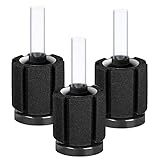


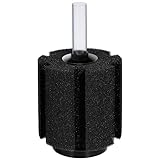

1. Aquarium Co-Op Sponge Filter (Medium and Large)
Aquarium Co-Op’s sponge filter is the most recommended option in the hobby and consistently outperforms cheaper alternatives. Its open-cell sponge provides exceptional surface area for beneficial bacteria colonization, the weighted base prevents it from floating, and the lift tube is tall enough to position the outlet near the surface for maximum oxygenation. Available in nano, small, medium, and large sizes, the medium handles tanks up to 20 gallons and the large suits tanks up to 55 gallons. Pair with any standard air pump and airline tubing.
2. Hikari Bacto-Surge High Density Foam Filter
Hikari’s Bacto-Surge uses a high-density foam that provides even more bacterial surface area than standard coarse sponge. It comes in four sizes for tanks from 5 to 30+ gallons and includes a weighted base. The dense foam traps more particulate matter than looser open-cell sponges, providing better mechanical filtration in addition to excellent biological filtration. It’s particularly popular for breeding setups because its fine cell structure doesn’t suck up fry while still maintaining excellent water quality in heavily stocked breeder tanks.
3. XINYOU XY-2822 Double Sponge Filter
For larger tanks or those requiring extra filtration capacity, dual-sponge filters like the XINYOU XY-2822 provide double the biological surface area in a single air-driven unit. The two sponges can be serviced on alternating schedules, ensuring you never crash the biological filter by cleaning both sponges simultaneously. This design is especially valuable in tanks where the filter is the primary (or only) biological filtration, such as barebottom breeding tanks or hospital setups. The unit handles tanks up to 55+ gallons effectively.
Sponge Filter Buying Guide
- Air pump pairing: Match air pump output to filter size; most sponge filters specify required air volume (LPH or GPH).
- Cleaning: Squeeze sponge in old tank water (never tap water) every 2–4 weeks; don’t over-clean.
- Seeding: A seeded sponge filter moved from an established tank instantly cycles a new tank—the most reliable cycle method.
- Noise: Air-driven filters produce surface agitation bubbles; use an adjustable air pump valve to reduce flow and noise.
- Hospital tanks: Keep a seeded sponge filter in your main tank so it’s always ready for emergency hospital use.
- Shrimp compatibility: All sponge filters are completely safe for baby shrimp; no need for intake covers.
How Sponge Filters Work and When to Use Them
Sponge filters are one of the simplest and most reliable filtration options, drawing water through a porous foam block powered by an air pump or a small powerhead. As water passes through, debris is trapped mechanically while the sponge’s huge surface area becomes home to the beneficial bacteria that perform biological filtration. The gentle flow and lack of an intake slot make them especially safe for fry, shrimp, and delicate fish like bettas that dislike strong currents.
These filters shine in specific situations. They are the go-to choice for breeding tanks and shrimp colonies because they will not suck up babies, and they make excellent backup or quarantine filters since a seeded sponge can be moved to instantly cycle a hospital tank. Their simplicity also means few moving parts to fail. The main trade-offs are limited chemical filtration and a less powerful mechanical clean than a canister filter, so they are best suited to lightly to moderately stocked tanks rather than large, messy fish.
Maintaining a Sponge Filter Properly
The single most important rule of sponge filter care is to preserve the beneficial bacteria living inside it. Never clean the sponge under chlorinated tap water, which would kill that bacteria; instead, swish and squeeze it in a bucket of old tank water removed during a water change. This rinses out trapped debris while keeping the biological colony intact. Clean it only when flow noticeably slows, rather than on a rigid schedule, so the filter stays well established.
Setup is straightforward: attach airline tubing to an air pump, ideally with a check valve to prevent backflow, and let the rising bubbles draw water through the foam. Position the filter where its gentle current circulates the tank without blasting delicate inhabitants. Over time the foam degrades and can be replaced, but to avoid losing your bacteria, run a new sponge alongside the old one for a few weeks before removing the original. With minimal cost and maintenance, a well-kept sponge filter provides dependable biological filtration for years.
Frequently Asked Questions
Are sponge filters good enough on their own?
For lightly to moderately stocked tanks, a properly sized sponge filter provides excellent biological filtration on its own. Heavily stocked or large tanks may benefit from pairing it with a hang-on-back or canister filter for extra mechanical cleaning.
How do I clean a sponge filter without killing the bacteria?
Rinse the sponge in a bucket of old tank water, never under chlorinated tap water, which kills beneficial bacteria. Simply swish and squeeze it to release trapped debris while preserving the biological colony.
Why are sponge filters good for shrimp and fry?
Sponge filters have no strong intake to suck up babies and produce a gentle current that delicate fry and shrimp tolerate well. The foam also grows biofilm that shrimp love to graze.
Do sponge filters need an air pump?
Most sponge filters are powered by an air pump that drives water through the foam with rising bubbles. Some models can instead be run with a small powerhead for stronger flow.
How often should I replace the sponge?
Replace the sponge only when it breaks down and no longer holds its shape, which can take a year or more. When you do, run the new sponge alongside the old one for a few weeks so beneficial bacteria can transfer.
Final Thoughts
Every aquarist should own at least one sponge filter. They’re the perfect secondary filter, backup hospital tank filter, and primary filter for small, breeding, or shrimp tanks. Cheap to buy, nearly impossible to break, and biologically exceptional—a quality sponge filter running in any tank is one of the best insurance policies you can have for fish health. Start with the Aquarium Co-Op version and you won’t be disappointed.
Related Reviews & Guides
Best 24/7 Aquarium Light With Sunrise Sunset: Top Picks
Best Pond Filter System for a Small Backyard Pond: Top Picks