Last Updated: October 4, 2026
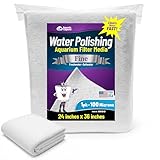
- Top Pick: Aquatic Experts Aquarium Polishing Filter Pad, Water Polishing Pad for Aquarium Filters, Filter Floss for Fish Tank Filters, (100 Micron, 24" x 36" – 1 Pack)
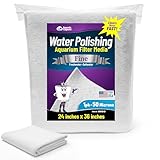
- Best Value: Aquatic Experts Aquarium Polishing Filter Pad, Water Polishing Pad for Aquarium Filters, Filter Floss for Fish Tank Filters, (50 Micron, 24" x 36" – 1 Pack)
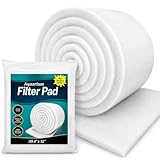
- Premium Choice: Demiwise Aquarium Polishing Filter Pad-Ultra Fine 50 Micron Filter Floss for Crystal Clear Water,Cut-to-Size Filter Media for Fish Tank,Safe for Fish/Reef/Turtles(24" x 36", 1 Pack)
 Aquarium Filter Floss Polish Pad” style=”max-width:100%;height:auto;margin-bottom:1rem” loading=”lazy”>
TL;DR: Aquarium filter floss and polish pads trap fine suspended particles for crystal-clear water. Place at the end of the mechanical stage, rinse weekly, and replace every 2–4 weeks. No special skills required — just cut, stuff, and enjoy polished water.
Aquarium Filter Floss and Polish Pad: Get Crystal-Clear Water Fast
Cloudy water is the most common aquarist complaint — and rarely fixed by a water change alone. Fine suspended particles (bacterial blooms, tannins, micro-debris) sail right through coarse sponge. Filter floss and polish pads catch those particles with a dense fiber matrix, polishing the water column to optical clarity within hours.
As an Amazon Associate we earn from qualifying purchases at no extra cost to you.



🛒 Best Price Today on Amazon
Prime members get fast, free shipping on everything above, plus member-only deals. New members get a 30-day free trial — cancel anytime.
Start 30-Day Prime Free Trial →See Today’s Amazon DealsFilter Floss vs. Polish Pads: What Is the Difference?
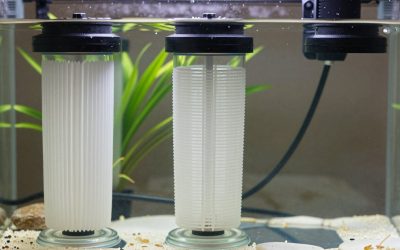
Filter floss is loose polyester batting cut to fit any sump tray, HOB basket, or canister tray. It is inexpensive, infinitely customizable, and delivers excellent mechanical filtration. Polish pads are pre-cut, denser versions with a graduated-micron structure — coarser on the intake side, finer on the outlet. Both perform identically; the choice is convenience versus cost.
For aquascaped tanks — Dutch plantscapes, high-tech CO2 systems, shrimp colonies — clear water is not purely aesthetic. Suspended particles reduce PAR at substrate level, slowing plant growth. A layer of filter floss at the end of the mechanical stage resolves this without chemicals.
Top Filter Floss and Polish Pads


As an Amazon Associate we earn from qualifying purchases. Product prices and availability are accurate as of the date/time indicated.



As an Amazon Associate we earn from qualifying purchases. Product prices and availability are accurate as of the date/time indicated.


As an Amazon Associate we earn from qualifying purchases. Product prices and availability are accurate as of the date/time indicated.
Filter Media Quick-Reference
| Property | Filter Floss | Polish Pad |
|---|---|---|
| Particle capture | 5–20 microns | 1–5 microns (fine side) |
| Flow resistance | Low | Medium |
| Customizability | Cut any shape/size | Pre-cut standard sizes |
| Recommended placement | Last mechanical stage | Last mechanical stage |
| Rinse frequency | Weekly | Weekly |
| Replace frequency | Every 2–4 weeks | Every 4–6 weeks |
| Biological colonization | Minimal — replace often | Minimal |
| Material | Polyester batting | Polyester / sintered fiber |
Where to Place Filter Floss in Your Filter
The golden rule: mechanical media first, biological media second, chemical media last. Within the mechanical stage, always put filter floss or a polish pad at the very end — after coarse sponge blocks and medium sponge. This sequence means coarse debris never clogs the fine floss, dramatically extending its service life.
- HOB filters: Lay floss on top of the bio-media tray, or cut to replace the factory cartridge entirely.
- Canister filters: Fill the last tray with floss or slot a pre-cut pad before the outlet.
- Sumps: Drape floss across a filter sock frame or a dedicated sock chamber.
- Sponge filters: Wrap a thin layer of floss around the sponge exterior for polishing without flow restriction.
Filter Floss for Specific Tank Types
High-Tech Planted Tanks
In a CO2-injected planted tank, water clarity directly affects the quality of photography and the health of low-growing carpet plants that depend on unobstructed light reaching the substrate. A layer of fine polish pad (1–3 microns) as the last filter stage achieves the optically clear water that makes aquascape photography pop. Replace it more frequently during the first weeks after a rescape, when disturbed substrate particles are at their highest concentration in the water column.
Shrimp Tanks
Neocaridina and Caridina shrimp are sensitive to water parameter swings. Filter floss replacement stresses shrimp less than large water changes because it removes particles without altering temperature, pH, or mineral content. A key rule: never replace all floss at once in a shrimp tank. Swap half at a time, one week apart, to prevent any temporary ammonia spike from debris disturbance reaching the livestock.
African Cichlid and Goldfish Tanks
Heavy-bodied, messy fish produce particulate waste at rates that overwhelm standard sponge alone. In these setups, filter floss becomes a weekly consumable rather than a monthly one. Budget for bulk rolls — buying loose polyester batting by the pound is dramatically cheaper than individual pre-cut pads when you are replacing media every 5–7 days. Double up the floss layer thickness to extend each replacement cycle slightly without sacrificing clarity.
DIY Filter Floss Hacks That Actually Work
The aquascaping community has developed several low-cost optimizations for filter floss use that save money without compromising performance:
- Bulk polyester batting: Craft store pillow stuffing (100% polyester, no treatments) at $5–8 per pound lasts months and performs identically to branded aquarium floss at 5–10× the price per gram.
- Pre-rinse new floss: Wash new floss in dechlorinated water before installing to remove any loose fibers that could temporarily cloud the tank.
- The sandwich method: Layer coarse floss, fine polish pad, coarse floss in a sump chamber. The outer coarse layers catch large debris; the middle fine layer polishes. This triples the service life of the expensive fine pad.
- Mesh bag containment: Place loose floss inside a fine mesh media bag to prevent fibers escaping into the tank during turbulent flow. Cut a piece of filter sock material and seal edges with — you guessed it — aquarium silicone (see our silicone sealant guide).
Maintenance Routine
Dirty floss is a nitrate factory — decaying trapped matter releases ammonia directly into your flow path. Rinse weekly under tank water (never tap water — chlorine kills beneficial bacteria) and squeeze until water runs mostly clear. Once the fibers no longer firm up after rinsing, replace. In heavily stocked tanks this may be every two weeks; lightly stocked planted tanks can stretch to four.
Track your replacement schedule alongside your water change calendar. If you notice water clarity declining between weekly rinses, it is a sign of overfeeding, overstocking, or insufficient coarse pre-filtration upstream — add another layer of medium sponge before the floss to extend intervals. Consistent maintenance turns filter floss from an afterthought into the most impactful single upgrade in your filter stack.
For upstream filtration, our guide on aquarium silicone sealant covers sealing filter sumps and return lines. If particles persist despite good floss maintenance, a UV sterilizer handles free-floating bacteria that mechanical media cannot trap.
Frequently Asked Questions
Can I use pillow stuffing as aquarium filter floss?
Yes — plain polyester pillow stuffing (100% polyester, no fire-retardant treatments) works identically to branded aquarium floss at a fraction of the cost. Check the label to confirm no antimicrobial or chemical treatments are present. Many experienced aquarists buy it by the bag and cut pieces as needed.
How do I know when aquarium filter floss needs replacing?
Replace when fibers no longer spring back after rinsing, when the pad disintegrates or shreds, or when flow through the filter noticeably drops even after cleaning. A brown or gray floss after rinsing still has life; one that remains dark and compacted after squeezing is done.
Will filter floss remove beneficial bacteria from my tank?
Negligibly. Filter floss is a mechanical medium, not a biological one. The vast majority of your nitrogen-cycle bacteria colonize porous bio-media (ceramic rings, bio-balls, sponge). Replacing floss regularly does not crash cycles — the bio-media downstream remains unaffected.
What micron rating do I need for polishing aquarium water?
For general polishing, 5–10 microns is sufficient to achieve visually clear water. True “crystal clear” — useful for photography or show tanks — requires a 1–3 micron polish pad as a final stage. Note that very fine pads restrict flow more and clog faster; pair them with a pre-filter to extend service intervals.
Can filter floss be used in a turtle tank?
Absolutely. Turtle tanks produce heavy waste loads that overwhelm standard sponge. Filter floss as the final mechanical stage handles the fine particles that make turtle water perpetually murky. Expect to rinse it every 3–4 days in an active turtle enclosure. See our turtle basking platform guide for full turtle tank setup tips, and our water clarifier guide for chemical polishing options when floss alone is not enough.
Ready to decide? Our #1 pick for 2026 is the Particle capture.
Live price & availability on Amazon.
Related Reviews & Guides


How to Choose a Protein Skimmer: Complete Buying Guide (2026)

Best Double Aquarium Stand For Two Tanks: Trusted Smart