Last Updated: October 4, 2026
- Top Pick: AAwipes 8-in-1 Aquarium Test Kit for Fish Tanks – Quick & Accurate Water Testing Strips for Aquariums & Ponds. Tests pH, Ammonia, Alkalinity, Hardness, Chlorine, etc. (K02-50)
- Best Value: kactoily Digital Aquarium Water Tester with App Alerts
- Premium Choice: API 5-IN-1 TEST STRIPS Freshwater and Saltwater Aquarium Test Strips 4-Count Box
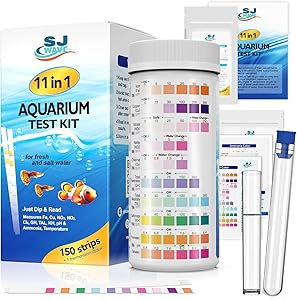
New fish keepers often focus on equipment like filters and heaters, but experienced aquarists know that water quality testing is what separates thriving tanks from problem tanks. Fish live in water that accumulates ammonia from waste, nitrite from bacterial cycling, and nitrate from biological filtration — and none of these are visible to the naked eye. Without regular testing, you’re managing your aquarium blind. A reliable aquarium test kit that measures key water parameters gives you the data you need to act before problems become fatal. This guide covers the best test kits on Amazon for freshwater, saltwater, and planted tank applications.
🛒 Best Price Today on Amazon
Prime members get fast, free shipping on everything above, plus member-only deals. New members get a 30-day free trial — cancel anytime.
As an Amazon Associate we earn from qualifying purchases at no extra cost to you.


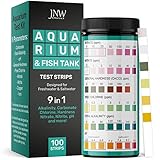
Quick Picks: Best Aquarium Water Parameter Test Kits
Why Trust Our Picks
We evaluated aquarium test kits based on parameter coverage, accuracy versus laboratory reference standards, cost per test, shelf life, ease of use, and real-world reliability confirmed through thousands of Amazon reviews from both beginner hobbyists and expert aquarists. We specifically prioritized liquid reagent kits over test strips for precision applications while also acknowledging where strips offer genuine practical advantages for casual monitoring. Each recommendation here represents the best option in its class for its intended use case.
Best Aquarium Test Kits: In-Depth Reviews
1. API Freshwater Master Test Kit – Best Overall
The API Freshwater Master Test Kit is the single most recommended aquarium product in the entire hobby, and for good reason. It tests the four parameters that matter most in any freshwater aquarium — pH, ammonia, nitrite, and nitrate — using liquid reagent chemistry that is significantly more accurate than test strip colorimetry. The kit includes enough reagent for approximately 800 individual tests across all four parameters, making it one of the best values in aquarium keeping. A single kit can last a dedicated hobbyist two or more years.
The color comparison system uses printed reference cards that you hold up to the test tube in natural light for comparison. Reading accuracy improves with practice, and most experienced users can distinguish readings to within 0.25 ppm on ammonia and nitrite. The kit also includes a step-by-step instruction booklet explaining what each parameter means and what action to take at different reading levels — invaluable for beginners going through their first nitrogen cycle.
- Pros: 800 tests, covers all core freshwater parameters, liquid reagents for superior accuracy, beginner-friendly instructions
- Cons: Takes 5–10 minutes per test, color comparison can be difficult under artificial lighting, does not test GH/KH
2. Salifert Combo Test Kits for Reef Aquariums – Runner-Up
Saltwater reef aquariums demand a completely different testing profile from freshwater tanks. While freshwater keepers primarily monitor the nitrogen cycle, reef keepers must also maintain precise levels of calcium, alkalinity (dKH), and magnesium — the three pillars of coral skeleton formation. Salifert is the benchmark brand for reef testing among experienced aquarists, with reagent chemistry that closely matches laboratory ICP results at a fraction of the cost.
Salifert’s individual test kits for calcium, alkalinity, magnesium, phosphate, and nitrate each provide extremely precise readings with clear endpoint indicators. The alkalinity test in particular is renowned for its accuracy in detecting shifts of 0.1 dKH — resolution that matters enormously in SPS (small-polyp stony) coral systems where stability is critical. Reef hobbyists worldwide trust Salifert as their go-to before committing to expensive ICP water analysis.
- Pros: Reef-specific parameter coverage, ICP-comparable accuracy, industry-standard trusted brand
- Cons: Must purchase individual kits per parameter (not a single all-in-one), higher per-test cost than API
3. Tetra EasyStrips 6-in-1 Test Strips – Best Budget
Test strips have historically been criticized for inaccuracy, but the Tetra EasyStrips represent the best available in this category and are genuinely useful in the right context. Each strip tests six parameters simultaneously — nitrate, nitrite, hardness, chlorine, alkalinity, and pH — in under 60 seconds with no mixing, no test tubes, and no measuring. Simply dip the strip, wait, and compare to the color chart on the bottle.
For established, stable aquariums that have completed their nitrogen cycle and are not experiencing issues, weekly strip testing provides a useful overview that catches major problems quickly. They’re also ideal for testing tap water, quarantine tanks, or buckets of prepared saltwater before water changes. Where strips fall short is in detecting the low-level ammonia and nitrite readings (0.25–0.5 ppm) that are critical during cycling — at these concentrations, strip colorimetry is too imprecise to be reliable.
- Pros: Instant results, 6 parameters simultaneously, no equipment needed, great for quick checks
- Cons: Less accurate than liquid reagents, poor resolution at low ammonia/nitrite levels, strips degrade after opening
Buyer’s Guide: Understanding Aquarium Water Parameters
The nitrogen cycle parameters: Ammonia (NH3/NH4+) is produced by fish waste, uneaten food, and decaying plant matter. Beneficial bacteria in your filter convert ammonia to nitrite (NO2-), and further bacteria convert nitrite to nitrate (NO3-). Ammonia and nitrite are both highly toxic even at levels of 0.25 ppm. Nitrate is far less toxic and accumulates until removed by water changes or live plants. A cycled tank should read 0 ammonia, 0 nitrite, and low nitrate (under 20 ppm for most species, under 5 ppm for sensitive invertebrates).
pH and its importance: pH measures the acidity or alkalinity of your water on a scale of 0–14. Most freshwater community fish prefer 6.5–7.5. African cichlids require 7.8–8.5. Discus and South American species prefer 6.0–7.0. The critical issue with pH is stability — a stable pH of 7.8 is less stressful to most fish than a pH that swings between 7.0 and 7.8 daily. Test pH at the same time each day to detect trends.
GH and KH (hardness): General hardness (GH) measures calcium and magnesium ion concentration. Carbonate hardness (KH) measures the bicarbonate and carbonate buffering capacity of water, which stabilizes pH. Low KH leads to pH crashes, which can be fatal. These parameters are especially important for livebearers, African cichlids, and planted tanks. The API Freshwater Master Kit does not include GH/KH — add a separate API GH&KH test kit if these matter for your fish.
Reef-specific parameters: Calcium (target 380–450 ppm), alkalinity (8–12 dKH), and magnesium (1250–1350 ppm) must all be maintained in precise balance for coral growth. Phosphate (target under 0.03 ppm) and nitrate (under 5 ppm) must be kept very low to prevent algae overgrowth and coral bleaching. Regular Salifert testing — at minimum weekly — is essential for active reef systems.
How often to test: During the nitrogen cycle (first 4–6 weeks of a new tank), test ammonia and nitrite every other day. In an established tank, test weekly for the first few months, then monthly once stable. After any significant change — new fish, medication, filter media change — increase testing frequency for 2 weeks.
FAQ: Aquarium Water Testing
My API test shows ammonia but my fish look fine — should I worry? Yes. Fish can appear normal at ammonia levels of 0.25–0.5 ppm while experiencing gill damage, immune system stress, and shortened lifespan. Any detectable ammonia in an established tank requires investigation — check for dead fish, uneaten food, or filter malfunction, and perform a water change immediately.
Can I use freshwater test kits for saltwater tanks? Partially. API Freshwater Master Kit can test the nitrogen cycle parameters in saltwater, but the color comparisons may read slightly off due to the saltwater background color. For reef parameters like calcium and alkalinity, you need saltwater-specific kits like Salifert.
My test results always look good but my fish keep dying — what am I missing? Consider parameters not covered by standard kits: dissolved oxygen (low in hot, overstocked, or poorly circulated tanks), chloramine (not removed by standard dechlorinators — requires sodium thiosulfate plus ammonia neutralizer), copper contamination (lethal to invertebrates), or temperature fluctuations. Also ensure you’re reading the test under white natural light, not yellow artificial light, which distorts color comparison.
How long do liquid test kit reagents last? Most API reagents have a shelf life of 3–5 years unopened. Once opened, they remain accurate for approximately 2 years if stored at room temperature away from light and heat. If you notice reagents producing strange colors or inconsistent results, replace them — expired reagents are worse than no testing at all because they give false confidence.
Final Verdict
For freshwater aquarists at any experience level, the API Freshwater Master Test Kit is the essential starting point — no other kit provides its combination of coverage, accuracy, test count, and value. Reef keepers should build their testing arsenal around Salifert individual test kits for calcium, alkalinity, and magnesium, supplemented by API for nitrogen cycle monitoring. If you want a fast, low-friction way to do routine checks on an established stable tank, the Tetra EasyStrips 6-in-1 are a practical complement — just don’t rely on them exclusively during cycling or for diagnosing problems. Test consistently, act on what you find, and your fish will thank you.
Frequently Asked Questions
Which parameters actually need testing?
Ammonia, nitrite, nitrate and pH cover the freshwater essentials, especially during cycling. Planted tanks add KH and GH, while reef tanks add salinity, alkalinity, calcium and magnesium. Testing everything weekly is overkill on a mature stable tank, but never skip ammonia and nitrite while a tank is new.
Liquid kits or test strips?
Liquid reagent kits are considerably more accurate and cheaper per test, which is why they are the standard for cycling and troubleshooting. Strips are convenient for a quick weekly screen but drift badly once the tube has been opened and frequently read nitrate poorly. Keep strips for spot checks only.
What readings mean my tank is cycled?
A cycled tank converts a 2 ppm ammonia dose to zero ammonia and zero nitrite within 24 hours, with nitrate clearly present. Both ammonia and nitrite must read zero, not merely low. If nitrite lingers, the second bacterial group is still establishing, so keep dosing ammonia and wait.
Do test kits expire?
Yes. Reagents degrade after roughly two to three years, and sooner if stored somewhere warm. Check the batch date, keep bottles out of sunlight, and shake nitrate bottle two vigorously for the full recommended time, since the settled reagent will otherwise give a falsely low reading.
Do saltwater tanks need different kits?
Yes. Some freshwater ammonia and nitrate chemistries misread in salt water, and reef tanks require alkalinity, calcium and magnesium tests that freshwater kits do not include. Buy a marine-specific kit, and measure salinity with a calibrated refractometer rather than a swing-arm hydrometer.
Related Reviews & Guides


Quick Picks: Best Aquarium Thermometers (Digital and…
Best Quiet Aquarium Sump: Top Expert Buying Guide for Tanks