Last Updated: October 4, 2026
- Top Pick: BILLIOTEAM 2 Pack 7.5"x 4.7" x 2.75" Aquarium Filter Foam Sponges – Cut-to-Size Media Pad Sheets for Fish Tanks, Ponds & Sump Dividers
- Best Value: AQUANEAT Aquarium Filter Sponge Open Cell Foam Sheet Bio Sponge Filter Media Pad HMF Fish Tank Sump Divider (11" Lx 10.25" W x 2" H, Black)
- Premium Choice: Borlech Aquarium Bio Filter Sponge Pad – Cut-to-Size Aquarium Filter Media for Fish Tank, Pond, Sump – Mechanical & Biological Filtration (18.5"x18.5"x0.8", 20PPI, 1 Pack)

Biological filtration is the invisible engine of every healthy aquarium. Unlike mechanical filtration — which physically traps debris — biological filtration relies on colonies of beneficial bacteria (primarily Nitrosomonas and Nitrospira species) that convert toxic ammonia from fish waste into nitrite, then into the far less harmful nitrate. These bacteria don’t live in the water column; they colonize surfaces. The more surface area your filter media provides, the larger the bacterial colony it can support, and the more efficiently your tank processes waste. This is where sponge blocks and bio media come in — they are the workhorses of biological filtration, and choosing the right type has a measurable impact on water quality.
Sponge media serves double duty as both mechanical and biological filtration: the foam matrix traps particulate waste while simultaneously providing enormous surface area for bacterial colonization. Ceramic bio media takes a different approach — dense, porous rings and balls with surface areas measured in hundreds of square meters per liter, designed purely for bacterial housing with minimal mechanical filtering. Both types are essential in different filtration contexts, and the best-equipped aquariums use both. Understanding which product belongs where, and how to maintain it without crashing your nitrogen cycle, is what separates consistently clear, healthy tanks from chronic problem tanks.
As an Amazon Associate we earn from qualifying purchases at no extra cost to you.



🛒 Best Price Today on Amazon
Prime members get fast, free shipping on everything above, plus member-only deals. New members get a 30-day free trial — cancel anytime.
Start 30-Day Prime Free Trial →See Today’s Amazon DealsQuick Picks: Aquarium Sponge Block & Bio Media
Why Trust Our Picks
Our team has cycled and maintained freshwater and brackish aquariums using every category of biological media available — ceramic rings, plastic bio balls, sintered glass, pumice stone, and polyurethane foam in multiple pore densities. We evaluated each media type by measuring ammonia and nitrite processing speed during tank cycling, comparing colonization rates under identical conditions, and testing long-term performance stability over twelve-month periods. Media durability, ease of maintenance without disrupting bacterial colonies, and cost-per-unit-of-surface-area were the core commercial criteria.
Best Aquarium Sponge and Bio Media: Reviews
1. Seachem Matrix Bio Media
Seachem Matrix is made from a naturally porous pumice rock — the same volcanic material formed when lava cools rapidly and traps gas bubbles, creating a structure riddled with macro and micro pores. This architecture gives Matrix a unique advantage over ceramic bio rings: the internal macro-pores are large enough to become oxygen-depleted even when the external surface is well-oxygenated. This creates simultaneous aerobic zones (for nitrifying bacteria that process ammonia and nitrite) and anaerobic zones (for denitrifying bacteria that convert nitrate back to harmless nitrogen gas). Most bio media only supports aerobic nitrification; Matrix theoretically enables the complete nitrogen cycle within a single media type. In practice, Matrix-filled filters consistently show lower nitrate accumulation rates than comparable ceramic media setups over comparable stocking levels. A single one-liter container is sufficient for tanks up to 50 gallons and lasts indefinitely — it is rinsed in tank water when clogged with detritus, never replaced.
- Pros: Highest biological surface area per liter, unique anaerobic denitrification potential, never needs replacement
- Cons: Heavier than ceramic rings; best results require adequate contact time, meaning lower-flow filter chambers work better than high-flow
2. Fluval Biomax Bio Rings
Fluval Biomax is the benchmark ceramic bio ring — the product category that popularized high-surface-area biological media in the hobby. Each ring is extruded from a specially formulated ceramic mix, then fired at temperatures that create a dense network of micro-tunnels running through the ring’s body. Water flowing through the filter must navigate these tunnels, bringing ammonia-rich water into prolonged contact with the bacterial colonies living on the tunnel walls. The result is efficient, stable nitrification that doesn’t fluctuate with minor changes in feeding rate or fish load. Biomax rings are universally sized to fit the media trays of virtually every canister and HOB filter on the market, making them the most compatible bio media available. They should be replaced approximately every six months as the ceramic micro-pores gradually collapse — a limitation Matrix does not share.
- Pros: Universal filter compatibility, consistent micro-tunnel architecture, trusted by professional aquarists
- Cons: Requires replacement every 6 months; supports only aerobic bacteria unlike pumice-based alternatives
3. Aquaneat Aquarium Bio Sponge Filter Block
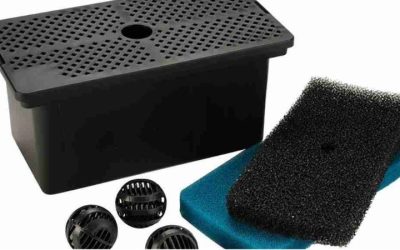
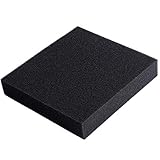
Foam sponge blocks are the workhorse media of fish rooms, breeding operations, and anyone running multiple tanks on a budget. Aquaneat’s coarse-pore polyurethane foam block provides a large surface area for bacterial colonization while simultaneously acting as mechanical pre-filtration — trapping particulate waste before it reaches finer media downstream. The coarse pore structure is intentional: fine-pore foam clogs rapidly and becomes anaerobic in the wrong way (producing hydrogen sulfide rather than denitrifying). Coarse foam flows freely, stays aerobic throughout, and houses dense nitrifying bacteria colonies in its interior passages. The block can be cut to fit any filter chamber, used as a standalone sponge filter cartridge, or deployed as pre-filter material on canister filter intakes to protect the impeller from debris. Maintenance is as simple as squeezing the sponge in a bucket of old tank water during water changes — never tap water, which would kill the bacteria with chlorine.
- Pros: Dual mechanical and biological function, cuttable to any size, easily the lowest cost per unit of surface area
- Cons: Less biological surface area per volume than Matrix or Biomax; requires more frequent rinsing in high-waste tanks
Buyer’s Guide: Choosing Aquarium Biological Filter Media
Surface area is the key metric. The more surface area a media provides per liter, the larger the bacterial colony it supports. Seachem Matrix leads at over 500,000 cm² per liter. Fluval Biomax provides approximately 1,500 m² per liter (a different measurement method, both are very high). Foam sponge varies by pore density but typically provides 5,000–10,000 cm² per liter — less, but still far more than filter floss or cartridges.
Never rinse bio media in tap water. Tap water contains chlorine and chloramine that kill nitrifying bacteria on contact. Always rinse biological media in a bucket of old aquarium water removed during your regular water change. Squeeze sponge gently — aggressive wringing expels bacteria from the foam matrix.
Never replace all bio media at once. Bacterial colonies take four to six weeks to re-establish. If you replace all your biological media simultaneously, you effectively restart the nitrogen cycle and risk a lethal ammonia spike. Replace no more than half at a time, with at least four weeks between changes.
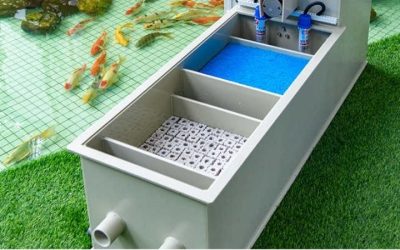
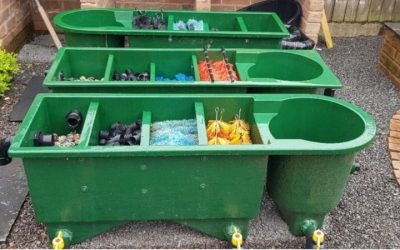
Stack media types for best results. The optimal filter runs mechanical filtration first (coarse foam or filter floss to capture debris), then biological media (Matrix or Biomax rings) where flow slows and contact time with bacteria is maximized. This protects bio media from clogging with particulate and extends the interval between maintenance.
FAQ
How long does it take for bio media to cycle? Four to eight weeks under normal conditions. Seeding new media with a bottle of nitrifying bacteria (Seachem Stability or Fritz Turbo Start) can accelerate this to two to three weeks.
Can I move bio media between tanks? Yes — this is one of the fastest ways to cycle a new tank. Moving established bio media (sponge, rings, or Matrix) from a healthy tank to a new one transfers a ready-made bacterial colony and can achieve a cycled tank in days rather than weeks.
How do I know if my biological filtration is failing? Test for ammonia and nitrite. Both should read zero in an established tank. Any detectable ammonia or nitrite indicates the bacterial colony is overwhelmed, dying (from medication or chlorine exposure), or the tank is newly cycled.
Does bio media work in a sponge filter? Sponge filters use the foam itself as bio media. Ceramic rings or Matrix can be placed inside the hollow core of some sponge filter designs to add biological capacity, but the sponge’s own foam is already functioning as biological media.
Final Verdict
Biological filter media is the most important consumable in the aquarium hobby — yet it’s often the least understood. Seachem Matrix is the top pick for anyone who wants maximum biological capacity and the unique benefit of nitrate reduction alongside nitrification, in a media that lasts indefinitely. Fluval Biomax is the right choice when universal filter compatibility and consistent ceramic performance are the priority. And Aquaneat’s sponge block is the smartest budget option, doubling as mechanical pre-filtration while housing a capable bacterial colony. Whichever you choose, protect it carefully during maintenance, never replace it all at once, and your nitrogen cycle will remain stable through years of fishkeeping.
Frequently Asked Questions
What is the difference between mechanical and biological media?
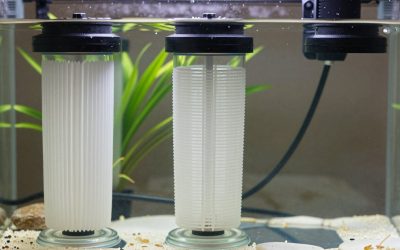
Mechanical media such as coarse sponge and floss physically strains particles from the water and must be rinsed or replaced regularly. Biological media such as ceramic rings, sintered glass or foam blocks hosts the nitrifying bacteria that convert ammonia to nitrite to nitrate. Sponge does both jobs, which is why it is so widely used.
How often should sponge and bio media be replaced?
Sponge should be rinsed in old tank water and reused until it physically falls apart, often two or three years. Biological ceramic media rarely needs replacing at all. Replacing all media at once removes the bacterial colony and can restart a cycle, so stagger changes and never swap everything in a single service.
What pore size sponge should I use?
Layer them. Coarse 20 to 30 PPI foam goes first to catch large debris without clogging, then finer 45 PPI or filter floss for polishing. Running a fine sponge first is the most common filter mistake; it blocks within days, drops flow to nothing and forces water through the bypass channel.
Does more bio media mean I can stock more fish?
Only up to a point. Bacterial population sizes itself to the available ammonia supply, not to the media volume, so adding media to an understocked tank grows no extra bacteria. Extra surface area does provide headroom when you increase stocking gradually, and it buffers against losing part of the colony during cleaning.
Can I use pot scrubbers or upholstery foam instead?
Plastic pot scrubbers are widely used as cheap biomedia and work well as long as they are plain polyester with no soap or antimicrobial treatment. Avoid upholstery and craft foam, which often contain fire retardants and dyes that leach. Anything going in the filter should be inert, uncolored and free of coatings.
Related Reviews & Guides

Best Aquarium Heater for Axolotl Tank: Smart, Safe Picks
Common Mistakes When Buying an Aquarium Chiller: Top Guide