Last Updated: October 9, 2026
- Top Pick: AQUASMITH Aquarium Chiller Fan,Fish Tank Cooler with Temperature Control,Minimum Setting 59℉,Auto Start/Stop,Refrigeration Effect 3-7℉,3-Speed Modes,for Axolotl Seawater Freshwater Coral Grass Tank
- Best Value: PAIZOO Aquarium Chiller Fan, Ultra-Quiet Fish Tank Cooler with 3 Speed Mode
- Premium Choice: DaToo 4 Fans Aquarium Chiller Fish Tank Fan Aquarium Cooling Fan, 1 Yr Warranty

TL;DR: An aquarium chiller is necessary when ambient room temp exceeds 80°F and your tank runs warmer than your livestock tolerates — typically 78–80°F threshold for most coldwater fish and 72–74°F for shrimp. Inline chillers are most efficient; drop-in coolers work for nano setups. Size to your tank volume plus 20% buffer. Expect to spend $200–$600 for a unit that handles 30–100 gallons reliably.
Best Aquarium Chiller for Summer: Buyer’s Guide to Keeping Tanks Cool
Summer is where tanks go wrong. You’ve dialed in filtration, nailed the nitrogen cycle, perfected your see co2 aquarium system beginner setup — and then July hits and your tank spends 3 months running 4–6°F above where it should. For coldwater species, shrimp, and planted tanks optimized for low CO2 demand, that chronic heat stress kills slowly and mysteriously.
As an Amazon Associate we earn from qualifying purchases at no extra cost to you.


The aquarium chiller summer question isn’t just “do I need one” — it’s understanding the mechanics of heat load, sizing correctly, and making the right tradeoffs. This guide breaks all of it down.
🛒 Best Price Today on Amazon
Prime members get fast, free shipping on everything above, plus member-only deals. New members get a 30-day free trial — cancel anytime.
Start 30-Day Prime Free Trial →See Today’s Amazon DealsTop Picks at a Glance




As an Amazon Associate we earn from qualifying purchases. Product prices and availability are accurate as of the date/time indicated.



As an Amazon Associate we earn from qualifying purchases. Product prices and availability are accurate as of the date/time indicated.


As an Amazon Associate we earn from qualifying purchases. Product prices and availability are accurate as of the date/time indicated.
Chiller Types Compared
| Type | Best For | Efficiency | Price Range | Notes |
|---|---|---|---|---|
| Inline refrigeration chiller | 30–200 gal tanks | High (dedicated compressor) | $200–$800 | Plumbed into return line; consistent performance |
| Drop-in (immersion) cooler | 5–30 gal nano | Medium | $80–$200 | Cooling coil sits in sump; easier install |
| Fan evaporative | Any, mild climates | Low (3–5°F max) | $15–$60 | Works only with open-top tanks; raises humidity |
| Peltier (thermoelectric) | Pico tanks under 10 gal | Very low (COP 0.3–0.5) | $40–$120 | High power draw for minimal cooling; not recommended |
Do You Actually Need a Chiller?
Before spending $300+, check whether cheaper interventions handle your situation:
Open-top with fans: Evaporative cooling from fans blowing across the water surface can drop temps 3–5°F. Works well in dry climates; nearly useless in humid environments where evaporation rate drops. Increases top-off frequency significantly.
Room AC: Keeping the room under 75°F usually keeps tanks under 78°F. Cheapest solution if you’re running AC anyway. Check whether your fish room specifically gets heat-loaded from lights, sump equipment, and pump heat before assuming room temp = tank temp.
LED lighting upgrade: Metal halide and T5 fluorescent fixtures dump significant heat into the water. Switching to the head-to-head breakdown can reduce tank temperature 2–4°F from light heat alone — meaningful if you’re borderline on threshold.
If none of those options keep you within species tolerance in summer, a chiller is the right call.
Sizing Your Chiller: The Math That Actually Matters
Manufacturers rate chillers by tank volume but that rating assumes specific conditions. Real heat load depends on: tank volume, target temperature delta (how far below ambient you need to go), equipment heat generation (pumps, heaters on during winter), and ambient room temperature.
Rule of thumb: size your chiller for 1.5x your actual tank volume. A 60-gallon display tank with sump might have 80 gallons total water volume — buy a unit rated for 100–120 gallons. Undersizing means the compressor runs continuously without reaching setpoint, shortening chiller life dramatically.
Critical: calculate total system volume including sump. Tank volume alone is the mistake most buyers make. For sumped setups, measure or calculate sump volume and add it. The Fluval 207 Canister Filter Review generates heat that adds to the load.
Installation: Inline Chiller Plumbing
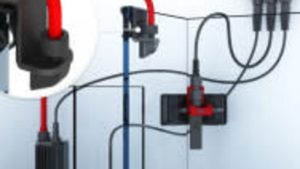
Inline chillers go on the return line after the pump, before water re-enters the display. Standard setup: sump → pump → chiller → UV sterilizer (if applicable) → display tank. Never put the chiller before the pump — it needs consistent flow to operate efficiently, and running dry destroys the titanium heat exchanger.
Flow rate matters: check the chiller’s rated flow range. Most inline units want 150–400 GPH depending on size. Too slow = poor heat exchange; too fast = water doesn’t dwell long enough to cool. Match your return pump output to the chiller’s optimal range, or use a dedicated pump for the chiller loop.
Titanium heat exchangers are standard now and handle saltwater without corrosion. Stainless steel variants from older units corrode in reef applications — verify material if buying used.
Temperature Targets by Livestock
Neocaridina shrimp (Cherry, Blue Velvet): 65–75°F optimal. Above 80°F, mortality increases sharply and breeding stops. This is the most common chiller use case in the planted tank hobby. See our shrimp tank setup guide for full parameter requirements.
Caridina shrimp (Crystal Red, Taiwan Bee): 62–72°F. Even less heat tolerance than Neocaridina; essentially requires active cooling in any warm climate.
Coldwater fish (goldfish, white cloud mountain minnows): 65–72°F for optimal health. Often kept without chillers and “manage” at 78°F but chronic warm exposure shortens lifespan and suppresses immune function.
Tropical community fish: 74–80°F range. Most tolerate summer spikes to 82°F briefly without issue. Chiller usually not required unless you’re in an exceptionally hot climate without AC.
Energy Costs: Running the Numbers
A properly sized inline chiller runs at ~50% duty cycle in summer — compressor on half the time. A 1/10 HP unit draws ~150W; at 50% duty cycle over a 4-month summer (120 days × 12 hours hot period) that’s roughly 108 kWh. At $0.15/kWh that’s ~$16 per summer. Undersized units running 90% duty cycle triple that cost while also wearing out faster.
FAQ
What temperature difference can an aquarium chiller realistically achieve?
A properly sized refrigeration chiller can maintain setpoint regardless of ambient temperature — that’s the point of a refrigeration cycle vs evaporative cooling. Practically, most inline units can pull 10–15°F below ambient continuously. Trying to maintain 68°F in a room that’s 85°F is achievable but requires a generously sized unit. Don’t rely on manufacturer max-temp delta specs alone; those are lab conditions.
Do I need a chiller if I have a sump?
Sumps add water volume which provides thermal buffering — temperature swings are slower — but doesn’t reduce the average temperature. If your room temperature drives tank temperature above livestock tolerance, sump volume doesn’t solve the problem; it just makes the problem develop more slowly. Sumps help with minor temperature fluctuations, not chronic elevated temperatures.
Can I use a wine cooler or mini-fridge as an aquarium chiller?
DIY versions using refrigerator coils exist and work, but require copper coils avoided in freshwater tanks (toxic to invertebrates and plants), or a stainless/titanium secondary loop to isolate tank water from refrigerant coils. Not recommended unless you’re comfortable with plumbing engineering. Commercial inline chillers using titanium exchangers are priced competitively enough now that DIY doesn’t make sense economically.
Should I run a heater alongside my chiller?
Yes — especially in climates with cold nights. Set the chiller 2°F above your target temperature, and the heater 2°F below. Example: target 74°F → heater set 72°F, chiller set 76°F. This creates a 4°F dead band where neither runs, reducing equipment cycling. Without a heater, temperature can drop excessively on cold nights or in air-conditioned rooms. A quality best-in-class betta fish aquarium heater paired with your chiller creates a stable temperature-controlled system year-round.
How do I reduce noise from my aquarium chiller?
Inline chillers have compressors — they make noise similar to a small refrigerator. 45–55 dB is typical; unavoidable from refrigeration physics. Mitigation: place chiller in an adjacent cabinet, sump room, or closet with adequate ventilation (chillers exhaust heat — confined spaces reduce efficiency and can cause overheating). Anti-vibration mounts help with transmitted vibration through floors. Chillers placed directly on hardwood floors amplify compressor vibration noticeably.
Frequently Asked Questions
When do I actually need a chiller?
When passive cooling cannot hold your target temperature during a heatwave, typically once room temperature stays above about 80 F or when lighting and pumps add several degrees. Reef tanks, coldwater species and shrimp breeders need one first. Most tropical community tanks cope on fans alone.
What size chiller does my tank need?
Size by total system volume including the sump, and by how many degrees of pull you require. As a rough guide, a quarter horsepower unit handles up to roughly 100 gallons with a modest pull, and a tenth horsepower suits nano and small reef systems. Undersizing means the compressor runs constantly.
What flow rate does the chiller need?
Each unit specifies a range, often 200 to 800 GPH for smaller chillers. Too little flow overcools the water and causes short cycling, while too much prevents efficient heat exchange. Feed it from a dedicated pump rather than teeing off the return, and use the largest tubing it accepts.
Can I just use fans instead?
Evaporative cooling from a clip fan blowing across the surface drops two to four degrees cheaply and is often enough. The cost is heavy evaporation, so pair it with auto top-off or salinity will climb in a marine tank. Also raise the lights, shorten the photoperiod and open the lid.
How noisy and hot is a chiller?
It contains a compressor and fan, so expect refrigerator-level noise and a stream of warm exhaust air. Allow at least six inches of clearance around the vents, never seal it inside a closed cabinet, and clean the condenser grill every few months or efficiency drops sharply.
Ready to decide? Our #1 pick for 2026 is the Inline refrigeration chiller.
Live price & availability on Amazon.
Related Reviews & Guides
Common Mistakes When Buying a Dosing Pump: Expert Guide

Aquarium Auto Top Off (ATO) System