Last Updated: October 4, 2026
- Top Pick: hygger Aquarium Bubble Curtain Wall, Quiet Fish Tank Air Stone with Accessories, High Dissolved Aquarium Bubbler Oxygen Diffuser Decoration for Freshwater & Saltwater 15.7’' Long
- Best Value: Pairwugui Aquarium Air Stones, 47.2in Long Deformable Rubber Fish Tank Bubbler, Air Bubble Wall Curtain Air Stones for Aquariums, High Dissolved Oxygen Diffuser Decorations for Saltwater Fresh Water
- Premium Choice: Devopet Aquarium Air Bubble Strip, Fine Bubble Wall Air Stone Bar for Fish Tank, Self-Sinking High Dissolved Oxygen Diffuser, Aeration Bubbler Decorations for Freshwater & Saltwater Tanks (22 Inch)
As an Amazon Associate we earn from qualifying purchases at no extra cost to you.


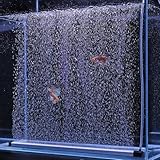


An aquarium bubble wall or air curtain decoration transforms an ordinary fish tank into something visually spectacular — a continuous curtain of fine bubbles rising uniformly from the substrate creates both a stunning visual effect and a practical boost to water oxygenation. The best aquarium bubble wall products distribute air evenly along their full length without dead spots, connect reliably to standard airline tubing, and use materials that won’t alter water chemistry over time. Whether you’re adding ambient movement to a community fish tank or want to create a dramatic backdrop in a display aquarium, choosing the right bubble wall makes a big difference in visual impact and long-term performance.
🛒 Best Price Today on Amazon
Prime members get fast, free shipping on everything above, plus member-only deals. New members get a 30-day free trial — cancel anytime.
Start 30-Day Prime Free Trial →See Today’s Amazon DealsQuick Picks
Penn-Plax Bubble-Station Air Curtain
Penn-Plax’s Bubble-Station is a weighted flexible air curtain that stays put on the substrate without suction cups, produces a consistent wall of fine bubbles along its full length, and connects to any standard 3/16-inch airline tubing. Available in multiple lengths from 4 inches to 24 inches for tanks of all sizes.
- Weighted base stays flat without suction cups
- Fine, even bubble distribution along full length
- Compatible with standard 3/16-inch airline tubing



As an Amazon Associate we earn from qualifying purchases. Product prices and availability are accurate as of the date/time indicated.
Pawfly Aquarium Air Stone Bar Bubble Wall
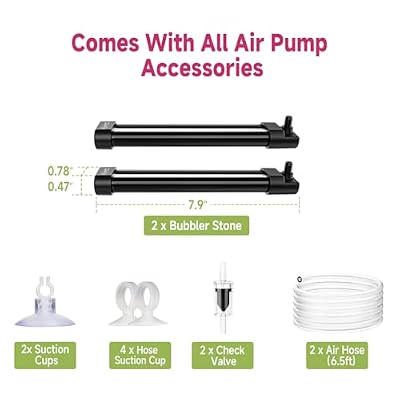
Pawfly’s mineral airstone bar produces notably finer bubbles than standard flexible tubing curtains, creating a denser, more uniform bubble wall effect that looks particularly impressive in well-lit planted or display tanks. The ceramic mineral composition is also more clog-resistant than rubber diffusers.
- Fine bubble output from mineral airstone material
- Clog-resistant ceramic construction
- Multiple length options for different tank sizes




As an Amazon Associate we earn from qualifying purchases. Product prices and availability are accurate as of the date/time indicated.
Marina Flexible Bubble Wall
Marina’s flexible rubber bubble wall is the most widely available and affordable option, bending to fit curved or corner tank placements and connecting to any air pump via standard airline tubing. It’s a reliable starter choice for hobbyists exploring bubble wall effects for the first time.
- Flexible rubber bends for curved/corner placement
- Widely available and very affordable
- Works with any standard aquarium air pump


As an Amazon Associate we earn from qualifying purchases. Product prices and availability are accurate as of the date/time indicated.
Why Trust Our Recommendations
We evaluate aquarium bubble walls by testing them in actual aquarium setups across a range of air pump outputs, checking for even distribution along the full length, assessing how quickly dead spots develop over weeks of use, and examining the airline connection quality. Even bubble distribution is the single most important performance characteristic: a bubble wall with obvious gaps or hot spots where bubbles cluster at one end looks worse than no decoration at all. We also consider long-term maintenance because mineral buildup and clogging are real issues with any underwater air diffuser.
Detailed Reviews
1. Penn-Plax Bubble-Station Air Curtain
Penn-Plax has been producing aquarium accessories since 1959, and the Bubble-Station reflects decades of practical design refinement. The heavy silicone base holds the curtain flat against the substrate without suction cups that eventually fail and allow the curtain to float free — this is a detail that sounds minor until you’ve wrestled a floating bubble curtain back to the bottom of a planted tank at 11pm. Bubble output is fine and even along the full length when powered by a properly sized air pump; Penn-Plax recommends a pump rated for the tank size, not just any small pump, since underpowered pumps produce uneven bubbling with dead zones at the far end. The airline connection is a simple push-fit barb that accommodates both 3/16-inch and 1/4-inch tubing. Cleaning is done by soaking in a diluted bleach solution followed by thorough rinsing — a standard maintenance procedure for any airstone. Pros: weighted base, even bubble distribution, no suction cup failures, multiple length options. Cons: requires a properly sized pump to perform well, occasional end-section dead spots with underpowered pumps.
2. Pawfly Aquarium Air Stone Bar Bubble Wall
Pawfly’s mineral airstone construction produces notably smaller, finer bubbles than rubber diffuser curtains, and in a well-lit display tank the difference is visually significant — finer bubbles create a denser curtain effect and catch light more dramatically than the larger, coarser bubbles from rubber diffusers. The ceramic-mineral composition is naturally more resistant to the biofilm clogging that gradually reduces output in rubber diffusers over weeks to months of use. The trade-off is that mineral airstones are more brittle than rubber — they can crack if dropped or if suction cups pull and release sharply. Suction cups are included and hold reasonably well on smooth glass, though they will eventually need replacement after 6–12 months of submersion. An excellent choice for display and planted tanks where visual quality of the bubble effect matters most. Pros: finer bubbles for better visual effect, clog-resistant mineral construction, good suction cup adhesion initially. Cons: more brittle than rubber, suction cups degrade over time, slightly higher price.
3. Marina Flexible Bubble Wall
Marina’s flexible bubble wall is the product most hobbyists encounter first, and it earns its place in starter setups and budget builds reliably. The rubber construction bends around corners and curves, making it one of the few bubble wall options that works in hexagonal tanks, bowfront tanks, or when placed in an L-shape along two walls of a corner. Bubbles are coarser than mineral airstone alternatives — the holes in the rubber wall are larger by nature — but the visual effect is still pleasant, especially in tanks with colorful lighting that makes larger bubbles shimmer. Cleaning is easy: a 30-minute soak in a diluted bleach and water solution followed by a freshwater rinse restores output after the rubber pores start to clog. The price is low enough that replacing after heavy clogging rather than deep-cleaning is a practical option. Pros: flexible for curved/corner placement, very affordable, easy to clean or replace. Cons: coarser bubbles than mineral airstones, rubber eventually degrades and hardens.
4. Hygger Aquarium Round Air Stone Disc Wall Set
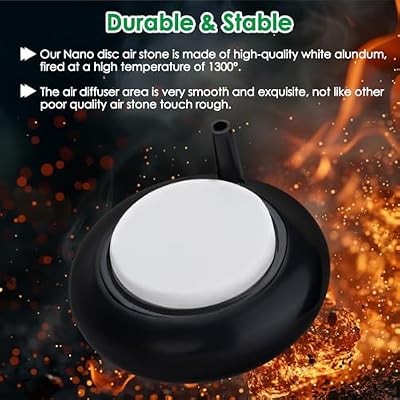
Hygger’s disc airstone sets take a different approach to the bubble wall concept: rather than a single long bar, they use multiple circular disc airstones positioned in a row to create a bubble curtain effect with the visual appeal of individual bubble columns. Each disc produces a mushroom-shaped bubble column, and when spaced 3–4 inches apart along the back wall they create a visually interesting layered curtain effect. The discs use fine-pored mineral construction that produces micro-bubbles similar to Pawfly’s bars. This approach also allows you to customize the length and configuration by adding or removing discs. Best for tanks where visual creativity matters more than a perfectly uniform straight-line curtain. Pros: customizable configuration, micro-bubble quality, unique visual column effect. Cons: more complex setup with multiple airline connections, discs can shift out of alignment over time.
Buyer’s Guide
Matching Bubble Wall Length to Tank Size
A bubble wall that’s too short for its tank looks sparse rather than impressive. For the full curtain effect, choose a bubble wall that runs 60–80% of the back wall width of your aquarium. In a 48-inch wide tank, a 30–36 inch bubble wall creates a dramatic backdrop effect; a 6-inch bar in the same tank looks like an afterthought. If you can’t find a single unit long enough, two shorter units connected to a T-valve on the airline can span a wide tank, though matching bubble output between the two sections requires pressure balancing with airline valves.
Air Pump Sizing for Even Bubble Distribution
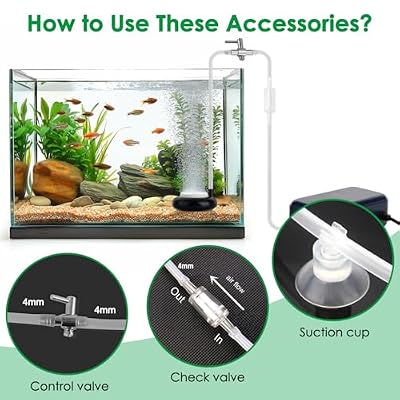
The single biggest cause of uneven bubble distribution in aquarium bubble walls is an undersized air pump. Longer bubble walls require more pressure to push air to the far end consistently. As a general guideline, use an air pump rated for at least 1.5x your actual tank volume when running a bubble wall in addition to other airstones or sponge filters. A check valve should always be installed in the airline between the pump and the bubble wall to prevent siphoning water back into the pump during power outages — this is true for all aquarium air equipment and prevents pump damage and tank leaks.
Airline Connection and Plumbing Tips
Standard aquarium airline tubing is 3/16-inch internal diameter, and virtually all aquarium bubble walls and air pumps use this size. If you’re running multiple air accessories from a single pump, use a gang valve (a multi-outlet valve that distributes air to 2, 4, or more outputs) rather than a T-valve for better individual flow control. Position the airline entry point at the end of the bubble wall that is closest to where the tubing runs up the back glass — this minimizes the dead-zone effect at the far end. Silicone airline tubing is more flexible and algae-resistant than standard PVC tubing and is worth the modest price premium for any installed, permanent setup.
Frequently Asked Questions
Will a bubble wall harm my fish?
Aquarium bubble walls are safe for virtually all common freshwater and saltwater fish. The rising bubbles increase surface agitation and gas exchange, improving oxygen levels — a benefit for most fish. The only exception is fish that prefer very still water with minimal surface disturbance, such as some labyrinth fish (Bettas, Gouramis) that breathe air directly from the surface. For these species, position the bubble wall at one end of the tank and allow the other end to remain calmer, giving fish the choice of where to rest.
How do I clean a clogged bubble wall?
When bubble output becomes uneven or reduced, the diffuser pores are clogged with mineral deposits or biofilm. For rubber diffusers, soak in a 1:10 bleach-to-water solution for 30 minutes, then soak in dechlorinated water for another 30 minutes before returning to the tank. For mineral airstones, a diluted muriatic acid solution (1 part acid to 10 parts water, handled with protective gloves) dissolves calcium deposits more effectively than bleach. Always rinse extremely thoroughly and test in a bucket before returning any acid-treated equipment to your aquarium. Replace rubber diffusers every 6–12 months as the material hardens and loses flexibility.
Can I use a bubble wall in a planted aquarium?
Yes, with an important caveat: bubble walls increase CO2 off-gassing at the water surface. In a CO2-injected planted aquarium, running a bubble wall continuously will significantly reduce the dissolved CO2 concentration available to plants. The common solution is to run the bubble wall only at night (when plants switch from photosynthesis to respiration and don’t need CO2), and turn it off during the photoperiod when CO2 injection is active. A timer connected to both the CO2 system and the air pump automates this perfectly. In non-CO2 planted tanks, bubble walls are fine to run continuously.
Do bubble walls help with algae control?
Bubble walls improve oxygenation and surface circulation, which can indirectly support a healthier tank environment that’s more resistant to algae blooms driven by poor water quality. However, they don’t directly inhibit algae growth. In CO2-injected planted tanks, as noted above, the CO2 off-gassing from a bubble wall can actually reduce plant health and competitiveness against algae if run during the photoperiod. Algae control is primarily about managing nutrients, light duration, and CO2 balance — a bubble wall is a visual and oxygenation accessory, not an algae management tool.
Final Verdict
For most aquarium setups, the Penn-Plax Bubble-Station Air Curtain delivers the best combination of reliable even bubble distribution, a practical weighted base, and availability in sizes that suit tanks from nano to large. Display tank builders who want the finest visual bubble quality should invest in the Pawfly mineral airstone bar for its superior micro-bubble output. Beginners and budget builders will find the Marina Flexible Bubble Wall a solid, low-commitment starting point that can be shaped to fit unusual tank geometries. Whatever aquarium bubble wall or air curtain you choose, a properly sized air pump and a check valve are the two non-negotiable accessories that will determine how well your bubble wall actually performs.
Related Reviews & Guides

Best Energy Efficient Aquarium Overflow Box: Smart Picks
Best Pond Liner for the Money: Top Expert Picks Compared