Last Updated: October 4, 2026
🛒 Best Price Today on Amazon
Prime members get fast, free shipping on everything above, plus member-only deals. New members get a 30-day free trial — cancel anytime.
Introduction
An aquarium auto top off (ATO) system automatically replaces water lost through evaporation, maintaining a stable water level and — critically for saltwater tanks — a consistent salinity that would otherwise drift upward as pure water evaporates and salt remains. Manual top-off is easy to forget and leads to frustrating salinity swings in reef tanks and unsightly water line marks on glass in freshwater systems. A reliable ATO removes this daily maintenance burden and improves overall tank stability significantly.
As an Amazon Associate we earn from qualifying purchases at no extra cost to you.



What to Look For
- Sensor Type: Float switches are simple and reliable but can stick in fouled water; optical sensors have no moving parts and detect water level changes more precisely — both work well, but optical sensors are increasingly preferred for high-reliability applications like reef tanks.
- Reservoir Capacity: Size your reservoir to hold at least 3–7 days of evaporation replacement to provide a meaningful maintenance buffer — larger tanks in dry climates can evaporate 1–2 gallons per day, so a larger reservoir is not a luxury but a practical necessity.
- Pump Safety Features: Look for ATOs with backup sensors and timed pump-run limits that prevent catastrophic tank flooding in the event of a stuck or failed sensor — this safety redundancy is essential in unattended systems.
Top Picks
Tunze Osmolator Nano ATO
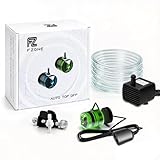
The Tunze Osmolator Nano is a compact, precision ATO system designed for tanks up to 65 gallons, using an optical sensor to detect water level with zero moving parts in the tank. Its safety timer prevents pump overrun even if the sensor fails, and the magnet-mounted sensor probe adjusts easily to the desired water level without tools. Tunze's reputation for build quality and reliability makes this one of the most trusted ATO systems in the reef keeping community.
Autaqua Smart ATO Micro Auto Top Off System
The AutoAqua Smart ATO Micro is a highly regarded optical ATO with dual-sensor safety design that prevents flooding even if the primary sensor malfunctions. Its compact pump and controller fit in tight spaces including small sumps and behind nano reef tanks, and the setup process is straightforward enough for first-time ATO users. Reviewers consistently note its reliability and ease of installation as standout features compared to competing budget ATO options.
BRS Kalkwasser Stirrer Bundle
For reef aquarists who want to combine ATO top-off with calcium and alkalinity supplementation, a kalkwasser stirrer paired with the ATO pump delivers saturated calcium hydroxide solution with each top-off dose — simultaneously replenishing evaporated water and buffering calcium and alkalinity levels that coral consumes rapidly. BRS (Bulk Reef Supply) produces reliable kalkwasser stirrers at accessible price points with the option to scale up as the reef system matures.
How Auto Top-Off Systems Maintain Stable Water Levels
An auto top-off, or ATO, system automatically replaces water lost to evaporation, keeping your aquarium’s water level constant without daily manual topping off. As water evaporates, only pure water leaves the tank while dissolved salts and minerals remain, so in a saltwater tank evaporation steadily raises salinity, and in any tank it drops the water line and can expose equipment. An ATO solves both problems by sensing the water level and pumping in fresh top-off water from a reservoir to hold it steady.
Stable water levels are especially important in reef and marine tanks, where consistent salinity is critical to coral and invertebrate health, and in systems with sumps, where a falling water line affects skimmer performance and pump operation. ATO systems use various sensing methods, including float switches, optical sensors, and conductivity sensors, often with a backup sensor for safety. By keeping the water line constant, an ATO also reduces the visible waterline residue and the stress that fluctuating levels can place on livestock. This is particularly valuable for keepers who travel or have busy schedules, since the system maintains stable conditions even when manual topping off is not possible for a day or two.
Setting Up and Running an ATO Safely
The most important consideration with any ATO is fail-safe protection, because a malfunctioning system can either overflow the tank or run a pump dry. Quality ATOs include redundancy, such as a secondary float switch or a timeout that stops the pump if it runs too long, which guards against a stuck sensor continuously adding water. Mount sensors securely so they cannot be bumped out of position by fish or maintenance, and place the unit where you can monitor it easily.
Fill the ATO reservoir with fresh, dechlorinated water, never salt water, since only pure water is lost to evaporation; adding salt water would raise salinity over time. Size the reservoir to your tank’s evaporation rate so you are not refilling constantly, and check the system periodically to confirm the sensors and pump are clean and functioning. Some advanced setups dose kalkwasser through the ATO to help maintain calcium and alkalinity in reef tanks. A properly configured ATO removes one of the most tedious daily chores while improving the stability that sensitive livestock depend on. Taking a few minutes during routine maintenance to wipe the sensors and confirm the pump runs cleanly keeps the system dependable for the long haul.
Frequently Asked Questions
What does an auto top-off system do?
An ATO automatically replaces water lost to evaporation, keeping the water level and, in saltwater tanks, the salinity stable. It removes the need to manually top off the tank every day.
Do I put fresh water or salt water in an ATO reservoir?
Always use fresh, dechlorinated water, never salt water. Evaporation removes only pure water and leaves salts behind, so topping off with fresh water keeps salinity correct.
Are auto top-off systems safe?
Quality ATOs include fail-safes like a backup sensor or pump timeout to prevent overfilling if a sensor sticks. Mounting sensors securely and checking the system regularly keeps it reliable.
Do I need an ATO for a freshwater tank?
An ATO is most critical for saltwater and sump systems, but it also benefits freshwater tanks by maintaining a steady water line. It is especially handy for nano tanks that evaporate quickly.
How big should my ATO reservoir be?
Size the reservoir to match your tank’s evaporation rate so you are not refilling it constantly. A larger reservoir means fewer refills, while making sure it fits your available cabinet space.
Final Thoughts
An auto top off system is one of the highest-impact quality-of-life upgrades available to aquarium keepers, particularly reef tank owners who need to maintain precise salinity levels daily. The modest investment in a reliable ATO pays dividends in improved tank stability, reduced maintenance burden, and greater peace of mind when leaving the tank unattended for extended periods.
Related Reviews & Guides


Best Aquarium Lid for Jumping Fish: Top Compared Mesh Picks

Canister Filter vs HOB Filter: Media, Noise and Real Cost