Last Updated: October 4, 2026

Evaporation is relentless in a saltwater aquarium — particularly in reef tanks where protein skimmers, refugium lighting, and powerheads all accelerate water loss. Even a modest 100-gallon system can lose a gallon or more of freshwater per day, sending salinity climbing dangerously if left unattended. An auto top-off (ATO) unit automates the freshwater replacement process, maintaining stable salinity without daily manual intervention. For any serious reef keeper, an ATO isn’t a luxury — it’s essential equipment.
🛒 Best Price Today on Amazon
Prime members get fast, free shipping on everything above, plus member-only deals. New members get a 30-day free trial — cancel anytime.
As an Amazon Associate we earn from qualifying purchases.




Quick Picks
Apex ATK Auto Top Off Kit
- Integrates with Neptune Apex controller
- Dual-sensor safety system
- Programmable fill limits prevent flooding


As an Amazon Associate we earn from qualifying purchases. Product prices and availability are accurate as of the date/time indicated.
Tunze Osmolator 3155 ATO
- Optical sensor plus float backup
- Compact European engineering
- Ultra-quiet pump operation




As an Amazon Associate we earn from qualifying purchases. Product prices and availability are accurate as of the date/time indicated.
AutoAqua Smart ATO Micro
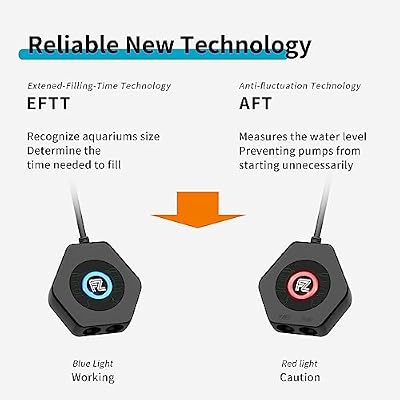
- Optical sensor technology at low price
- Compact design fits tight sumps
- No subscription or controller required


As an Amazon Associate we earn from qualifying purchases. Product prices and availability are accurate as of the date/time indicated.
Why Trust Our Picks
ATO failures are among the most catastrophic events in reef keeping — a stuck float switch can flood a living room with RO water in hours, while a failed sensor that stops topping off can crash salinity within a day. Our reviewers have run ATOs for years across multiple tank setups, testing each unit through sensor malfunctions, power outages, and real-world failure scenarios. Reliability and safety redundancy are weighted more heavily than price in our evaluation — because a cheap ATO that floods your home is the most expensive purchase you’ll make.
Individual Reviews
Neptune Apex ATK Auto Top Off Kit — Best Overall
For reef keepers already running a Neptune Apex controller — which is most serious hobbyists at the 100-gallon-plus level — the ATK (Auto Top-off Kit) is the logical choice. It integrates directly with the Apex ecosystem, allowing programmable fill limits (maximum top-off duration per day), alarm notifications, and historical logging that lets you track evaporation trends over weeks and months. The dual-sensor configuration is the safety feature that sets it apart: an optical sensor for precision control plus a float sensor as a physical backup. If one fails, the other catches it. This is the kind of fail-safe design that prevents the horror stories that circulate in reef forums.
- Pros: Full Apex integration, dual-sensor safety, programmable fill limits, remote monitoring via app
- Cons: Requires Neptune Apex controller to unlock full functionality; expensive premium for non-Apex users
Tunze Osmolator 3155 — Runner-Up
Tunze has been engineering aquarium equipment in Germany since the 1960s, and the Osmolator is one of their most refined products — a dual-sensor ATO that uses an optical sensor for primary level detection and a physical float for emergency backup, all in a compact package that installs cleanly in tight sump configurations. The pump is whisper-quiet (a meaningful consideration in living room reef setups) and the electronic controls are straightforward to configure without a separate controller. For reefers who aren’t in the Apex ecosystem but want professional-grade reliability, the Tunze is the gold standard.
- Pros: Stand-alone (no controller required), dual-sensor reliability, ultra-quiet pump, compact European design
- Cons: More expensive than budget ATOs; Tunze’s proprietary sensor format makes third-party integration less flexible
AutoAqua Smart ATO Micro — Best Budget
AutoAqua’s Smart ATO Micro punches significantly above its price point — an optical sensor system (more reliable than simple float switches) in a compact form factor that fits in sumps where larger units struggle. The safety features include a pump-dry protection mode and a maximum runtime limiter that shuts off the pump if it runs longer than programmed — a critical guard against catastrophic flooding from a stuck sensor or siphon failure. For a first-time ATO purchase on a budget, this is the unit that gives you optical sensor technology without the premium price of Tunze or Apex hardware.
- Pros: Optical sensor, dry-run protection, runtime limiter, compact design, affordable
- Cons: Single sensor (no backup float); no controller integration for advanced programming
Innovative Marine DropOff Magnetic ATO — Best for Nano Tanks
Nano reef tanks present a specific ATO challenge: the tiny water volume means even small evaporation events shift salinity dramatically, but most ATO units are designed for larger sump configurations. Innovative Marine’s DropOff addresses this with a magnetically mounted optical sensor that attaches directly to the tank glass — no sump required. It’s the ideal solution for Innovative Marine’s own AIO (all-in-one) tank lineup, though it works with any tank where the sensor can mount to the interior glass panel.
- Pros: Sump-free design works on nano and AIO tanks, magnetic mounting is secure and easy to reposition
- Cons: Limited reservoir size for larger evaporation rates; the compact pump can’t move large volumes quickly
Buyer’s Guide: ATO Safety — What Every Reef Keeper Needs to Know
The most important feature in any ATO isn’t convenience — it’s failure safety. Every ATO unit will eventually experience a sensor malfunction, a stuck float, or a siphon that doesn’t stop when the pump turns off. How the unit handles these failures determines whether you come home to a stable reef or a flooded living room.
Look for these safety features as non-negotiables: a maximum runtime limiter (shuts off the pump after a set number of minutes or seconds per fill cycle), dry-run pump protection (prevents the pump from burning out if the reservoir runs empty), and — ideally — a dual-sensor system where an optical sensor and a float sensor operate independently as backups for each other.
Place your ATO reservoir lower than your sump return pump section to eliminate siphon risk — a siphon that forms between the reservoir and the sump can drain your entire freshwater supply into the tank even when the pump is off. This single placement decision prevents one of the most common ATO-related disasters.
FAQ
Do I need an ATO if I already have a sump?
Yes — a sump alone doesn’t replace the need for an ATO. The sump provides a buffer against short-term evaporation by maintaining a larger water reserve, but salinity still rises as freshwater evaporates. An ATO automates the correction; without it, you’re manually adding RO water daily.
What type of water should I use in my ATO reservoir?
Always use RODI (reverse osmosis/deionized) water — not tap water and not RO-only water. TDS (total dissolved solids) in untreated tap water accumulates in the tank over time, causing algae blooms and parameter imbalance. A home RODI unit is a necessary companion to any ATO system.
How large should my ATO reservoir be?
Size your reservoir to hold at least 7–10 days of evaporation without requiring a refill. For a 100-gallon reef losing 1 gallon per day, a 10–15 gallon reservoir is the practical minimum. Larger reservoirs (20+ gallons) give you flexibility during travel or busy periods.
Can a float switch ATO fail dangerously?
Yes — float switches can stick in the “on” position, causing continuous top-off that rapidly dilutes your tank’s salinity and can overflow the sump. Optical sensor ATOs are less prone to mechanical failure; float switches are best used as backup redundancy alongside an optical primary sensor.
Where should I place the ATO sensor in my sump?
Place the sensor in your return pump section — the final chamber before water is pumped back to the display. This area has the most stable water level and is least affected by turbulence from the protein skimmer or incoming drain water, which can cause false triggering in other sump sections.
Final Verdict
The Neptune Apex ATK is the top choice for Apex users — the integration, dual-sensor safety, and programmable fill limits make it the most intelligent ATO solution in the hobby. For stand-alone use without a controller requirement, the Tunze Osmolator 3155 is the most dependable and quiet option we’ve tested. Budget-conscious reef keepers will find the AutoAqua Smart ATO Micro delivers optical sensor reliability at an accessible price — just pair it with a check valve to eliminate siphon risk, and it will serve reliably for years.
Frequently Asked Questions
What does an auto top off actually do?
It replaces water lost to evaporation, and only evaporation. Water evaporates as pure H2O and leaves dissolved salts and minerals behind, so without topping off, salinity in a reef tank climbs steadily and hardness rises in freshwater. An ATO senses the drop and pumps in fresh RO or dechlorinated water to hold the level constant.
Should I fill the ATO reservoir with fresh water or saltwater?
Always fresh RO or RODI water with no salt added. Adding saltwater to replace evaporation compounds the salinity climb rather than correcting it. This is the single most common ATO mistake for new reef keepers, and it can push salinity over 1.030 within a couple of weeks on a small tank with high evaporation.
How do I stop an ATO from overfilling the tank?
Use redundancy. A good setup pairs a primary optical or float sensor with a second high-level cutoff sensor, plus a pump timeout that shuts off after a set run time. Mount sensors where surface turbulence will not slosh across them, and size the reservoir so that even a total failure cannot dump more water than the tank can absorb safely.
Do float switches or optical sensors last longer?
Mechanical float switches are cheap but can stick from salt creep, biofilm or a snail. Optical sensors have no moving parts and are generally more reliable, though they need occasional wiping because a film on the prism reads as water present and stops the pump. Clean whichever type you use every month during maintenance.
Does a freshwater tank need an ATO?
It helps, especially on open-top or nano tanks where evaporation swings water level and concentrates hardness between water changes. It also keeps hang-on filter intakes and heaters submerged. Freshwater ATO reservoirs should hold dechlorinated water; if you use tap, treat the whole reservoir when you fill it rather than dosing the tank.
Related Reviews & Guides

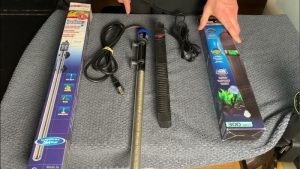
Eheim Jager vs Fluval M Heater Comparison: Best 100W Compared

Best Pond Aerator for a Small Backyard Pond: Top Smart Picks