Last Updated: October 9, 2026
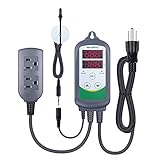
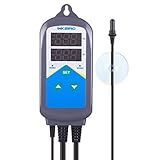
- Top Pick: Inkbird ITC308S Temperature Controller for Aquarium with Submersible Probe, Heating Cooling Outlets Thermostat for Heater and Cooling Fans
- Best Value: Inkbird ITC-308S Aquarium Heating and Cooling Dual Stage Temperature Controller Freshwater Saltwater Aquarium Tropical Fish Ornamental Shrimp
- Premium Choice: Inkbird Digital Outlet Heat Temperature Controller with Day Night Control for Brewing Aquarium Breeding Reptiles Hatching Heat Mat
An aquarium heater alone can fail, and when it does the consequences for your fish are serious. A dedicated temperature controller acts as an independent safety net: it monitors the water with its own probe and cuts power to your heater the moment the tank reaches the set point, protecting livestock from a stuck-on heater or runaway temperatures. Below are our top picks, followed by a buying guide and FAQ.
As an Amazon Associate we earn from qualifying purchases at no extra cost to you.




🛒 Best Price Today on Amazon
Prime members get fast, free shipping on everything above, plus member-only deals. New members get a 30-day free trial — cancel anytime.
Top Picks Reviewed
1. Finnex HC-810M
The Finnex HC-810M is built specifically for aquariums and uses a dual-relay design that practically eliminates the classic failure mode where a heater sticks in the ON position and overheats the tank. It pairs with titanium or standard 3-prong heaters up to 800 watts, shows a clear digital temperature readout, and includes high/low alarms plus memory retention after a power loss. For livestock safety this is the controller we reach for first. Check it on Amazon.
2. Inkbird ITC-308S
The Inkbird ITC-308S is a hobby favorite for good reason: it is a true dual-stage controller, so you can plug a heater into one outlet and a cooling fan or chiller into the other and have the unit manage both around your set temperature. The submersible probe reads water temperature directly, dual display windows show measured and set values, and it offers high/low alarms with Celsius or Fahrenheit modes. Check it on Amazon.
3. BN-LINK 2-Stage (1875W)
The BN-LINK 2-stage controller stands out for its high 15A/1875W capacity, making it a strong choice for larger tanks or setups running powerful heaters. It handles both heating and cooling outlets, switches between Celsius and Fahrenheit, and is pre-wired and ready to plug in, which keeps setup beginner-friendly. Check it on Amazon.
4. WILLHI WH2408
The WILLHI WH2408 keeps things simple with two knobs for on and off temperatures instead of a menu system, which many beginners appreciate. It is rated up to 1200W, offers fine control resolution, and covers a wide temperature range, making it a dependable no-frills option for a single heater. Check it on Amazon.
5. AIICIOO 2-Stage
The AIICIOO 2-stage controller is a budget-friendly alternative that still delivers separate heating and cooling outlets and a clear digital display. It is a practical pick if you want dual-stage control without paying for extras like WiFi, and it works well for everyday freshwater and tropical setups. Check it on Amazon.
Why Use a Separate Temperature Controller?
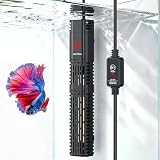
Built-in heater thermostats are convenient but they share a single point of failure: if the internal thermostat sticks, nothing stops the heating element. A standalone controller adds redundancy by reading the water independently and physically switching the heater’s outlet off. For sensitive species, expensive livestock, or large tanks, that redundancy is cheap insurance. If you are still choosing a heater, see our guide to the best aquarium heaters and pair it with a controller from this list.
What to Look For in a Temperature Controller
- Dual-relay or dual-stage design: Dual-relay safety (like the Finnex) guards against a stuck heater; dual-stage (like the Inkbird) lets you run both a heater and a cooling fan or chiller from one unit.
- Wattage capacity: Match the controller’s rated wattage to your heater. Larger tanks running 300W+ heaters benefit from higher-capacity units such as the BN-LINK.
- Probe quality and placement: A submersible, well-shielded probe placed away from the heater gives the most accurate reading.
- Alarms and display: High/low temperature alarms warn you before a problem becomes fatal, and a clear digital readout makes calibration easy.
- Calibration: The ability to offset the reading lets you match the controller to a trusted thermometer.
Setting Up Your Controller Safely
Place the probe on the opposite side of the tank from the heater so it reads average water temperature, not the heater’s immediate output. Set your goal a degree below the heater’s own thermostat so the controller, not the heater, governs shut-off. Always keep a separate glass or digital thermometer in the tank to verify readings. New tank? Make sure it is fully cycled first — see our nitrogen cycle guide. If you also fight summer heat, a controller’s cooling outlet can drive a fan or aquarium chiller.
Frequently Asked Questions
Do I really need a temperature controller if my heater has a thermostat?
It is not strictly required, but it adds a vital layer of safety. Heater thermostats are the most common point of failure in a heating system, and a separate controller prevents a stuck heater from overheating the tank.
What is the difference between dual-relay and dual-stage?
Dual-relay means two internal relays must agree to keep the heater on, reducing the chance of a stuck-on failure. Dual-stage means the controller has two outlets — one for heating and one for cooling — so it can manage temperature in both directions.
Where should I place the temperature probe?
Position the probe in good flow on the opposite side of the tank from the heater, fully submerged but not buried in substrate, so it reads representative water temperature rather than the heater’s hot output.
What temperature should I set for a tropical tank?
Most tropical community fish do well between 75 and 80°F. Set the controller to your species’ goal and place the heater’s own dial a degree or two higher so the controller does the final switching.
Can one controller run both a heater and a chiller?
Yes, if it is a dual-stage model. The heating outlet powers your heater and the cooling outlet powers a fan or chiller, letting the unit hold a stable range year-round.
Will a temperature controller work with any aquarium heater?
In almost all cases, yes. The controller simply switches the heater’s outlet on and off, so any standard plug-in heater works as long as the heater’s wattage stays within the controller’s rated capacity. Set the heater’s own dial slightly higher than your goal so the controller does the final switching.
Are WiFi temperature controllers worth it?
WiFi models let you monitor temperature and receive alerts on your phone, which is genuinely useful for valuable livestock or when you travel. If you are home most days and check the tank regularly, a standard digital controller does the core safety job just as well for less money.
Related Reviews & Guides

Best Pond Liner for a Waterfall: Top Expert Buying Guide
Best Aquarium Overflow Box for a 125 Gallon Tank: Top Picks