Last Updated: October 4, 2026
Algae on aquarium glass is one of the most universal frustrations in the hobby. Whether it’s the stubborn green spot algae that seems to reappear days after cleaning, or the streaky film that obscures your view of the fish, having the right algae scraper makes the job fast, effective, and safe for both your tank inhabitants and your aquarium glass. This guide reviews the best aquarium algae scrapers and glass cleaners available on Amazon, covering options for glass tanks, acrylic tanks, and hard-to-reach corners.
🛒 Best Price Today on Amazon
Prime members get fast, free shipping on everything above, plus member-only deals. New members get a 30-day free trial — cancel anytime.
As an Amazon Associate we earn from qualifying purchases at no extra cost to you.


Quick Picks: Best Aquarium Algae Scrapers and Glass Cleaners
Why Trust Our Algae Scraper Recommendations
We evaluated algae scrapers and glass cleaners based on cleaning effectiveness across algae types (soft film, green spot, coralline), ease of use for tanks of varying depths, material safety for glass and acrylic surfaces, and long-term value including replacement part availability. We specifically tested products against the two most common scraping challenges: green spot algae on side panels requiring blade work, and soft biofilm that accumulates on front glass that can be removed with a pad.
Magnetic cleaners were evaluated for magnetic strength across common glass thicknesses (3/8″, 1/2″, and 3/4″), float recovery when dropped (critical for not contaminating the substrate), and the quality of the inner pad interface with glass. Handle scrapers were assessed for reach, blade sharpness, and ease of blade replacement. All recommended products are safe for freshwater and saltwater aquariums.
In-Depth Reviews
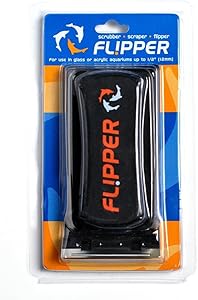
1. Flipper Standard 2-in-1 Magnetic Algae Cleaner — Best Overall
The Flipper has become the gold standard in magnetic aquarium cleaners because of one brilliantly simple innovation: a dual-sided design that lets you switch between a scrubbing pad and a razor blade scraper without ever taking the cleaner out of the water. A quick flip of the outside magnet switches modes instantly, meaning you can alternate between softening biofilm with the pad and then cutting through hardened green spot algae with the blade in the same cleaning session.
The magnetic grip on the Standard model handles glass up to 1/2 inch thick, covering the vast majority of aquariums up to about 90 gallons. The Flipper Max handles up to 3/4 inch for larger systems. Both versions use float-recovery design — if the outer magnet separates, the inner piece floats rather than sinking to the substrate. Replacement blades are affordable and widely available. For anyone with a glass aquarium who does regular maintenance, this is the most efficient tool available.
- Pros: 2-in-1 blade and pad, float recovery, strong magnet, works for glass only
- Cons: Not suitable for acrylic tanks (blade will scratch); Standard version limited to 1/2″ glass
2. Mag-Float Glass Aquarium Cleaner — Runner-Up
Mag-Float has been a trusted name in aquarium glass cleaning for decades, and their magnetic cleaner remains one of the most reliable options for hobbyists who want a simple, no-frills solution. The standout feature is the guaranteed float recovery — Mag-Float pioneered the floating inner design, ensuring that if the magnet separates (which happens when passing over thick seams or corners), the inside piece rises to the surface immediately rather than crashing into your substrate or scaring your fish.
The scrubbing pad is gentle enough to avoid micro-scratching even on softer glass, and the product comes in multiple sizes (Small for tanks up to 30 gallons, Medium up to 75 gallons, Large up to 200 gallons) so you can match the magnet strength precisely to your glass thickness. While it lacks the blade function of the Flipper, for soft and medium algae growth it’s a highly effective daily driver and particularly good for beginners learning tank maintenance habits.
- Pros: Legendary float reliability, size range for all tanks, gentle on glass, beginner-friendly
- Cons: No blade function for hard spot algae; pad-only cleaning requires more passes on stubborn growth
3. API ALGAE SCRAPER for Glass Aquariums — Best Budget
For aquarists who prefer a handle scraper over a magnetic cleaner — or need to reach the bottom of a deep tank where magnets lose effectiveness — the API Algae Scraper is an excellent, affordable solution. The long handle (extendable versions available) lets you reach the bottom panel and lower glass sections of tanks 24 inches deep and taller without getting your arm wet. The stainless steel blade attachment cuts through green spot algae and coralline growth with minimal effort.
The scraper includes both a blade pad and a soft scrubbing pad, covering both tough and light algae scenarios. Replacement pads are sold separately at very low cost, making the long-term ownership cost minimal. This tool is particularly useful as a secondary cleaner alongside a magnetic cleaner for comprehensive coverage of corners, edges, and substrate-level glass that magnetic cleaners can’t safely reach.
- Pros: Long reach, stainless blade for tough algae, replaceable pads, low price
- Cons: Requires arm-in-tank (messy); blade not safe for acrylic; less convenient for quick touch-ups
Buyer’s Guide: Choosing the Right Aquarium Algae Scraper
Glass vs. acrylic tanks: This is the most important consideration. Steel blades and hard plastic scrapers will permanently scratch acrylic. For acrylic tanks, use only soft microfiber pads or acrylic-specific scrapers. Mag-Float offers acrylic-safe versions. The Flipper blade is glass-only — never use the blade side on acrylic.
Magnetic vs. handle scrapers: Magnetic cleaners are more convenient for regular maintenance — no arm dipping required, and they can be used daily with minimal disruption to the tank. Handle scrapers are better for deep tanks, corners, and tackling heavy algae buildups. Many experienced hobbyists keep both on hand.
Matching magnet strength to glass thickness: Using a magnet rated for thinner glass on thick glass will result in weak grip and poor cleaning contact. Always check the manufacturer’s glass thickness specification and err toward the stronger model if your tank is near the limit of a size range.
Algae type dictates tool choice: Soft biofilm and green dust algae come off easily with a scrubbing pad. Green spot algae (hard, circular deposits) requires a blade or firm scraper. Coralline algae in marine tanks needs a razor blade and sometimes multiple passes. Identify your algae before selecting the appropriate tool.
Prevention reduces scraping frequency: Reducing light duration (8 hours per day maximum for most community tanks), controlling nitrate and phosphate levels, and adding algae-eating inhabitants (nerite snails, otocinclus, plecos) dramatically reduces how often you need to scrape. Regular maintenance is still necessary, but less intensive.
Frequently Asked Questions
How often should I clean my aquarium glass? For most community tanks, a light wipe-down every 1–2 weeks during water changes keeps algae from building up. Heavy-light tanks or tanks with high nutrient loads may need weekly glass cleaning.
Is algae on the glass harmful to fish? Algae itself is not harmful and actually indicates a healthy, established nitrogen cycle. The concern is visual obstruction and potential water quality issues from excessive nutrient-driven algae blooms. Light glass algae growth is normal and benign.
Can magnetic cleaners damage my silicone seams? Running a magnetic cleaner directly over silicone seams repeatedly can gradually wear the silicone, particularly with blade-equipped cleaners. Lift the cleaner away from the glass before passing over seams and corners.
What’s the best way to remove coralline algae in a reef tank? Coralline requires a razor blade scraper and firm pressure. Some hobbyists let coralline colonize the back and side glass for a natural look while keeping only the front glass clear. A fresh razor blade is most effective.
Final Verdict
The Flipper Standard 2-in-1 Magnetic Algae Cleaner is the most capable and convenient algae scraper available for glass tanks — the ability to switch between blade and pad without removing your hand from the tank makes it a genuine time-saver during weekly maintenance. For those who prefer simplicity and proven reliability, the Mag-Float is a classic that has earned its reputation over decades. And for deep tanks or budget-conscious setups where a handle scraper makes more sense, the API Algae Scraper delivers solid blade performance at a low price. Match your choice to your tank type and algae challenge, and glass maintenance becomes one of the faster and more satisfying parts of the hobby.
Related Reviews & Guides


Best Aquarium Water Change Bucket and Hose: Top Top Picks
Best 30 Inch Aquarium Hood: Top Compared LED Options Guide