Last Updated: October 9, 2026
- Recommended Aquarium Sponge Filters
- Why Sponge Filters Excel at Biological Filtration
- Sponge Density: Fine vs. Coarse Pore Structure
- Sizing a Sponge Filter for Your Tank
- Dual Sponge Filter Configurations
- Cleaning Without Crashing Your Nitrogen Cycle
- Air Pump Sizing and Bubble Rate
- Frequently Asked Questions
- Long-Term Sponge Filter Management
- Related Articles
- Related Guides
- Top Pick: ALEGI Aquarium Sponge Filter Pad, Bio Filter Media Foam Sponges
- Best Value: AQUANEAT 3 Pack Aquarium Bio Sponge Filter Breeding Fry Betta Shrimp Nano Fish Tank (Small up to 10Gal)
- Premium Choice: AQUANEAT Aquarium Bio Sponge Filter Breeding Fry Betta Shrimp Nano Fish Tank (Large up to 60Gal)
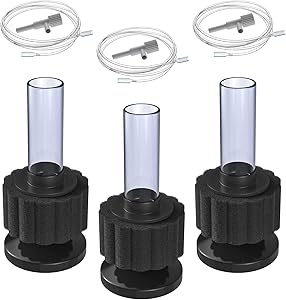
TL;DR: A sponge filter is the safest, most versatile biological filter for fry tanks, shrimp colonies, and hospital setups. This guide covers sponge density, sizing, dual-sponge configurations, and maintenance schedules that protect your nitrogen cycle.
Aquarium Sponge Filter: The Gentle, High-Performance Bio-Filter Every Tank Needs
The aquarium sponge filter may look primitive next to sleek canister systems, but for biological filtration efficiency, colony stability, and safety with vulnerable livestock, it consistently outperforms far more expensive equipment. Fry, shrimp, and recovering fish all benefit from the gentle, intake-safe flow that only a sponge filter provides.
As an Amazon Associate we earn from qualifying purchases at no extra cost to you.



This guide covers how to choose the right sponge density and size, how to run dual-sponge configurations, and how to clean sponge filters without crashing your beneficial bacteria colony.
🛒 Best Price Today on Amazon
Prime members get fast, free shipping on everything above, plus member-only deals. New members get a 30-day free trial — cancel anytime.
Start 30-Day Prime Free Trial →See Today’s Amazon DealsRecommended Aquarium Sponge Filters


As an Amazon Associate we earn from qualifying purchases. Product prices and availability are accurate as of the date/time indicated.



As an Amazon Associate we earn from qualifying purchases. Product prices and availability are accurate as of the date/time indicated.




As an Amazon Associate we earn from qualifying purchases. Product prices and availability are accurate as of the date/time indicated.
Why Sponge Filters Excel at Biological Filtration
Biological filtration depends on surface area colonized by nitrifying bacteria — specifically Nitrosomonas (converts ammonia to nitrite) and Nitrospira (converts nitrite to nitrate). A quality aquarium sponge provides an enormous surface area in a compact form, combined with consistent water flow that keeps bacteria oxygenated and fed with fresh ammonia-containing water.
Unlike ceramic rings or bio-balls, sponge material also provides mechanical filtration simultaneously — trapping particulates in the outer layers while the inner pore structure hosts the bacterial colony. This dual function in a single inexpensive media is what makes sponge filters punching above their price class.
Sponge Density: Fine vs. Coarse Pore Structure
| Pore Type | PPI (pores per inch) | Best For | Drawback |
|---|---|---|---|
| Coarse (soft) | 10–20 PPI | High-bioload tanks, large fish | Less mechanical filtration |
| Medium | 20–30 PPI | Community tanks, general use | Balanced — few drawbacks |
| Fine | 30–45 PPI | Shrimp, fry, nano tanks | Clogs faster in high-waste tanks |
| Ultra-fine | 45+ PPI | Breeding tanks, crystal shrimp | Requires frequent rinsing |
For most community aquariums, a medium-density sponge (20–30 PPI) strikes the best balance. Fine-pore sponges are essential for shrimp colonies — coarse sponges allow baby shrimp to enter the filter where they become trapped and die. If you’re running a breeding or shrimp setup, always verify the sponge PPI before purchasing.
Sizing a Sponge Filter for Your Tank
Most sponge filter manufacturers rate their products by tank volume, but these ratings assume average stocking levels. For a heavily stocked tank or one with messy species (goldfish, cichlids), size up by 50%. Key sizing principle: the limiting factor is sponge surface area (bacterial colony capacity), not flow rate. A sponge filter moving less water through more sponge is generally better than one moving more water through less sponge.
| Tank Size | Minimum Sponge Rating | Recommended for Heavy Stock |
|---|---|---|
| Up to 10 gallons | 10-gallon rated | 20-gallon rated |
| 20–30 gallons | 30-gallon rated | 40–55-gallon rated |
| 40–55 gallons | 55-gallon rated | Dual sponge setup |
| 75+ gallons | Dual sponge setup | Dual XL sponge setup |
Dual Sponge Filter Configurations
Running two sponge filters in a single tank is one of the most practical strategies in the hobby. Benefits go beyond doubled capacity:
- Maintenance safety net — clean only one sponge at a time; the other retains the full bacterial colony, preventing cycle disruption
- Instant hospital tank seeding — move one established sponge to a quarantine tank and it instantly cycles that tank, critical for treating sick fish quickly
- Redundancy — if an air pump fails overnight, one sponge filter stopping rarely crashes a tank; both failing is catastrophic
For tanks 40 gallons and up, dual sponge filters driven by a single dual-outlet air pump is an efficient, reliable configuration. Position the two sponges on opposite ends of the tank to maximize flow distribution and reduce dead spots where waste accumulates. This complements your aquascape layout by preventing detritus buildup in foreground carpet plants.
Cleaning Without Crashing Your Nitrogen Cycle
The most common sponge filter mistake: rinsing under tap water. Chlorine and chloramines in tap water kill nitrifying bacteria on contact. The golden rule is always rinse sponge media in tank water removed during a water change — never tap water, never RO/DI water, never hot water.
Squeeze and rinse the sponge 3–5 times in the bucket of tank water until the water runs reasonably clear. You want to remove trapped detritus that would decompose and add ammonia load — you do not want to sterilize the sponge. Some dark color remaining in the rinse water is fine; that’s biofilm, not waste.
Cleaning frequency depends on stocking density. Lightly stocked tanks need sponge cleaning every 4–6 weeks. Heavily stocked tanks or those with messy feeders may need monthly or even bi-weekly rinsing. Monitor your aquarium ammonia alert badge — rising ammonia after a cleaning indicates the colony was disrupted and needs time to recover.
Air Pump Sizing and Bubble Rate
Sponge filters are powered by air from an external pump. The air lift creates upward flow that draws water through the sponge. The right bubble rate is a steady stream — not a violent burst. Over-aeration creates excessive surface agitation that drives off CO2, which matters in planted tanks. Under-aeration reduces flow through the sponge and limits oxygen delivery to the bacterial colony.
A pump rated at 2–3x the sponge filter’s minimum recommended output, controlled with a gang valve for flow adjustment, gives you fine-grained control. For a planted tank on a CO2 injection schedule, dial down the sponge filter air rate during peak CO2 hours and increase it at night when CO2 injection stops and oxygenation becomes the priority.
Frequently Asked Questions
Can a sponge filter be the only filtration in an aquarium?
Yes, for appropriately sized and stocked tanks. A correctly rated sponge filter handles both mechanical and biological filtration in community tanks, planted tanks, shrimp colonies, and breeding setups. The only situation where sponge-only filtration falls short is tanks with very high bioloads (goldfish ponds, heavily overstocked cichlid tanks) where additional mechanical filtration capacity is needed. For the vast majority of hobbyist setups, a quality sponge filter run alone produces excellent water quality.
How long does it take to cycle a new sponge filter?
An uncycled sponge filter takes 4–6 weeks to establish a mature bacterial colony through a standard fishless or fish-in cycle. You can accelerate this to 1–2 weeks by seeding the new sponge — press it against an established sponge filter in a cycled tank for 10–14 days, allowing bacteria to colonize the new media from the established one. This is the fastest reliable method that doesn’t risk crashing the donor tank.
Why is my sponge filter not bubbling properly?
The three most common causes: (1) air tubing kink or crack reducing pressure, (2) check valve installed backwards blocking flow, or (3) a clogged uplift tube inside the sponge housing. Remove the sponge from the filter body and check that the uplift tube is clear. Replace check valves annually — they degrade silently. Silicone air tubing lasts longer than vinyl and is worth the small upgrade cost.
Is a sponge filter suitable for a betta tank?
Sponge filters are ideal for betta tanks. Bettas are labyrinth fish adapted to low-flow environments — power filter outlets and canister spray bars create current levels that stress and exhaust them. A fine-pore sponge filter produces gentle, diffuse flow that keeps water clean without creating directional current. The soft surface also prevents fin damage that can occur when a betta rests against hard filter intakes.
Do sponge filters work in saltwater tanks?
Yes. Sponge filters function identically in marine systems — the same nitrifying bacteria colonize the sponge regardless of salinity. They are commonly used in saltwater quarantine and hospital tanks, and in nano reef setups where powerhead flow from a skimmer handles oxygenation. In a display reef tank, sponge filters are typically supplemental to a sump; in a bare-bottom quarantine tank, they are often the sole filtration, which is exactly the right application.
Long-Term Sponge Filter Management
A well-maintained sponge filter lasts 3–5 years before the cellular structure degrades and needs replacement. Signs that a sponge needs replacing: it no longer springs back after squeezing, it tears easily, or black anaerobic zones develop inside the body that can’t be cleared with rinsing.
When replacing a sponge, run the new sponge alongside the old one in the same tank for 4–6 weeks before removing the old media. This seeds the new sponge fully before it becomes the sole biological filtration. Combined with a stable water testing routine, this transition method produces no detectable ammonia spike and preserves the tank ecosystem completely.
Ready to decide? Our #1 pick for 2026 is the Coarse (soft).
Live price & availability on Amazon.
Related Reviews & Guides
Quietest Aquarium Filter Types: Where the Noise Comes From

Aquarium Feeding Ring Floating Fish Food