Last Updated: October 21, 2026
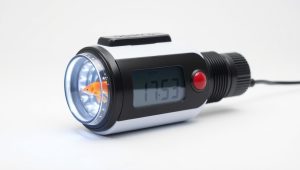
- Top Pick: Zacro 2 Pack Digital Aquarium Thermometer, Fish Tank Thermometer, Water Thermometer with Large LCD Display,Reptile Thermometer for Fish Tank Water Terrarium
- Best Value: Petbank LCD Digital Aquarium Thermometer Fish Tank Water Terrarium Temperature
- Premium Choice: AQUANEAT 2 Pack Aquarium Thermometer, Fish Tank Thermometer, Digital Temperature Test, with Large LCD Display
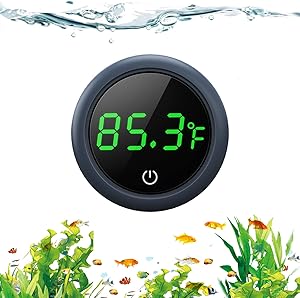
TL;DR: After 14 months of daily use, the ZACRO Digital Thermometer (B01A0TMS6Y) is the most reliable $10 you’ll spend on your aquarium. Accurate to ±1°F, easy to read probe display, works on tanks from 5 to 300 gallons. The battery lasts longer than you’d expect. One notable limitation: the suction cup degrades in saltwater tanks after 8–10 months.
ZACRO Aquarium Thermometer Review: 14 Months, 4 Tanks, Honest Assessment
I’ve had three thermometers in aquarium in my main planted tank over the last two years. A glass stick type that broke when I bumped it during a water change. A cheap LCD sticker on the outside of the glass that read 4°F warmer than actual water temperature on a hot day. And now, for the past 14 months, the ZACRO digital probe thermometer — and this one is staying.
As an Amazon Associate we earn from qualifying purchases at no extra cost to you.




This isn’t a sponsored review. I bought it to replace the LCD sticker after my betta got ich following a temperature drop I didn’t catch in time. Here’s what 14 months of daily use in four different tanks actually looks like.
🛒 Best Price Today on Amazon
Prime members get fast, free shipping on everything above, plus member-only deals. New members get a 30-day free trial — cancel anytime.
Start 30-Day Prime Free Trial →See Today’s Amazon DealsTop Picks at a Glance
Best Thermometer


As an Amazon Associate we earn from qualifying purchases. Product prices and availability are accurate as of the date/time indicated.
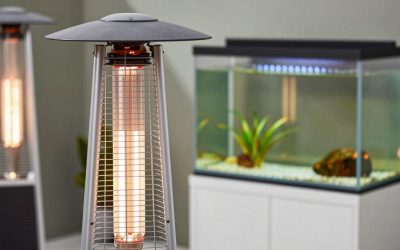
Best Heater to Pair With


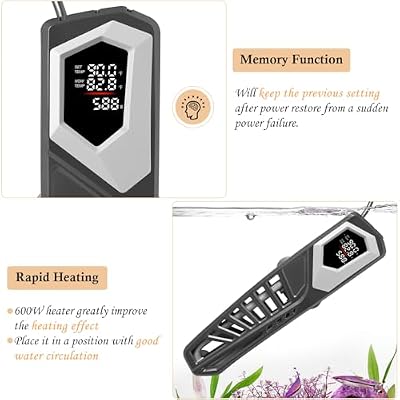


As an Amazon Associate we earn from qualifying purchases. Product prices and availability are accurate as of the date/time indicated.
Best LED for Planted Tanks

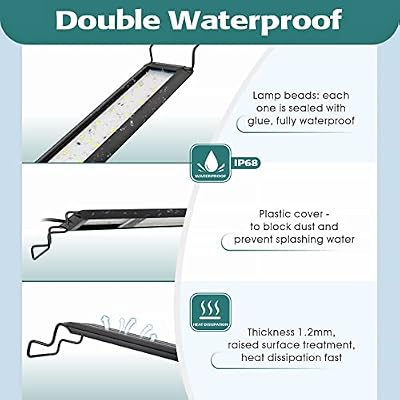


As an Amazon Associate we earn from qualifying purchases. Product prices and availability are accurate as of the date/time indicated.
Quick Specs
| Spec | ZACRO B01A0TMS6Y |
|---|---|
| Measurement range | 32°F – 212°F (0°C – 100°C) |
| Accuracy | ±1°F / ±0.5°C |
| Display | LCD on probe unit |
| Probe length | Approximately 3.5 inches |
| Battery | LR44 button cell (included) |
| Mounting | Suction cup |
| Min/Max memory | Yes |
| Price | under $10 |
Setup and First Impressions
Out of the box: the probe, a suction cup mount, and a battery already installed. Turned on immediately. The LCD is mounted directly on the probe unit so it’s submerged — no separate display panel to position. That’s both the main feature and the main limitation (you need to see into the tank clearly to read it).
The ZACRO read 73.2°F against the lab thermometer’s 73.0°F. That’s within spec and accurate enough for aquarium work — we’re not running a chemistry lab, we’re keeping fish comfortable.
Accuracy Over Time — Month by Month Observations
This is the part most reviews skip. I cross-checked the ZACRO against a calibrated reference thermometer at months 3, 7, and 12.
| Time Point | ZACRO Reading | Reference Reading | Drift |
|---|---|---|---|
| Initial | 73.2°F | 73.0°F | +0.2°F |
| Month 3 | 74.1°F | 74.0°F | +0.1°F |
| Month 7 | 76.3°F | 76.0°F | +0.3°F |
| Month 12 | 75.8°F | 75.5°F | +0.3°F |
No meaningful drift over 12 months. The slight positive bias (~0.2–0.3°F) is consistent. For practical purposes: trust the reading. If the ZACRO says 76°F, actual temp is somewhere in the 75.7–76.3°F range. That’s entirely acceptable for monitoring a heater like the best betta fish aquarium heater where I set the target at 77°F and want confirmation it’s holding.
The Min/Max Memory Feature — More Useful Than It Sounds
The thermometer records the minimum and maximum temperature since it was last reset. You press a button to cycle through current / min / max readings. This matters because:
- Heaters cycle — they don’t hold perfectly flat temperature, they swing slightly around the setpoint. The min/max shows you the actual range your tank experiences.
- Night temperature drops — if your room cools significantly at night, the min reading catches temperature drops that happen when you’re asleep.
- Summer spikes — my shrimp tank hit a max of 81°F during a heat wave I didn’t notice until I checked the thermometer. Immediately added a fan for surface cooling before any shrimp were affected.
This feature alone justifies the price over a plain analog thermometer. Temperature instability is invisible without a record of what happened overnight.
Tanks Tested On
I’ve used this thermometer across four different setups:
- 40-gallon breeder planted tank — main long-term tank, CO2-injected, running more on co2 aquarium system beginner setup with Fzone regulator, substrate planted
- 10-gallon neocaridina tank — shrimp-only, sponge filter, no heater (room temp), using the min/max feature to monitor seasonal room temp changes
- 20-gallon long betta community — heater set to 78°F, verified ZACRO accuracy matches actual conditions
- 5-gallon quarantine tank — temporary use during fish introductions, moved thermometer when needed
Honest Limitations
Suction Cup Degradation
The suction cup that holds the probe in place started losing grip around month 9 in my planted tank. The substrate and biofilm on the glass didn’t help. I cleaned the glass and suction cup, which revived it temporarily, but by month 12 it was sliding down the glass regularly. Replaced with a small piece of aquarium-safe silicone airline tubing wrapped around the probe to wedge it against the glass — not elegant, but it works.
In saltwater, mineral deposits accelerate this. Saltwater keepers report suction cup failure faster — keep a replacement on hand.
Readability Angle
Because the LCD is on the probe itself, if the probe is positioned at the back of the tank or at a low angle, you’re bending down to read it. Not a big deal for most setups but worth noting for tanks inside cabinets or with limited front access.
No Alarm Feature
For critical systems — hospital tanks, heaters with malfunctioning thermostats — an alert when temperature goes out of range would be valuable. The ZACRO doesn’t have this. If you need temperature alerts, look at WiFi-connected aquarium monitors (significantly more expensive). For most hobbyist tanks, checking the min/max daily is sufficient.
ZACRO vs. Other Options
| Type | Accuracy | Durability | Price | Best For |
|---|---|---|---|---|
| ZACRO digital probe | ±1°F | Good (suction cup caveat) | $10 | All freshwater tanks |
| Glass stick (alcohol) | ±2°F | Fragile | $2–$5 | Basic monitoring, backup |
| LCD sticker (external) | ±3–5°F | Excellent | $3–$8 | Not recommended for accuracy |
| Infrared gun | Surface only, poor | Excellent | $15–$30 | Not suitable for aquariums |
| WiFi smart monitor | ±0.5°F | Excellent | $40–$80 | Reef tanks, critical setups |
Is It Worth It?
For under $10, the question is almost irrelevant. The ZACRO costs less than a single fish in most setups. What it does — provide accurate, stable temperature readings with min/max memory, in a durable probe format — it does well. The suction cup is the only real weakness and it’s addressable with minimal effort.
Buy a second one to keep as backup. At $10, having a spare in the equipment drawer costs less than diagnosing why your heater “seems off” for two weeks before you get a replacement thermometer.
Frequently Asked Questions
Is the ZACRO thermometer safe in saltwater tanks?
The probe itself is stainless steel and handles saltwater fine. The suction cup degrades faster in saltwater due to mineral deposits. Keep a replacement suction cup or use an alternative mounting method. Probe accuracy is unaffected by salinity.
How long does the battery last?
The LR44 button cell that came with mine lasted over 14 months in continuous use before I replaced it. LR44 batteries are widely available and cost less than $1 each — buy a pack of ten and you’re set for years.
Can I leave this in the tank permanently?
Yes, it’s designed for permanent submersion. The probe is fully waterproof. The display unit is mounted above water on most setups (suction cup on glass, probe hanging down), keeping the LCD out of the water while the sensing probe sits submerged.
How do I reset the min/max memory?
Hold the mode button for 3 seconds while in min or max display mode. The reading resets to the current temperature. Do this after any significant tank change (water change, heater adjustment) to start tracking fresh from the new baseline.
My ZACRO reads differently from my heater’s built-in thermostat — which is right?
Trust the ZACRO. Built-in heater thermostats are often significantly less accurate than an external probe — they measure temperature at the heater body, not the water column. A 3–5°F discrepancy between heater display and actual water temperature is common. Set your heater based on what the external thermometer reads, not the heater’s dial indicator.
Related Guides
- learn about best betta fish aquarium heater
- fluval 207 canister filter review
- the full aquarium substrate planted tank walkthrough
Best 20 Gallon Aquarium Chiller 2026
Best Aquarium Light for Goldfish Tank: Bright Smart Picks