Last Updated: October 4, 2026
- Top Pick: AAwipes 8-in-1 Aquarium Test Kit for Fish Tanks – Quick & Accurate Water Testing Strips for Aquariums & Ponds. Tests pH, Ammonia, Alkalinity, Hardness, Chlorine, etc. (K02-50)
- Best Value: 11 in 1 – Aquarium Test Strips | 950 Tests – 150 Strips | Fish Tank Aquariums Water Test Kit & ebook | Aquarium Thermometer | Fish Tank Water Testing Kit Includes 50 Ammonia Strips | Versatile Usage
- Premium Choice: Pawfly 5 in 1 Aquarium Water Master Test Kit, Fish Tank Water Testing Kit
🛒 Best Price Today on Amazon
Prime members get fast, free shipping on everything above, plus member-only deals. New members get a 30-day free trial — cancel anytime.
Why Water Testing Is Essential for Every Aquarium
Water quality is the single most important factor in fish health, yet it is invisible to the naked eye. Toxic ammonia and nitrite can build to lethal levels in a tank that looks perfectly clear. pH swings stress fish and make them vulnerable to disease. Nitrate accumulation causes chronic health problems over time. Regular water testing is the only way to know what is actually happening in your aquarium — not just what it looks like.
As an Amazon Associate we earn from qualifying purchases at no extra cost to you.


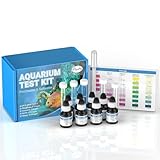




Every aquarium keeper, from beginner to expert, should test their water at least weekly, especially during the initial nitrogen cycle when ammonia and nitrite spike. A good test kit measures the four critical parameters: ammonia, nitrite, nitrate, and pH. Some kits also include tests for general hardness (GH), carbonate hardness (KH), and phosphate, which are useful for planted tanks and sensitive species.
API Freshwater Master Test Kit
The API Freshwater Master Test Kit is the gold standard for hobbyist water testing. It includes liquid reagent tests for pH, high-range pH, ammonia, nitrite, and nitrate — the five most critical parameters for freshwater tanks. Liquid tests are significantly more accurate than dip strips. The kit includes enough reagents for 800 tests total, making it extremely cost-effective over time. Results are color-matched against a printed chart and are easy to read once you get the hang of it. This is the kit most experienced fishkeepers recommend to beginners.
API Saltwater Master Test Kit
For reef and marine aquarium keepers, the API Saltwater Master Test Kit provides accurate readings for pH, ammonia, nitrite, and nitrate in saltwater conditions. Saltwater chemistry is more complex, and this kit is formulated specifically for the higher mineral content of marine tanks. Like its freshwater counterpart, it uses liquid reagents and provides enough solution for hundreds of tests. Saltwater hobbyists should also consider testing for alkalinity (dKH) and calcium separately.
Tetra EasyStrips 6-in-1 Aquarium Test Strips
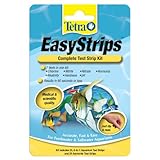
For quick, daily monitoring between more thorough liquid tests, Tetra EasyStrips offer a convenient dip-and-read format. Each strip tests for nitrate, nitrite, hardness, chlorine, alkalinity, and pH simultaneously in 60 seconds. While not as precise as liquid tests, they are excellent for spotting sudden changes that warrant a more detailed liquid test. They are also great for beginners who want a fast sanity check without the multi-step liquid test process. Keep a box handy alongside your API master kit.
What to Look For in an Aquarium Water Test Kit
- Liquid vs. strips: Liquid reagent tests are more accurate; strips are faster but less precise.
- Parameters covered: At minimum, test for ammonia, nitrite, nitrate, and pH.
- Test count: Calculate cost per test — a 800-test liquid kit is far more economical long-term.
- Freshwater vs. saltwater: Make sure the kit is formulated for your tank type.
- Color chart clarity: Look for test kits with well-printed, easy-to-read comparison charts.
- Shelf life: Liquid reagents can expire; store them away from heat and light.
Understanding What Each Test Measures
A good aquarium test kit lets you monitor the handful of parameters that determine whether your fish thrive or struggle. The most critical are the three stages of the nitrogen cycle: ammonia, nitrite, and nitrate. Ammonia and nitrite are highly toxic even in small amounts and should always read zero in an established tank, while nitrate is far less harmful but should be kept below 20 to 40 ppm through water changes. Beyond these, pH tells you how acidic or alkaline the water is, and most community fish do well between 6.5 and 7.5.
Hardness tests round out the picture. General hardness (GH) measures dissolved minerals like calcium and magnesium, while carbonate hardness (KH) measures the water’s buffering capacity, or its resistance to pH swings. Low KH can let pH crash suddenly, which is dangerous for fish. Liquid reagent kits are generally more accurate and economical over time than paper test strips, though strips are convenient for quick weekly checks. Whichever you use, follow the timing and shaking instructions exactly, since rushed readings are a common source of false results.
Building a Testing Routine
Consistency matters more than any single reading. During the initial cycling of a new tank, test every day or two to track ammonia and nitrite as they rise and fall. Once the tank is established, a weekly test of the key parameters is enough to catch problems before they harm your fish. Always test before a water change so you know your baseline, and keep a simple log so you can spot trends over time.
- New tanks: Test ammonia, nitrite, and nitrate frequently until the cycle completes and ammonia and nitrite hold at zero.
- Established tanks: A weekly check of the core parameters catches most issues early.
- Troubleshooting: Test immediately if you notice sick fish, cloudy water, or unexpected deaths.
Avoiding Common Testing Errors
A few simple habits keep your readings trustworthy. Always shake reagent bottles exactly as directed, since separated liquids give false results, and respect the timing instructions because reading a test too early or too late shifts the color. Rinse test tubes with tank water rather than soap, which leaves residues that skew results. Store kits away from heat and sunlight so the reagents do not degrade, and replace them once they pass their expiration date. Reading color charts in natural daylight rather than artificial light also improves accuracy. Building these small disciplines into your routine ensures the numbers you act on truly reflect what is happening in your aquarium.
Frequently Asked Questions
How often should I test my aquarium water?
Test every day or two while a new tank is cycling, then settle into a weekly routine once the tank is established. Always test right away if fish appear sick or stressed, as water quality is the most common underlying cause.
Are liquid test kits more accurate than test strips?
Liquid reagent kits are generally regarded as more precise and consistent than paper strips, and they tend to be cheaper per test over the long run. Test strips are fine for quick weekly screening, but confirm any concerning result with a liquid test.
What should my ammonia and nitrite levels be?
Both ammonia and nitrite should read zero in a healthy, fully cycled aquarium. Any detectable level signals a problem with your cycle or overfeeding and calls for an immediate water change and investigation.
What is a safe nitrate level?
For most freshwater community tanks, keeping nitrate below 20 to 40 ppm is a good target. You lower nitrate primarily through regular partial water changes and by avoiding overstocking and overfeeding.
Why is my pH unstable?
Sudden pH swings are often caused by low carbonate hardness, which leaves the water with little buffering capacity. Testing KH alongside pH helps you understand why your pH drifts and whether you need to add buffering.
Final Thoughts
A water test kit is one of the smartest investments any aquarium keeper can make. The API Freshwater Master Test Kit should be in every freshwater hobbyist's toolkit — it is accurate, cost-effective, and covers all the critical parameters. Supplement with test strips for daily quick checks and you will always have a clear picture of your water quality. Healthy water means healthy fish.
Related Reviews & Guides


Aquarium Sponge Filter
11 Best Aquarium Rocks and Stones for Tank Decor