Last Updated: October 9, 2026
- How Aquarium Magnetic Mounts Work
- Top Aquarium Magnetic Mount Picks
- What to Look for in a Magnetic Equipment Holder
- Spec Comparison Table
- Installation Tips for a Clean Aquascape
- FAQ: Aquarium Magnetic Mounts
- Choosing the Right Magnet Strength for Your Glass
- Safe Handling, Glass Protection, and Saltwater Care
- Frequently Asked Questions
- Related Articles

TL;DR: Aquarium magnetic mounts eliminate cable clutter and simplify equipment placement — no suction cups, no drilling. This guide covers how they work, top picks, and what to look for when buying a aquarium magnetic mount for your planted or reef tank.
Aquarium Magnetic Mount: The Cleanest Way to Hang Tank Equipment
Walk up to any well-scaped aquarium and the first thing you notice is what you don’t see — no suction cups peeling off the glass, no wires draped over the rim, no clunky brackets breaking the natural line of the hardscape. That clean look usually comes down to one tool: the aquarium magnetic mount.
As an Amazon Associate we earn from qualifying purchases at no extra cost to you.


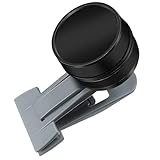



Magnetic equipment holders use two opposing magnet assemblies — one inside the tank, one outside — to grip the glass and hold heaters, thermometers, flow pumps, CO2 diffusers, and other gear in exactly the position you want. No penetrations, no adhesives, fully repositionable. For the aquascaper chasing a minimalist aesthetic, they are close to indispensable.
🛒 Best Price Today on Amazon
Prime members get fast, free shipping on everything above, plus member-only deals. New members get a 30-day free trial — cancel anytime.
Start 30-Day Prime Free Trial →See Today’s Amazon DealsHow Aquarium Magnetic Mounts Work
Each set consists of an internal cradle and an external anchor connected by strong rare-earth (neodymium) or ferrite magnets. Slide the internal piece into position, press the external magnet against the opposite side of the glass, and friction does the rest. Most designs use a rubber or silicone pad on the internal piece to protect the glass and provide grip without scratching.
Holding strength is rated in glass thickness — a mount rated for 12 mm glass will lose grip on 15 mm glass, so always check specs against your tank’s wall thickness before buying. Rimless low-iron tanks common in aquascaping are usually 8–15 mm; large reef tanks can exceed 19 mm.
Top Aquarium Magnetic Mount Picks


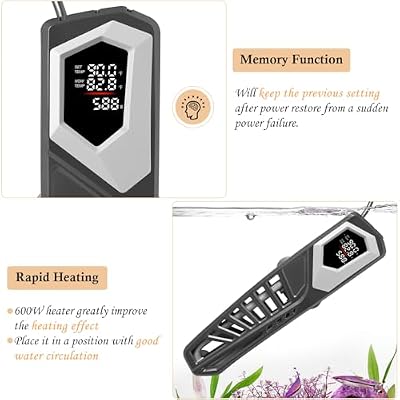


As an Amazon Associate we earn from qualifying purchases. Product prices and availability are accurate as of the date/time indicated.

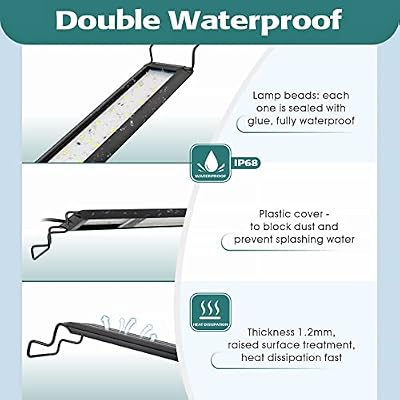


As an Amazon Associate we earn from qualifying purchases. Product prices and availability are accurate as of the date/time indicated.


As an Amazon Associate we earn from qualifying purchases. Product prices and availability are accurate as of the date/time indicated.
What to Look for in a Magnetic Equipment Holder
Not all magnetic mounts are made equal. Here are the four factors that matter most for planted and reef tanks.
- Glass thickness rating — always match to your exact glass spec, not an approximation.
- Cradle compatibility — some mounts only fit round tubes (heaters); others have adjustable clamps for flat or irregular shapes.
- Material — stainless steel and ABS plastic resist saltwater corrosion; avoid bare ferrous metal in marine tanks.
- Adjustability — tilt-and-rotate cradles let you angle a heater or thermometer probe for better circulation and accuracy.
Spec Comparison Table
| Feature | Entry-Level Mount | Mid-Range Mount | Premium Mount |
|---|---|---|---|
| Max glass thickness | 8 mm | 12 mm | 19 mm |
| Magnet type | Ferrite | Neodymium | N52 neodymium |
| Saltwater safe | No | Yes | Yes |
| Cradle adjustability | Fixed | Rotate 360° | Tilt + rotate |
| Max equipment diameter | 16 mm | 22 mm | 28 mm |
| Typical price range | $5–$10 | $12–$20 | $25–$45 |
Installation Tips for a Clean Aquascape
Position the mount before adding substrate and hardscape so you can hide the internal cradle arm behind rocks or driftwood. Route power cables down the inside rear corner and exit below the waterline through a small gap at the back glass — this keeps the top of the tank almost wire-free from the front viewing angle.
For planted tanks using CO2, a magnetic mount on the diffuser ensures you can slide it forward during maintenance without disturbing the scape. Pair with a proper CO2 diffuser placement strategy for maximum efficiency.
Heater placement matters for temperature stability. Mounting the heater horizontally near a flow outlet with a magnetic holder produces more even heat distribution than a vertical corner mount — read more in our aquarium heater placement guide.
If you’re running a sump-less setup and need a return pump inside the display, a strong magnetic mount keeps the pump body stable without marring the glass — especially useful for rimless aquarium setups where traditional hang-on fittings are impractical.
FAQ: Aquarium Magnetic Mounts
Can I use an aquarium magnetic mount on a curved tank?
Standard flat-face magnets do not grip curved glass reliably because the contact surface is too small. Some specialty mounts use flexible pads that conform to mild curves, but for bowfront or cylinder tanks, look for models specifically rated for curved glass or use suction cup mounts instead.
Will the magnet damage fish, invertebrates, or live coral?
The magnetic field strength at the internal cradle is extremely localised — it dissipates rapidly with distance and poses no documented harm to fish, shrimp, snails, or coral. The only risk is equipment falling if the mount is undersized for your glass thickness, so always size up when in doubt.
How do I remove a stuck magnetic mount from thick glass?
Slide the external magnet sideways along the glass rather than pulling it straight off — this shears the magnetic bond progressively and requires far less force. Never yank perpendicularly; you risk chipping the glass edge or cracking thin panels.
Are magnetic mounts safe for saltwater and reef tanks?
Only if the housing and cradle are made from saltwater-safe materials — ABS plastic, acrylic, or 316 stainless steel. Avoid any mount with exposed bare iron or ferrite magnets; saltwater will corrode them quickly and can leach rust into the display.
Can I use two magnetic mounts next to each other without interference?
Yes, as long as they are at least 5–8 cm apart. Placing strong neodymium mounts too close risks the external magnets attracting each other and shifting both cradles. Space them generously and test positioning before finalising your equipment layout.
Choosing the Right Magnet Strength for Your Glass
The most important number when buying a magnetic mount is the glass thickness it is rated for, and matching it correctly determines whether your equipment stays put or slides loose. Magnetic mounts work by gripping through the glass wall, and the holding force drops sharply as the glass gets thicker. A mount rated for a thinner panel will feel weak or fail entirely on a thicker tank, while an oversized magnet on thin glass can be hard to reposition and risks pinching fingers during handling. Always check your tank’s actual glass thickness, which is often printed on the silicone seam or available from the manufacturer, before selecting a mount.
The weight and drag of the equipment you intend to hold also matters. A lightweight thermometer or a small CO2 diffuser places little load on the magnet, but a flow pump or powerhead generates thrust that constantly tries to push the mount out of position. For these higher-load items, choose a mount rated comfortably above your glass thickness and the device’s weight so it holds firm under continuous force. Rare-earth neodymium magnets offer the strongest grip in a compact size, which is why they dominate the higher-load mounts, while lighter accessories are fine on more modest magnets. Buying a mount sized for the job from the start avoids the frustration of equipment drifting out of place.
Safe Handling, Glass Protection, and Saltwater Care
Strong magnets demand respect during installation. Neodymium magnets snap together with surprising force, and letting the inner and outer halves slam together can crack glass or pinch skin. The safe technique is to slide one piece into position and bring the second up to the glass gradually from the side, easing them into alignment rather than letting them jump across the gap. Keep the protective pads, usually rubber or silicone, clean and intact, since they cushion the glass and provide the friction that stops the mount from sliding. A piece of grit trapped under a pad can scratch the glass as you reposition, so wipe both pads before placing the mount.
Maintenance keeps a mount working and looking clean. Over time algae and biofilm coat the inner pad and reduce grip, so include the mount in your routine cleaning by wiping it whenever you service the tank. In saltwater systems, take extra care with the exposed metal: many magnets are encased in a protective coating, but salt creep and humidity can attack any chip in that shell and lead to rust that stains the tank or weakens the magnet. Choosing mounts designed and rated for marine use, drying the outer magnet if it gets splashed, and inspecting the coating periodically all extend the life of the mount and keep your aquascape free of clutter and corrosion.
Frequently Asked Questions
What can I mount with aquarium magnets?
Heaters, thermometers, small powerheads, probes, feeding rings, frag racks and cable clips all have magnet mount options, which keep suction cups and their inevitable failures off your glass. Magnets hold position reliably without leaving marks, and let you reposition equipment without draining any water.
How thick a glass will the magnet hold through?
Magnets are rated by glass thickness, commonly up to 10, 12, 15 or 19 mm. Buy for your actual pane measured at the rim, and go one grade stronger if the item is heavy. Too weak a magnet slips slowly, and you eventually find the heater lying on the substrate.
Are they safe on acrylic tanks?
Only with a soft-faced magnet designed for acrylic. Any grit trapped between magnet and panel scratches acrylic instantly and permanently. Rinse the pads before each use, never drag a magnet that has been sitting on the substrate, and lift it away rather than sliding it across debris.
Will the magnets rust?
Bare neodymium corrodes quickly in fresh water and disastrously fast in salt water. Buy fully encapsulated units where the magnet is sealed inside resin or plastic, and inspect the seal for cracks. A rusting magnet stains the glass, loses strength rapidly and can leach iron into the tank.
Does the magnetic field bother fish?
Static magnetic fields at these strengths have no measurable effect on fish or invertebrates. The practical cautions are for you: strong magnets pinch fingers badly, can crack glass if they snap together, and should be kept away from phones, cards and pacemakers. Always separate them by sliding, never pulling straight apart.
Ready to decide? Our #1 pick for 2026 is the Max glass thickness.
Live price & availability on Amazon.
Related Reviews & Guides




Best Aquarium Overflow Box Maintenance and Cleaning Kit
Best Inline Heater for Sump Systems: Safe Smart Top Picks