Last Updated: October 21, 2026
- Top picks at a glance
- What Is CO2 Injection and Why Do Plants Need It?
- Complete CO2 System Components — What You Need
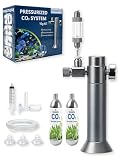
- Fzone CO2 Regulator — Spec Sheet and Why the DC Solenoid Matters
- Step-by-Step Installation: CO2 Regulator to Tank
- Reading Your Drop Checker — The Color Guide
- BPS by Tank Size — Starting Points
- Common Beginner Mistakes
- Frequently Asked Questions
- Related Articles
- Related Guides
- Top Pick: Enkreefi 2L Aquarium CO2 Generator System with Solenoid Valve & Bubble Counter – Complete Carbon Dioxide Reactor Kit for Planted Tanks
- Best Value: FZONE Desktop Aquarium CO2 System,45g CO2 Cartridge,5/8" & 3/8" Compatible
- Premium Choice: Upgraded 2L/5L Aquarium CO2 Generator System with Timer-Enabled Motor Valve, Upgrade CO2 System Kit with Quick-Release Structure for Aquarium Plants Tanks (2L)

TL;DR — Quick Answer
A pressurized CO2 system for a planted aquarium needs: a CO2 cylinder, regulator with DC solenoid, diffuser or inline diffuser, and a drop checker. Start at 1–2 BPS (bubbles per second), target yellow-green on the drop checker, and use a timer to cut CO2 at lights-off. Total setup cost $60–$150 for a 20–50 gal tank.
CO2 Aquarium System for Beginners 2026: Step-by-Step Pressurized Setup, BPS Guide & Drop Checker Explained
CO2 injection is the single biggest upgrade you can make to a planted aquarium. Plants photosynthesize using CO2 + light + nutrients — without dissolved CO2, even perfect lighting and fertilization won’t produce the dense, healthy growth you see in competition aquascapes. This guide walks through a complete pressurized CO2 system setup for beginners: every component, every connection, the correct bubble-per-second rate, and how to read your drop checker so you’re not flying blind.
As an Amazon Associate we earn from qualifying purchases at no extra cost to you.


As an Amazon Associate we earn from qualifying purchases. Product prices and availability are accurate as of the date/time indicated.
🛒 Best Price Today on Amazon
Prime members get fast, free shipping on everything above, plus member-only deals. New members get a 30-day free trial — cancel anytime.
Start 30-Day Prime Free Trial →See Today’s Amazon DealsTop picks at a glance
BEST OVERALL
Fzone Aquarium CO2 Regulator with DC Solenoid
Dual-gauge pressure display, DC solenoid for timer integration, needle valve for precise BPS control.
As an Amazon Associate we earn from qualifying purchases. Product prices and availability are accurate as of the date/time indicated.
RUNNER-UP
Fluval 207 Canister Filter
Inline CO2 diffusion via canister intake — the most efficient delivery method for planted tanks.


As an Amazon Associate we earn from qualifying purchases. Product prices and availability are accurate as of the date/time indicated.
SUBSTRATE COMPANION
UNS Controsoil Aqua Soil
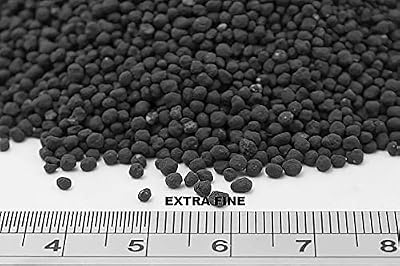
CO2 injection only pays off in a tank with nutrient substrate — aqua soil feeds roots while CO2 feeds leaves.



As an Amazon Associate we earn from qualifying purchases. Product prices and availability are accurate as of the date/time indicated.
What Is CO2 Injection and Why Do Plants Need It?
Carbon dioxide (CO2) is the carbon source for plant photosynthesis. The equation is simplified: CO2 + H₂O + light energy → glucose + O₂. Without adequate CO2, plants hit a ceiling — even with intense lighting and full fertilization, growth slows, algae outcompetes for available carbon, and leaves yellow.
Normal atmospheric CO2 dissolves into aquarium water at about 3–5 ppm. Planted tanks need 20–30 ppm for optimal growth. That 6–10x increase is what CO2 injection delivers. The dissolved CO2 also interacts with water to form carbonic acid (H₂CO₃), slightly lowering pH — this is actually beneficial for most planted tank species that prefer pH 6.5–7.0.
The CO2-KH-pH triangle: CO2 lowers pH, KH buffers against pH changes. Higher KH = more CO2 needed to hit target pH. This is why knowing your water’s KH (carbonate hardness) matters — tap water KH 4 dKH needs far less CO2 to hit pH 6.8 than KH 12 dKH tap water.
Complete CO2 System Components — What You Need
| Component | Function | Cost Range |
|---|---|---|
| CO2 cylinder (paintball or standard) | CO2 storage under pressure (800–1000 PSI full) | $20–$80 |
| CO2 regulator (Fzone B09MW1JB1G) | Reduces tank pressure to working pressure, controls BPS | under $70 |
| DC solenoid valve (integrated in Fzone) | Electronic on/off — connect to outlet timer | Included |
| CO2-rated tubing | Silicone or specialized CO2 tubing (not regular airline) | $5–$15 |
| Diffuser or inline atomizer | Breaks CO2 into micro-bubbles for dissolution | $10–$30 |
| Drop checker | Displays dissolved CO2 level via pH indicator color | $8–$20 |
| 4dKH reference solution | Required in drop checker for accurate CO2 reading | $8–$12 |
| Outlet timer | Turns solenoid on 1 hour before lights, off at lights-out | $10–$20 |
Fzone CO2 Regulator — Spec Sheet and Why the DC Solenoid Matters
| Spec | Value |
|---|---|
| Inlet pressure rating | Up to 3000 PSI (handles full paintball and standard cylinders) |
| Working pressure gauge | 0–160 PSI (output pressure) |
| Tank pressure gauge | 0–3000 PSI (cylinder fill level) |
| Solenoid type | DC solenoid (low power draw, runs cool) |
| Solenoid voltage | 110V US plug |
| Needle valve | Integrated, adjustable BPS |
| CGA fitting | CGA-320 (standard US CO2 cylinders) |
| Price (2026) | under $70 |
The DC solenoid is the critical feature. AC solenoids (common on cheap regulators) run hot and use more power. More importantly: the solenoid lets you plug into an outlet timer so CO2 automatically turns on 1 hour before lights on and off at lights off. This is non-negotiable — CO2 off when lights are off prevents pH crash at night (no photosynthesis consuming CO2, builds up overnight, pH drops dangerously).
Step-by-Step Installation: CO2 Regulator to Tank
Before starting, have on hand: PTFE tape (plumber’s tape), CO2 tubing (not standard airline — it’s too porous), suction cups or inline diffuser adapter, and your drop checker with 4dKH reference solution already loaded.
- Prepare the cylinder connection. Wrap 2–3 layers of PTFE tape clockwise around the CGA-320 fitting threads. Hand-tighten regulator onto cylinder, then 1/4 turn with adjustable wrench. Do not overtighten — strip-risk on brass fittings.
- Check for leaks. Open cylinder valve slowly (counterclockwise). Watch both gauges rise. Tank gauge shows cylinder fill level; working pressure gauge should read near 0 until you dial in output. Apply soapy water to all connections — bubbles = leak. Re-tighten or re-tape if bubbling.
- Set working pressure. Adjust regulator output to 20–40 PSI working pressure. Higher KH water may need 40 PSI to push CO2 through diffuser backpressure; lower for soft water setups. Start at 20 PSI.
- Connect CO2 tubing. Run CO2-rated silicone tubing from regulator output to diffuser (in-tank ceramic disc) or to inline atomizer (on canister intake hose). Secure connections with airline clamps.
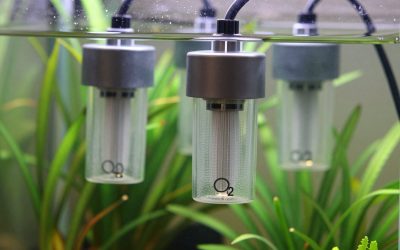
- Mount drop checker. Fill the glass bubble with 4dKH reference solution, add 2 drops of pH indicator (4dKH kit usually includes this). Hang inside tank at mid-water-column level. It takes 1–2 hours to reflect actual dissolved CO2, not instantaneous.
- Connect solenoid to timer. Plug solenoid power cord into programmable outlet timer. Set timer: ON 1 hour before lights on, OFF at lights off (or right before). Never run CO2 at night.
- Adjust needle valve for BPS. Open needle valve slowly until you count 1–2 bubbles per second through a bubble counter (most diffusers have one). Watch drop checker for 2 hours — blue = too low CO2, green = target, yellow = too high (dangerous for fish). Adjust needle valve in small increments: 1/16 turn changes BPS noticeably.
Reading Your Drop Checker — The Color Guide
The drop checker uses a pH-sensitive dye (bromothymol blue) in 4dKH reference solution. The KH is fixed, so CO2 concentration directly determines pH, which determines color. This gives you a direct CO2 readout without needing a CO2 test kit:
- Blue (pH 7.4+): Under 15 ppm CO2. Plants not getting enough. Increase BPS.
- Blue-green: ~15–20 ppm. Low-tech plants okay here. High-demand plants may show slow growth.
- Green (pH ~7.0): ~20–25 ppm CO2. Target zone for most planted tanks — adequate without fish stress.
- Yellow-green: ~25–35 ppm. High-tech target. Watch fish for gasping at surface — drop back 1/4 BPS if you see it.
- Yellow (pH 6.4–6.8): 35–50+ ppm. Too high — fish risk. Reduce BPS immediately.
Caution: drop checker lags 1–2 hours behind actual CO2. If fish are gasping at the surface in the morning (peak CO2 from overnight buildup), cut CO2 — don’t wait for the checker to confirm.
BPS by Tank Size — Starting Points
| Tank Size | Starting BPS | Target BPS (high-tech) | Adjust By |
|---|---|---|---|
| 10 gal | 0.5 BPS | 1 BPS | 1/16 needle turn |
| 20 gal | 1 BPS | 1.5–2 BPS | 1/16–1/8 turn |
| 40 gal | 2 BPS | 2.5–3 BPS | 1/8 turn |
| 75 gal | 3–4 BPS | 4–5 BPS | 1/8–1/4 turn |
| 120+ gal | 5 BPS | 5–7 BPS | 1/4 turn |
Inline diffusion (via canister filter intake) is 2–3x more efficient than in-tank ceramic disc diffusers — you can hit the same dissolved CO2 with lower BPS. If you’re running a Fluval 207 as covered in our Fluval 207 Canister Filter Review, route CO2 tubing to the intake strainer for inline diffusion. Pair this with appropriate aqua soil from our Aquarium Substrate Planted Tank Guide, and dial in your light intensity from the Aquarium Led Light Planted Comparison.
Common Beginner Mistakes
- Running CO2 overnight: No photosynthesis = CO2 builds up, pH crashes to 5.5–6.0 by morning. Timer is mandatory, not optional.
- Using regular airline tubing: Standard silicone airline is porous to CO2 — you’ll lose 40–60% before it reaches the diffuser. Use CO2-rated tubing (stiffer, green or clear).
- Not using 4dKH reference solution in drop checker: Drop checker filled with tank water gives inaccurate readings because tank KH varies. Always use premixed 4dKH solution.
- Adjusting BPS too fast: Small needle valve turns cause large BPS changes. Wait 1 hour after each adjustment before evaluating drop checker color.
- Ignoring fish behavior: Fish gasping at surface = too much CO2, regardless of what the drop checker says. Cut CO2 first, check colors after.
Frequently Asked Questions
How long does a CO2 cylinder last?
A standard 5 lb CO2 cylinder at 2 BPS continuous (8 hours daily) lasts approximately 4–6 months. Paintball 24g cylinders last 1–2 weeks at low BPS. Standard 5 lb aluminum cylinders are the most economical long-term — refill at welding supply, homebrew, or paintball shops for $3–$8. Always have a spare cylinder or regulator adapter ready — cylinders run out with no warning once pressure drops below 200 PSI.
Will CO2 injection kill my fish?
Not if dosed correctly. CO2 at 20–30 ppm dissolved is safe for all tropical fish. Problems occur when CO2 runs overnight (no lights = no photosynthesis = CO2 accumulates to toxic levels) or when BPS is set too high (drops pH dangerously fast). Use a timer, start low at 1 BPS, and watch your fish behavior — they’ll tell you before the drop checker does.
Do I need CO2 for a low-tech planted tank?
No — low-tech setups (dim light, easy plants like java fern, anubias, crypts, mosses) grow fine on atmospheric CO2 at 3–5 ppm. CO2 injection is for high-tech tanks with bright light and demanding plants (HC Cuba, glosso, stem carpets). Adding CO2 without sufficient light just feeds algae — the triangle of light + CO2 + nutrients must be balanced.
What’s the difference between a DC and AC solenoid on a CO2 regulator?
DC solenoids (like the Fzone B09MW1JB1G) convert AC power to DC internally — they run cooler, use less power, and have longer operational life. AC solenoids run warm to hot continuously and draw more wattage. For an always-on device like a CO2 solenoid that cycles daily, DC is meaningfully better over a 2–3 year lifespan. The Fzone for under $70 uses DC — that’s part of what you’re paying for.
Can I use a paintball CO2 cylinder with the Fzone regulator?
Yes, with a CGA-320 to paintball adapter ($8–$12 on Amazon). Paintball cylinders (24g disposable or 20 oz refillable) are convenient for small tanks but more expensive per gram of CO2 than standard cylinders. A 20 oz paintball cylinder at 1 BPS (4 hours daily) lasts about 6–8 weeks. Better for nano tanks or travel — for permanent setups, a standard 5 lb aluminum cylinder with CGA-320 fitting is more economical.
6 Best Co2 Systems For Aquarium 2026
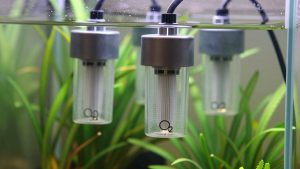
Best CO2 Diffusers for Planted Aquariums: Inline vs In-Tank Explained