Last Updated: October 4, 2026
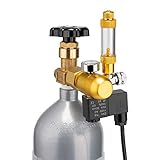
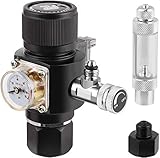
- Top Pick: FZONE Mnin Aquarium CO₂ Regulator Kit for CGA320 Side Open CO2 Cylinder
- Best Value: Aquarium CO2 Regulator, Mini Detachable Design, Complete with Bubble Counter and Check Valve Function for Establishing CO2 System in Aquatic Plant Tank
- Premium Choice: Complete Aquarium CO2 System, Desktop CO2 Regulator with 45g Disposable CO2 Cartridge, Compatible with 5/8" and 3/8" Threaded for Nano Aquariums
As an Amazon Associate we earn from qualifying purchases at no extra cost to you.




🛒 Best Price Today on Amazon
Prime members get fast, free shipping on everything above, plus member-only deals. New members get a 30-day free trial — cancel anytime.
Start 30-Day Prime Free Trial →See Today’s Amazon DealsQuick Picks: Best CO2 Regulators for Planted Tanks at a Glance
Why Trust Our Picks?
A CO2 regulator is the most critical piece of hardware in a pressurized planted tank system — a poorly built or inaccurate regulator can cause dangerous CO2 spikes that kill fish, or inconsistent delivery that starves plants. We evaluated these regulators on pressure accuracy and stability, solenoid quality and heat generation, needle valve precision, end-of-tank dump protection (dual-stage models), included accessories, and long-term reliability reported across planted tank communities including the r/PlantedTank subreddit and The Planted Tank forum.
Buying Guide: What to Look for in a Planted Tank CO2 Regulator
The single most important feature distinction in CO2 regulators is single-stage versus dual-stage design. Single-stage regulators are more affordable but carry end-of-tank dump risk; dual-stage eliminates this hazard and is worth the additional cost for tanks with fish. Look for an integrated solenoid with low heat output and a long rated cycle life — a failing solenoid is the most common point of failure in budget regulators. Needle valve quality determines how precisely you can dial in bubble rates; look for brass or stainless internals rather than plastic. Ensure the regulator is compatible with your cylinder fitting (CGA 320 for standard CO2 cylinders in the US). A built-in bubble counter simplifies setup, though a separate inline model provides more visibility.
Frequently Asked Questions
What is an end-of-tank dump and why is it dangerous?
An end-of-tank dump occurs in single-stage regulators when the cylinder pressure drops low enough that the regulator loses its ability to maintain stable working pressure — instead of shutting off, it releases a surge of CO2 that can rapidly raise tank CO2 levels to lethal concentrations for fish within minutes. Dual-stage regulators prevent this by maintaining stable output pressure even as cylinder pressure declines toward empty. Always monitor CO2 cylinders and swap them before they fully deplete when using single-stage regulators.
How many bubbles per second should I inject for my tank?
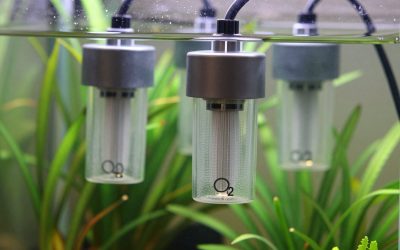
A commonly used starting point is 1 bubble per second per 10 gallons of tank volume, then adjusted based on CO2 indicator readings (drop checker) and fish behavior. Target CO2 concentration is typically 20–30 ppm for most planted tanks. Fish showing labored breathing or gasping at the surface indicate CO2 is too high; if the drop checker stays blue all day, CO2 is too low. Adjust in small increments and allow 24 hours to assess the change.
Should I run CO2 24 hours a day or only during light hours?
CO2 injection should run only during the light period — typically one hour before lights on through lights off. Plants only photosynthesize and consume CO2 when light is present; during darkness they respire and produce CO2. Injecting CO2 overnight when plants are not consuming it raises tank CO2 to unsafe levels. A solenoid connected to a timer automates this cycle and is a standard part of any properly configured pressurized CO2 system.
Can I use a CO2 regulator with a paintball cylinder?
Yes — paintball CO2 cylinders are a popular choice for smaller planted tanks because they are compact, inexpensive to fill, and widely available. You need a regulator with a paintball-compatible fitting (CGA 320 paintball adapter) or a regulator specifically designed for paintball cylinders. Many hobbyists use 20 oz paintball cylinders for tanks up to 30 gallons, getting several weeks to a couple of months of CO2 supply depending on bubble rate and plant load.
Do I need CO2 injection for a low-tech planted tank?
No — many beautiful planted tanks thrive without CO2 injection by using low-light plants (anubias, java fern, mosses, crypts) with modest lighting and fertilization. CO2 injection allows you to grow high-light demanding plants like carpeting species, stem plants, and red plants at their best, but it adds complexity and cost. Beginners are often advised to start with a low-tech setup and add CO2 once they have mastered the basics of plant care and water chemistry.
Final Verdict
For most planted tank hobbyists, the Fzone Aquarium CO2 Regulator offers the best combination of reliability, precision, and value — it covers everything needed for a complete setup at a price accessible to intermediate hobbyists. Those investing in a high-value tank with sensitive fish should strongly consider upgrading to the CO2Art Pro Elite for the peace of mind its dual-stage end-of-tank dump protection provides. Beginners on a budget will find the Baomain a functional starting point to learn CO2 injection before committing to a premium system.
Related Reviews & Guides


Aquarium Plant Fertilizer Guide: How Dosing Actually Works

Aquarium Planted Fertilizer Liquid Review