Last Updated: October 21, 2026
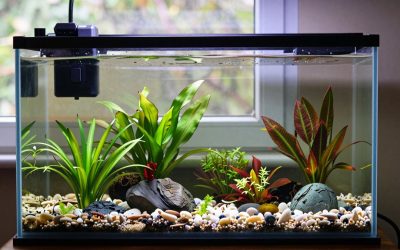
Best canister filter for planted tank use is judged on completely different criteria from a fish-only tank. You need enough turnover to distribute dissolved CO2 and nutrients to every leaf in the tank, without producing a current strong enough to flatten a carpet or scatter fine substrate across the whole layout.
As an Amazon Associate we earn from qualifying purchases.
As an Amazon Associate we earn from qualifying purchases at no extra cost to you.





By David Nguyen
Flow for Plants Without Scouring the Carpet
A planted tank asks its filter to do a job a fish-only tank never does: move dissolved carbon and nutrients evenly through the whole volume. Choosing the best canister filter for planted tank use means sizing for distribution rather than for waste processing alone.
The Deciding Numbers: Turnover, Loaded Flow and Head Height
Any best canister filter for planted tank calculation starts here. Planted tanks generally run 5-10 times real water volume per hour, higher than the 4-6 times a fish-only community tank needs, because CO2 and nutrients have to reach plants at every point in the layout rather than simply keeping ammonia at zero.
Printed GPH is measured empty. Real flow drops 30-50% once media is loaded, and a canister loses more to hose length and head height, so a 40 gallon (151 L) tank holding around 34-36 gallons (129-136 L) wants a unit rated near 350-450 GPH (1325-1703 LPH).
Head height is the number specific to canisters. Every foot the return has to lift reduces output, so a canister on the floor beneath a tall tank delivers noticeably less than the same unit sitting mid-cabinet, and the specification sheet rarely makes this obvious.
The Other Criteria: Outflow Type, Inline Fittings and Media Volume
How the water re-enters the tank matters as much as how much of it there is. A spray bar spreads the same flow across the back wall gently, while a single nozzle concentrates it into a stream that will scour a carpet and lift fine substrate.
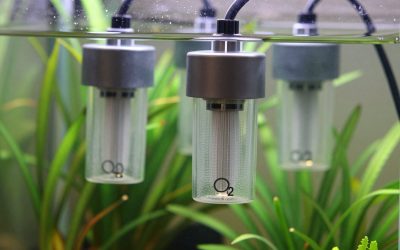
Inline capability is the planted-tank specific feature. A canister with standard hose diameters accepts an inline CO2 diffuser or heater on the return, which removes two more pieces of equipment from inside the tank and improves CO2 dissolution.
Media volume is the last criterion and the least urgent. It buys longer intervals between services rather than better water, since the bacterial colony sizes itself to the waste available regardless of how much surface area you provide it with.
Tank Size, Placement and Fit
Cabinet interior height is what stops most purchases. A canister needs its own height plus the hose bend above it, and a stand built as a display shelf often has considerably less usable height than its outside dimensions suggest.
Measure before you order: cabinet interior height and door width against the canister, hose length against the drop from tank rim to housing, and stand capacity against roughly 10 lb/gallon (about 1 kg/L). A filled 40 gallon (151 L) tank runs around 450 lb (204 kg).
The Options by Need
These five cover the realistic configurations for a best canister filter for planted tank build. Each is grouped by the layout it suits rather than ranked, since the best canister filter for planted tank use depends on footprint, carpet plants and whether CO2 is involved.
For Nano Aquascapes: Small Canister With a Spray Bar
Tanks from 10-20 gallons (38-76 L) want a canister rated roughly 100-200 GPH (379-757 LPH), fitted with a spray bar rather than a nozzle. That combination gives circulation without a current that uproots newly planted stems.
Who it suits: nano aquascapes with carpet plants and fine substrate. Who it does not: anyone on a tight budget, since a small canister costs several times a hang-on-back that would keep the same tank chemically clean.
For Standard Planted Tanks: Mid-Sized Canister With Glassware
A 20-40 gallon (76-151 L) planted tank wants roughly 5-10 times turnover, so a unit rated 250-450 GPH (946-1703 LPH) after allowing for loading and head height. Lily pipes or a spray bar keep the flow visible-free and gentle.
Who it suits: standard rimless aquascapes where equipment should not be visible. Who it does not: anyone with fish that need strong surface agitation, since a submerged lily pipe outflow deliberately minimises it and reduces gas exchange.
That reduced agitation has a real consequence worth planning for. Dissolved oxygen falls lowest before dawn in a densely planted tank, so an air stone running overnight is a sensible pairing even when CO2 makes it undesirable during the day.
For CO2 Injected Tanks: Canister With Inline Fittings
An inline diffuser on the return line dissolves CO2 through the impeller and hose run, which typically achieves better saturation than a glass diffuser inside the tank and removes one more object from the layout.
Who it suits: injected tanks aiming for a drop checker sitting green at roughly 30 ppm. Who it does not: low-tech keepers, since inline fittings add cost and complexity for no benefit, and anyone unwilling to check hose connections regularly for leaks.
For Long Footprints: Canister With Separated Inflow and Outflow
On a 48 in (122 cm) tank, placing the intake at one end and the return at the other creates flow across the whole length. That is the single biggest advantage a canister has over any hang-on-back in a planted layout.
Who it suits: four foot aquascapes where the far corner otherwise stagnates and grows black beard algae. Who it does not: short tanks, where the same arrangement produces a cross-current that disturbs the substrate rather than circulating gently.
For Low Maintenance: Larger Canister Run Below Capacity
A canister rated above what the tank needs, with flow dialled down, holds more media and goes longer between services. Media volume rather than flow rate is what buys you the extra time.
Who it suits: people who service equipment twice a year and want that to be enough. Who it does not: anyone who assumes a bigger unit means better filtration, since biological capacity beyond the available waste does nothing at all.
Dialling flow down also has a limit. Many canisters lose priming reliability and develop noisier impeller behaviour when restricted heavily, so reducing output by a small margin is workable while halving it usually is not.
| Setup | Rated flow | Outflow type | Recurring cost | Who it suits |
|---|---|---|---|---|
| Small canister, spray bar | 100-200 GPH (379-757 LPH) | Spray bar | Floss, seals | Nano aquascapes, carpets |
| Mid canister, glassware | 250-450 GPH (946-1703 LPH) | Lily pipe or spray bar | Floss, glassware cleaning | Standard rimless planted tanks |
| Canister with inline fittings | Matched to tank | Inline diffuser on return | CO2 refills, diffuser parts | Injected high-tech tanks |
| Separated inflow and outflow | 300-450 GPH (1136-1703 LPH) | Opposite ends | Floss, longer hoses | Four foot aquascapes |
| Oversized, flow reduced | Above requirement, dialled down | Any | Floss, less often | Twice-yearly servicing |
Direct Comparisons and Who Should Not Buy
One comparison decides most best canister filter for planted tank purchases, one common assumption damages layouts, and a cheaper route is worth considering for low-tech tanks.
Spray Bar Versus Lily Pipe
A spray bar spreads flow across the back wall, which suits carpets, fine substrate and tanks where even distribution matters more than appearance. A lily pipe concentrates flow into a smoother directional current and looks better in a rimless aquascape.
The practical difference shows at the substrate. A lily pipe aimed slightly wrong scours a channel through a carpet within a week, while a spray bar rarely does, so tanks with hairgrass or monte carlo generally do better with the bar.
Who Should Not Buy an Oversized Canister
Buying two sizes up is common advice from fish-only keepers and it damages planted layouts. Excess flow flattens stems, scours substrate around the base of hardscape and drives off dissolved CO2 through surface disturbance.
It also adds maintenance you did not need. A larger housing means more media to rinse and a heavier unit to carry to a sink, and the biological capacity beyond the tank’s waste output contributes nothing measurable.
Size to the tank and control direction instead. A correctly sized unit with a spray bar aimed along the back wall distributes flow better than an oversized one pointed at the glass, and it leaves the substrate and the carpet undisturbed.
The Cheaper Route for Low-Tech Tanks
A hang-on-back with a loose media basket plus a small powerhead costs considerably less than a canister and delivers both turnover and directional flow. It is visible along the back, which is the real trade-off rather than performance.
For a low-tech planted tank without CO2, that arrangement is genuinely sufficient. Spring is when many people upgrade, with tax refunds and the start of the growing season pushing purchases of canisters and CO2 gear together, and it is worth deciding whether the tank actually needs both.
Living With It: Failures and Twelve-Month Costs
The best canister filter for planted tank use runs continuously and sits out of sight, which is exactly the combination that lets problems develop unnoticed for months.
Where Canisters Typically Fail in Planted Tanks
Gaskets perish and leak into a closed cabinet, where water reaches the floor before anyone sees it. Hoses accumulate biofilm and lose flow gradually, and in a planted tank that shows as poor CO2 distribution and algae in the far corner rather than as a filtration problem.
Glassware clogs with biofilm and needs periodic cleaning with a brush, and lily pipes crack easily when handled. Inline diffuser membranes foul over months and reduce dissolution without any change in bubble count, which is a common cause of unstable CO2.
That instability is worth naming because of what it grows. Fluctuating dissolved carbon is the condition black beard algae exploits most reliably, so a fouled diffuser often shows up as algae on hardscape weeks before anyone suspects the filter.
What It Costs to Keep Running
The recurring items are mechanical floss, gaskets and hoses occasionally, glassware brushes, and continuous electricity. An injected tank adds CO2 refills, drop checker fluid and inline diffuser parts, which together make stability an ongoing commitment.
Prices change constantly, so check at the time of purchase. Compare the twelve-month running total rather than the shelf price, and include wattage, since the unit draws power every hour of the year for the life of the tank.
Warranty, Spares and Electrical Safety
Warranties typically exclude moving parts and seals, treating impellers, gaskets and hoses as consumables. Check that seals and impellers are sold individually, because a canister with available spares lasts many years longer than one that must be replaced whole.
Electrical safety is a selection criterion. Anything beside water should carry a UL or ETL mark, every powered device belongs on a GFCI outlet with a drip loop, and a cabinet holding a canister deserves a leak check each time you open it.
Frequently Asked Questions
These four come up most often when someone is buying a canister specifically for a planted aquascape.
What turnover does a planted tank need?
Roughly 5-10 times real water volume per hour, which is higher than a fish-only tank because CO2 and nutrients need distributing to every leaf. Size the rated GPH about 30-50% above that to allow for media loading and head height.
Will a canister drive off my CO2?
Only if the outflow breaks the surface. A submerged spray bar or lily pipe keeps agitation low and retains dissolved CO2, which is why planted tanks use them. The trade-off is reduced gas exchange, so watch fish for surface breathing.
Do I need an inline diffuser?
No, but it usually improves dissolution and removes an object from the layout. An in-tank glass diffuser works perfectly well, and either way the number that matters is a drop checker sitting green at roughly 30 ppm throughout the photoperiod.
How often should I service it?
Rinse mechanical media every four to eight weeks in a bucket of tank water, and do a fuller service including hoses roughly twice a year. Never rinse biological media under the tap, since chlorine and chloramine kill nitrifying bacteria on contact.
See More:
The Bottom Line
The default best canister filter for planted tank use is a mid-sized unit rated 30-50% above the 5-10 times turnover your real water volume needs, fitted with a spray bar rather than a nozzle so carpets and fine substrate stay where you put them. Place inflow and outflow at opposite ends on a long tank, and add an inline diffuser only if you are running CO2. The lower-cost option for a low-tech planted tank is a hang-on-back with loose media plus a small powerhead, which handles turnover and direction for considerably less money.
Product links and buying checks
As an Amazon Associate, we earn from qualifying purchases.
- Fluval 307 canister filter on Amazon — A mid-sized canister example, rated for 40–70 US gallons. Match flow and outlet placement to the planted layout; this is not a nano-tank recommendation.
Prices, availability and included accessories can change. Review the current listing and the compatibility guidance above before purchasing.

CO2 Aquarium System for Beginners 2026
Best RODI System for a Planted Tank: Top Expert Buying Guide