

Last Updated: October 17, 2026
- Betta Planted Tank at a Glance
- Step 1: Choose the Tank Size
- Step 2: Pick the Substrate
- Step 3: Install a Gentle Filter and a Heater
- Step 4: Choose Fin-Safe Plants
- Step 5: Hardscape and Planting Order
- Step 6: Cycle the Tank Before Adding the Betta
- Lighting for a Planted Betta Tank
- Feeding and Maintenance Schedule
- Common Problems and Fixes
- Tank Mates in a Planted Betta Tank
- Frequently Asked Questions
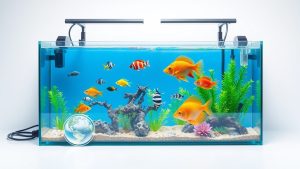
A good betta planted tank is a heated, filtered and fully cycled aquarium of at least 5 to 10 gallons, with a soft substrate, low-flow filtration, a lid, floating plants for shade, and fin-safe live or silk plants in place of sharp plastic decor. Planted setups suit bettas well because bettas come from shallow, vegetated, slow-moving water, and dense cover gives them places to rest and explore. Follow the order below: size, equipment, cycling, hardscape, planting, then the fish.
Quick answer: Our top pick in 2026 is the Tank size — our #1 rated choice. See the full ranked comparison, alternatives and buying advice below.
Betta Planted Tank at a Glance
| Item | Target |
|---|---|
| Tank size | At least 5 to 10 gallons; larger is easier to keep stable. Seriously Fish gives a minimum footprint of about 45 x 30 cm and does not support tiny containers |
| Temperature | Seriously Fish gives 22 to 30 C and FishBase 24 to 30 C (roughly 72 to 86 F); Aquarium Co-Op aims for about 80 F with a heater |
| pH | Seriously Fish and FishBase both give 6.0 to 8.0; stability matters more than chasing a number |
| Flow | Gentle; an air-driven sponge filter is a common choice |
| Lid | Required; bettas jump, but leave an air gap above the water |
| Plants | Soft-leaved live plants, floating cover, silk if artificial |
| Typical lifespan | FishBase lists a maximum reported age of 2 years; veterinary and pet-care guides commonly cite roughly 2 to 5 years in good captive conditions, so sources vary |
| Tank mates | Best kept alone; peaceful nano species only in larger, well-planted tanks |
Step 1: Choose the Tank Size
Bettas are small, reaching about 6.5 cm in total length according to FishBase (7 cm standard length per Seriously Fish), but they are not suited to bowls or tiny jars. Aquarium Co-Op advises a tank that holds at least 5 to 10 gallons, and Seriously Fish explicitly says it does not support keeping the species in tiny aquaria. Small volumes swing in temperature and water quality quickly, and they leave no room for plants, a heater and a filter to work properly.

Penn-Plax (APON1) Aquaponic Planter and Aquarium for Betta Fish Tank Promotes Healthy Hydroponic Environment for Plants and Fish
Included for 'Betta Fish Planted Tank Setup: Step by Step' as a relevant option in this category; details come from the product listing.
View on Amazon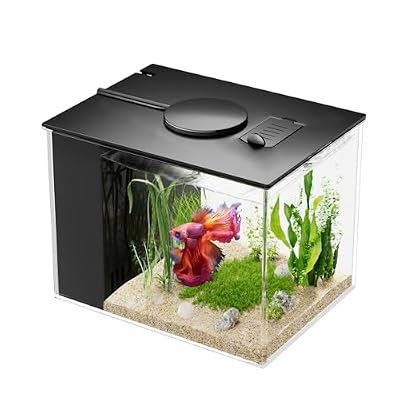
Vehipa Betta Fish Tank 1 Gal (3.7L), Acrylic Nano Aquarium Kit Black | With Water Filter Pump & LED Light, Ideal for Small Fish, Shrimp and Plants
Included for 'Betta Fish Planted Tank Setup: Step by Step' because the listing specifies Acrylic Nano Aquarium Kit Black and With Water Filter Pump & LED Light, details this guide uses to compare options.
View on Amazon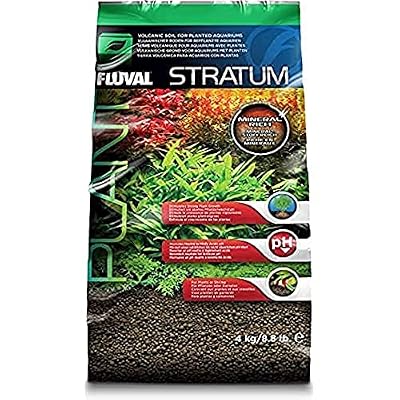
Fluval Plant and Shrimp Stratum Aquarium Substrate - 8.8 lb Bag | Freshwater Planted Tank Substrate for Strong Plant Growth and Shrimp Habitats - Supports Neutral to Slightly Acidic pH
Included for 'Betta Fish Planted Tank Setup: Step by Step' because the listing specifies 8.8 lb Bag and Supports Neutral to Slightly Acidic pH, details this guide uses to compare options.
View on Amazon
Tetra LED Half Moon 1.1 Gallon Fish Tank Kit for Betta Fish | Aquarium Kit Includes Moveable LED Light and 1.1 Gallon Acrylic Tank With Feeding Hole, Ideal for Beginners
Included for 'Betta Fish Planted Tank Setup: Step by Step' because the listing specifies Ideal for Beginners, details this guide uses to compare options.
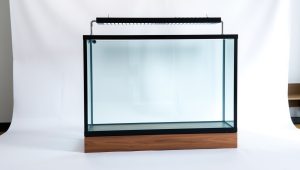
View on AmazonA 10-gallon tank is a practical starting point for a planted betta tank. It holds heat steadily, leaves space for several plant groups, and allows a gentle filter. Bigger tanks give more room for plants, which also improves water quality.
Choose a tank with a lid, or fit one. Bettas can jump, and Seriously Fish advises a well-covered tank that is not filled to the very top, because bettas are labyrinth fish that take occasional breaths from the layer of humid air above the water.
Step 2: Pick the Substrate
Bettas spend most of their time in the middle and top of the tank, so substrate matters mainly for plants and appearance.
- Fine gravel or sand: Inert and fine enough to anchor stem and rosette plants. Sand is easy on any fish that rests on the bottom.
- Nutrient-rich aquarium soil: Feeds root-feeding plants such as sword plants and cryptocorynes, but it can release ammonia early on and may soften water. Use it with a thin cap of sand or gravel, and cycle the tank properly before adding fish.
- Root tabs under inert substrate: A middle path for tanks that use plain sand or gravel.
Avoid sharp-edged gravel or rough decorative rock. Smooth materials are safer for long, delicate fins.
Step 3: Install a Gentle Filter and a Heater
Long-finned bettas are weak swimmers and tire in strong currents. Seriously Fish recommends an air-powered sponge filter set to turn over gently, and Aquarium Co-Op also points to sponge filters to keep surface film down without strong current. Other options include an adjustable hang-on-back filter or a small internal filter with the outflow baffled.
Use a heater with a thermostat. Tank temperatures in a warm room still drift at night, and bettas become lethargic when cool. Place the heater where water moves past it, and protect it with a guard if the fish likes to rest against warm surfaces.
Plants help filtration, but they do not replace a filter. Sponge filters also provide surface area for beneficial bacteria, which is the core of the nitrogen cycle.
Step 4: Choose Fin-Safe Plants
Hobby guides repeatedly point out that hard or sharp plastic plants can tear fins. A common home test is to drag pantyhose or a thin stocking across the plant, because anything that snags the fabric can snag a fin. It is a rough test, not a guarantee. Silk plants are generally softer, but some have stiff or rough parts, and wire-supported silk plants can rust if the fabric tears. Live plants avoid the problem and also take up nitrogen waste.
| Plant type | Examples | Why it suits bettas | Planting method |
|---|---|---|---|
| Rhizome | Anubias, Java fern | Broad, sturdy leaves for resting spots; low light; very forgiving | Tie or wedge onto wood or stone; never bury the rhizome |
| Rosette | Cryptocoryne, dwarf sword plants (Echinodorus) | Dense low cover; wide leaves | Plant crown at substrate level; add root tabs |
| Stolon | Dwarf sagittaria, small Vallisneria | Grass-like background | Plant in small groups; they spread by runners |
| Stem | Hygrophila, Ludwigia, Rotala | Quick growth that soaks up nutrients | Trim the base; plant stems individually in groups |
| Moss | Java moss | Soft cover; also holds on to wood | Tie to hardscape |
| Floating | Frogbit, salvinia | Shade and surface cover; possible bubble nest anchors | Place on the surface |
Sources disagree on very fast floaters. Some warn that duckweed can spread to cover the whole surface quickly, and that dense cover can limit the open air space bettas need. Choose a floater that is easy to thin, such as frogbit, and keep a clear patch at the surface so the fish can reach air.
Step 5: Hardscape and Planting Order
- Rinse the substrate and any wood or stone. Dust and tannins cloud the water otherwise. Smooth driftwood is a good choice; test rough pieces with the same pantyhose method.
- Add substrate with a gentle slope higher at the back. This gives depth for background plants and makes debris easier to see at the front.
- Place hardscape first. Wood and stone create territories and anchor points. Leave a few open swimming lanes and sheltered corners.
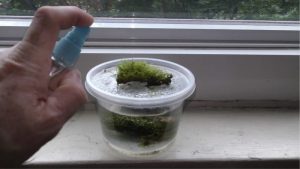
- Fill the tank part-way. Tropica advises planting with the water only a few centimetres deep and keeping plants damp with a mister while you work. Pour water onto a saucer or plate when topping up so the substrate does not get stirred.
- Plant from back to front. Stems and tall stolons at the back, rosette plants mid-tank, low plants and moss in front. Tie or wedge rhizome plants rather than burying them.
- Finish filling and add floating plants. Add the heater and filter, check that the lid fits, and set a lighting period.
- Dechlorinate all water. Aquarium Co-Op notes that chlorine and chloramine harm bettas and that letting water sit overnight is unreliable, so use a dechlorinator.
Step 6: Cycle the Tank Before Adding the Betta
A new tank has no bacteria to convert fish waste. Ammonia and nitrite can burn gills and kill fish quickly. A fishless cycle typically takes several weeks, though adding established filter media or bottled bacteria can shorten it. Test for ammonia and nitrite with a liquid test kit and add the betta only when both read zero and nitrate appears.
Plants can help a new tank, but they do not remove the need to cycle. Heavily planted tanks, especially with fast-growing stems, are more forgiving of mistakes, though keepers still recommend testing water for the first month.
Lighting for a Planted Betta Tank
An LED light on a timer for around six to eight hours a day suits low-light plants such as anubias, Java fern and cryptocorynes. Too many hours of light feeds algae more than plants. If you add stem plants or carpeting plants, which need more light, shorten the period and increase intensity rather than lengthening it, and consider the tank’s dimensions. Floating plants lower the light reaching the bottom, so the combination of bright light, floaters and low plants needs balancing.
Feeding and Maintenance Schedule
Aquarium Co-Op suggests feeding once a day, as much as the fish can finish in about a minute, using betta pellets plus freeze-dried foods such as bloodworms. Overfeeding causes constipation and pollution. Bettas are carnivorous, so plants do not replace food.
| Frequency | Task |
|---|---|
| Daily | Feed lightly; check the heater, filter and fish behavior |
| Weekly | Water change of roughly 20 to 30 percent in a small planted tank; remove dead leaves; test water |
| Every 2 to 4 weeks | Trim stems, thin floaters, rinse the sponge filter in used tank water |
| Monthly | Replace worn plant ties; clean the glass; check thermometer accuracy |
| As needed | Replace airline tubing or filter parts; scrape algae |
Aquarium Co-Op notes that a 10-gallon can need cleaning only once or twice a month, changing about 30 percent of the water, but this assumes a well-balanced tank with light feeding and no extra stock. Test water and adjust accordingly. Rinse filter sponges in tank water that has just been removed, not in tap water, so the bacteria survive.
Common Problems and Fixes
| Symptom | Likely cause | Fix |
|---|---|---|
| Ragged or torn fins | Sharp decor, aggressive tank mate, or dirty water | Replace rough decor, test water, and consult an aquarium-experienced vet or a fish health resource if fin loss continues |
| Fish hides and rests at the bottom | Cold water or strong current | Check heater and thermometer; reduce flow with a sponge filter or baffle |
| Plants melting early on | Plants adjusting after being grown out of water | Trim dead leaves; most recover within weeks |
| Green algae on glass | Too much light or nutrient surplus | Shorten the photoperiod; thin floaters; reduce feeding |
| Fish gulps for air constantly | Poor water quality, or surface blocked by floaters | Test ammonia and nitrite; keep part of the surface open |
| Fish stays near the top and looks lethargic | Cool water, illness or stress | Verify temperature, test water, and seek advice if symptoms last |
For persistent illness, such as clamped fins, white spots, swollen belly or cloudy eyes, consult an aquatic veterinarian or an experienced fish health resource. Medications can harm plants and invertebrates, and some contain copper, so read labels and treat in a separate container if advised.
Tank Mates in a Planted Betta Tank
Seriously Fish states that Betta splendens is best kept alone, and Aquarium Co-Op describes bettas as solitary and territorial, although some peaceful nano fish may be tolerated in larger, planted tanks. Never keep two males together. Avoid fin-nippers and brightly colored, long-finned fish that a male might view as a rival. Snails and some shrimp can work, but bettas may eat small shrimp, so provide dense moss and monitor behavior. Always have a backup plan, such as a spare tank or a divider, in case a tank mate does not work.
Frequently Asked Questions
What size tank does a planted betta tank need?
A minimum of 5 to 10 gallons is commonly advised, and Seriously Fish sets a base of about 45 x 30 cm. A 10-gallon gives room for plants, a heater and a gentle filter while holding temperature steadily. Bowls and tiny containers are not recommended.
Are plastic plants safe for bettas?
Soft plastic plants can be safe, but hard or sharp ones can tear long fins. Keepers often use a pantyhose test, dragging stocking material over the plant to see whether it snags. Live plants and soft silk plants without wire are generally safer choices.
Do bettas need a filter in a planted tank?
Yes, a filter is still recommended. Plants take up some waste but do not replace the bacteria that process ammonia and nitrite. A gentle sponge filter gives biological filtration without strong current.
What are the best plants for a beginner betta tank?
Anubias, Java fern, cryptocorynes, Java moss and a floating plant such as frogbit are commonly recommended because they need little light and no special equipment. Rhizome plants like anubias and Java fern should be tied to wood or stone rather than buried. Add stem plants once the tank is stable.
Do I need a heater if the room is warm?
In most homes, yes. Bettas are tropical and become lethargic in cool water, and room temperature often drops overnight. A thermostat-controlled heater keeps the tank within a steady range.
Can I add the betta right after planting?
No. Wait until the tank has cycled and ammonia and nitrite read zero. Adding fish too early exposes them to toxic spikes. Plants help, but they do not replace a completed cycle.
How long do bettas live?
FishBase gives a maximum reported age of 2 years, while veterinary and pet-care guides commonly cite roughly 2 to 5 years in good conditions. Many bettas are already several months old when sold, so lifespan from purchase is often shorter than the maximum. Good water quality, steady warmth and proper food support longevity.
Ready to decide? Our #1 pick for 2026 is the Tank size.
Live price & availability on Amazon.
Related Reviews & Guides
How to Soften Aquarium Water Safely: Numbers First Guide

Best 10 Gallon Heater For Fish Tank 2026










