Last Updated: October 21, 2026
The best CO2 diffusers for planted aquariums are the Aquario Neo diffuser for in-tank use in tanks up to about 40 gallons, an inline diffuser such as the CO2Art or Up Aqua inline models for canister-filtered tanks over 30 gallons, and a classic glass ceramic diffuser when you want the cheapest reliable option for a small scape. The right choice depends mostly on your tank size, your filter type and how much visible equipment you are willing to see. This guide explains the tradeoffs, compares common diffuser types by the numbers and covers the maintenance that keeps fine mist coming.
What a CO2 diffuser actually does
Pressurized CO2 leaves the regulator as gas. Plants can only use it once it dissolves into the water. A diffuser forces the gas through a fine porous membrane, usually ceramic, so it breaks into tiny bubbles with a huge surface area. Smaller bubbles dissolve faster before reaching the surface, which means you need less gas to hit the same CO2 level. A good diffuser is the difference between a tank that grows red stem plants and carpets well and one that burns through a cylinder while the plants stall.
Diffuser types compared
Figures are typical for each class; working pressure varies by membrane, and price bands are general market ranges.
| Diffuser type | Example products | Suggested tank size | Typical working pressure | Dissolving efficiency | Typical price range |
|---|---|---|---|---|---|
| Glass ceramic disc (in-tank) | Generic glass diffusers, ADA Pollen Glass | up to 20-30 gal | about 25-35 psi | Moderate | $10-$60 |
| Acrylic or steel ceramic disc (in-tank) | Aquario Neo Original and Neo Special | up to about 40 gal per unit | about 15-25 psi | Good | $20-$45 |
| Inline diffuser | CO2Art inline, Up Aqua inline | 30-120 gal, sized to hose diameter | about 30-45 psi | Good to very good | $25-$70 |
| Reactor (non-ceramic) | DIY or commercial chamber reactors | 40 gal and up | Low | Near-complete | $40-$120 |
| Bubble counter ladder | Plastic ladder diffusers | up to 15 gal | Very low | Low to moderate | $5-$15 |
Inline CO2 diffuser vs in-tank diffuser
In-tank diffusers
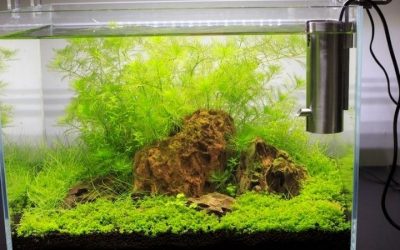
An in-tank diffuser sits inside the aquarium, ideally low down and below the filter outflow so the current pushes the mist around the tank. It works with any filter type, including hang-on-back and sponge filters, and you can see the mist to confirm it is working. The downsides are visible hardware in the scape and a membrane that grows algae and needs regular cleaning.
Inline diffusers
An inline CO2 diffuser plugs into the outflow hose of a canister filter. CO2 is injected into the moving water, so mist leaves the outflow already spread across the tank. Nothing extra is visible in the aquarium, and the membrane stays cleaner because it sits in the dark. The catches: you need a canister filter, the diffuser must match your hose diameter (commonly 12/16 mm or 16/22 mm), and inline units restrict flow slightly. They also need higher working pressure, which some cheap regulators struggle to deliver smoothly.
Which to choose
Under about 30 gallons with a hang-on-back filter, go in-tank. Over 30 gallons with a canister, inline is cleaner and more efficient. For 75 gallons and up, consider a reactor or two inline diffusers.
Picks by planted tank setup
| Setup | Suggested diffuser | Why |
|---|---|---|
| Nano scape, 5-15 gal, small CO2 kit | Glass ceramic disc or Neo Original (small) | Low cost, works at low gas flow, easy to watch |
| 20-40 gal with hang-on-back filter | Aquario Neo Special | Fine mist at moderate pressure; stainless body resists breakage |
| 40-75 gal with canister filter | CO2Art or Up Aqua inline sized to hoses | Hidden, even distribution through outflow |
| 75-125 gal high-tech | Two inline diffusers or a reactor | Higher dissolution capacity without visible clutter |
| Low-tech tank with DIY yeast CO2 | Ladder diffuser or low-pressure disc | Yeast systems cannot push enough pressure for fine ceramic |
Setting up CO2 for a planted tank, step by step
- Install a check valve between the regulator and diffuser so water cannot siphon back into the solenoid or needle valve.
- Add a bubble counter to set flow repeatably. Start around 1 bubble per second for 20 gallons and adjust slowly.
- Place the diffuser in the current. In-tank units go low on the side opposite the outflow, or directly under it, so mist travels across the tank.
- Use a drop checker filled with 4 dKH reference solution. Aim for lime green, which corresponds to roughly 30 ppm of CO2.
- Time CO2 with lights. Turn CO2 on via solenoid about 1 to 2 hours before lights and off about an hour before lights out.
- Watch livestock. Fish gasping at the surface means too much CO2; reduce the bubble rate and increase surface agitation at night.
Maintenance and what wears out
- Ceramic membranes clog. Algae and biofilm reduce mist quality within 4 to 8 weeks. Soak the diffuser in a diluted bleach solution, around 1 part bleach to 20 parts water, for 30 minutes, then rinse thoroughly and soak in dechlorinated water before reinstalling. Never use bleach on diffusers with metal parts that the manufacturer says to avoid.
- Replacement membranes: many acrylic and inline diffusers accept replacement discs, a few dollars each, which is cheaper than replacing the whole unit.
- Glass breaks. Glass diffusers are elegant but fragile during cleaning. Keep a spare if you rely on one.
- Common mistake: raising the bubble rate to compensate for a clogged diffuser. Clean it first; a dirty membrane just makes bigger bubbles that waste gas.
Bottom line
For most planted tanks under 40 gallons, an Aquario Neo diffuser gives fine mist at reasonable pressure and costs little. Canister-filtered tanks above 30 gallons benefit from a CO2Art or Up Aqua inline diffuser that hides the hardware and spreads CO2 through the outflow. Pair any diffuser with a check valve, bubble counter and drop checker, clean the membrane regularly, and your plants will make far better use of every bubble.
Amazon Sword Plant Care: How It Grows and What to Watch
9 Best Planted Aquarium Fertilizers for Lush Growth