Last Updated: October 17, 2026
- Angelfish in a Planted Tank at a Glance
- Why a Tall Tank Matters
- Best Plants for Angelfish
- Placement and Layout
- Flow and Filtration
- Spawning Sites and Breeding Behaviour
- Damage Risks and Plant Problems
- Water Conditions, Light and Fertiliser
- Tank Mates in a Planted Angelfish Tank
- Feeding and Plant Health
- Setup Checklist
- Frequently Asked Questions
Angelfish do well in a planted aquarium if the tank is tall, the water is gentle and the planting is dense at the back and sides with open swimming space in the middle; sword plants (Echinodorus), vallisneria, java fern and anubias are the most commonly recommended choices. Angelfish rarely destroy robust plants, and broad-leaved species double as spawning sites. The main limits are tank height, flow and the fish’s habit of eating small tankmates, not plant damage.
Quick answer: For most people in 2026, the best angelfish in a planted aquarium is the Minimum tank — our #1 rated choice. See the full ranked comparison, alternatives and buying advice below.
Angelfish in a Planted Tank at a Glance
| Factor | Reported guidance | Source type |
|---|---|---|
| Minimum tank | Seriously Fish lists 100 x 40 x 50 cm (about 200 litres) as the minimum; a tall tank of at least 50 cm for adults | Seriously Fish species profile |
| Fish size | Body length up to about 15 cm; height around 20 cm including fins | Seriously Fish; Aquarium Co-Op |
| Temperature | 24-30 C (75-86 F) | Seriously Fish |
| pH and hardness | pH about 6.0-7.4; soft to moderately hard water | Seriously Fish |
| Flow | Slow to moderate; diffuse with a spray bar rather than a powerhead | Planted-tank magazine |
| Temperament | Generally peaceful for a cichlid, but territorial when breeding; will eat small fish | Seriously Fish |
| Plants | Tall, leafy species; large leaves and vertical surfaces for spawning | Several |
The fish commonly sold are mass-produced domestic varieties such as black, gold and koi strains, so wild-type requirements are a guide, not a rule. Water parameters, group size and tank size should be matched to the fish you have, and the numbers above are species-level references.

Red Cap Albino Angelfish Live Freshwater Aquarium Fish – Peaceful Tropical Community Fish for Planted Tanks, Aquascapes & Home Aquariums (3)
Included for 'Angelfish in a Planted Aquarium: Best Plants and Setup' because the listing specifies Peaceful Tropical Community Fish for Planted Tanks and Aquascapes & Home Aquariums (3), details this guide uses to compare options.
View on Amazon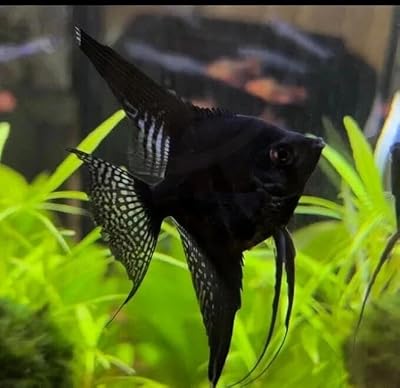
3-Pack Black Angelfish 2–2.5” Body – Live Freshwater Aquarium Fish – Elegant Long-Fin Variety – Peaceful Community Fish – Graceful Centerpiece for Planted Tanks – Hardy & Captivating for Aquascapes
Included for 'Angelfish in a Planted Aquarium: Best Plants and Setup' because the listing specifies 2.5” Body and Live Freshwater Aquarium Fish, details this guide uses to compare options.
View on AmazonRed Cap Albino Angelfish Live Freshwater Aquarium Fish – Peaceful Tropical Community Fish for Planted Tanks, Aquascapes & Home Aquariums
Included for 'Angelfish in a Planted Aquarium: Best Plants and Setup' because the listing specifies Peaceful Tropical Community Fish for Planted Tanks and Aquascapes & Home Aquariums, details this guide uses to compare options.
View on Amazon
Santboz Starfire Red Angelfish Live Fish Freshwater Fish Aquarium 1-1.5 Inch. Brilliant Color Elegant Finnage Peaceful Community Tropical Cichlid Graceful
Included for 'Angelfish in a Planted Aquarium: Best Plants and Setup' as a relevant option in this category; details come from the product listing.
View on AmazonWhy a Tall Tank Matters
Angelfish are laterally compressed fish with long, trailing dorsal and anal fins. Adults can measure around 20 cm from top to bottom including fins, and Seriously Fish recommends a tank at least 50 cm tall for adults. A planted-tank magazine is more lenient, calling a tank of about 76 cm (30 inches) long at standard height enough to start with, taller being better, and at least 120 cm (48 inches) long for multiple pairs. That 76 cm figure is below the Seriously Fish minimum of 100 x 40 x 50 cm, so it is best read as a starting point for young fish rather than a home for adults.
In a short tank, tall fins brush the surface and substrate, leading to torn fin edges and stress. Height also gives plants a vertical canopy, which is how angelfish live in their natural habitats: still, vegetated waters with leaves and roots at different levels.
Welfare notes: angelfish live for years, and commonly cited ranges for well-kept fish are roughly 8 to 12 years, though sources vary. They are cichlids, and pairs become aggressive during spawning. A small tank with several adults often ends in bullying, so research the group size you can accommodate before buying.
Best Plants for Angelfish
| Plant | Role | Light and care | Notes |
|---|---|---|---|
| Sword plants (Echinodorus) | Centrepiece, broad leaves for spawning | Moderate light; heavy root feeder | Size varies by species, and large types can exceed 40 cm; from South American river basins |
| Vallisneria | Background curtain of tall ribbon leaves | Low to moderate; fast spreader | Needs regular thinning |
| Java fern | Attached to wood and rock | Low | Do not bury the rhizome |
| Anubias | Tough leaves, shade plant | Low | Slow growing; good for egg-laying surfaces |
| Bolbitis | Dark fern on wood | Low | Slow growing |
| Water sprite | Dense cover and fry shelter | Moderate | Grows fast; floats or roots |
| Hornwort | Floating cover | Low to moderate | Sheds needles; fast nutrient uptake |
| Cryptocoryne | Ground-level planting | Low | Tolerates the fish’s activity |
| Cabomba, Myriophyllum | Fine-leaved stems | Moderate to high | May struggle without CO2 and are sensitive to damage |
Sources agree that large, broad-leaved plants make good anchors in an angelfish tank. They appear in many species profiles as natural companions. Fine-leaved stems can work with strong light but are less forgiving.
Placement and Layout
The layout of a tall planted tank for angelfish typically follows a few ideas that are mentioned across sources:
- Tall plants at the back and corners. Vallisneria, large swords and water sprite create a backdrop. Reaching toward the surface suits the fish’s vertical body shape.
- Open midwater swimming area. A clear central space lets adult fish move and display. Angelfish are tall rather than wide, so they slip between plant stems with little damage.
- Driftwood and attached plants in the midground. Java fern, anubias and bolbitis on wood provide structure and visual breaks that reduce line-of-sight aggression.
- Floating plants for the top. These add cover where angelfish cruise and diffuse light. Thin them so lower plants still receive light.
- Smooth substrate. Fine, smooth gravel or sand protects fish that browse the bottom and suits root feeders.
The reason for this arrangement is behavioural. Dense vegetation gives subordinate fish retreat space, while open water allows normal swimming. Breaking sightlines is one of the simplest ways to reduce squabbles in cichlids.
Flow and Filtration
Angelfish prefer still to slowly moving water. A planted-tank article advises avoiding strong powerheads and using a spray bar or other diffuser, so flow circulates without pushing fish with long fins around. A sponge or canister filter with the outlet aimed at the glass or along the surface often works. Good circulation still matters in a planted tank to move nutrients to plants and prevent dead spots, so the aim is gentle, even movement.
Spawning Sites and Breeding Behaviour
In the wild and in tanks, angelfish lay eggs on vertical surfaces. Seriously Fish describes spawning on slate, broad-leaved plants or even aquarium glass. A planted-tank magazine notes a preference for large, sloping leaves. A sword plant leaf, a broad anubias leaf or a vertical piece of slate all fit.
Expect the pair to clean the chosen leaf, lay eggs and guard them. Parents may eat eggs if disturbed or stressed, and in a community tank they often chase other fish away from the site. If you do not want breeding, a group with mixed sexes may still pair up, so plan for the possibility. If you do want fry, a separate breeding tank is the standard approach, as free-swimming fry are eaten by almost any tankmate.
Spawning leaves can be damaged when pairs repeatedly clean them. Replacing a stripped sword leaf is normal.
Damage Risks and Plant Problems
| Symptom | Cause | Fix |
|---|---|---|
| Torn or nibbled leaves | Soft plants with individual fish that pick, or a hungry fish | Feed varied food, choose tougher species, remove fragile plants |
| Uprooted plants | Digging, especially by spawning pairs | Anchor with rocks or use hardscape-attached plants |
| Stripped sword leaves | Pair cleaning a spawning site | Normal; consider a spare leaf or slate |
| Tattered fins on the fish | Brushing sharp or stiff plant parts, or aggression | Add smooth plants, check fin damage causes |
| Algae on swords | Light too strong or too long | Reduce photoperiod; plant more fast growers |
| Yellow sword leaves | Root nutrient shortage | Add root tabs or a suitable fertiliser |
| Floating plants blocking light | Overgrowth | Thin regularly |
Angelfish are tall, narrow-bodied fish that move between stems easily, so swimming alone rarely damages dense planting, though individual fish vary in how much they pick at soft leaves.
Water Conditions, Light and Fertiliser
Angelfish accept a fairly broad range of water chemistry, especially domestic strains, but stable temperature near the middle of 24-30 C and clean water are essential. Many keepers aim for the mid-to-upper 20s C. Planted tanks help with nitrate, though they do not replace water changes.
Sword plants and vallisneria perform well in low-tech tanks without CO2 when they have a nutrient-rich substrate or root tabs. Moderate light, around six to eight hours daily, is typical. Fertilisers aimed at planted tanks are generally safe for angelfish at label doses, but heavy dosing encourages algae.
Tank Mates in a Planted Angelfish Tank
| Group | Compatibility | Why |
|---|---|---|
| Corydoras and larger peaceful rasboras | Good | Peaceful and too large or too bottom-oriented to be easy prey |
| Larger peaceful tetras, such as bleeding heart or lemon tetras | Usually good | Similar water needs and size |
| Bristlenose plecos | Usually good | Bottom dwellers; ensure ample food |
| Neon tetras and other very small fish | Risky | May be eaten once the angelfish are adult |
| Dwarf shrimp | Risky | Often eaten |
| Fin-nipping fish such as tiger barbs | Avoid | Damage the long fins |
| Other large cichlids | Avoid | Aggression and competition |
Seriously Fish describes the species as generally peaceful but capable of eating smaller fish such as tetras. Fin-nippers such as tiger barbs are reported to target the long fins.
Feeding and Plant Health
Angelfish are omnivores that take flakes, small pellets and frozen foods. Varied feeding reduces the urge to pick at soft leaves, and small portions twice a day keep nitrate and algae in check. Remove uneaten food within a few minutes. In a planted tank, waste from fish also feeds the plants, so a modest, steady stocking level tends to be more stable than a crowded tank that relies on heavy fertiliser. Check plants weekly for melting, holes or algae, because early changes in leaf colour usually show light or nutrient problems before fish are affected.
Setup Checklist
- Choose a tank at least 50 cm tall and 100 cm long (the Seriously Fish minimum), with a larger footprint if several pairs may form.
- Add smooth sand or fine gravel and a nutrient source for root feeders.
- Place hardscape and attach java fern and anubias.
- Plant swords and vallisneria at the back, leaving open space centrally.
- Fill, cycle and stabilise at a temperature in the mid-range.
- Add floaters and fish gradually.
Frequently Asked Questions
Do angelfish eat aquarium plants?
Generally they leave sturdy plants alone. Some individuals pick at soft leaves, and spawning pairs strip leaves they use for egg-laying. Feeding varied foods and choosing tough species such as swords, java fern and anubias keeps damage low.
How tall should an angelfish tank be?
Seriously Fish suggests a tall tank of at least 50 cm for adults, and angelfish reach around 20 cm in height with fins. Taller tanks reduce fin damage and give plants room to build a vertical canopy.
Which plants do angelfish spawn on?
They lay eggs on large vertical or sloping surfaces. Broad sword plant leaves, anubias leaves, slate and even glass are all reported. Keepers who want to breed provide several options.
Do planted tanks need CO2 for angelfish?
No. The commonly suggested plants, including swords, vallisneria, java fern and anubias, grow in low-tech tanks with moderate light. CO2 is optional and only needed for demanding stem plants.
Can I keep angelfish with neon tetras in a planted tank?
It is risky. Small tetras may be eaten once the angelfish matures, even if they get along when young. Larger peaceful tetras, rasboras and corydoras are safer partners.
How many angelfish can I keep together?
That depends on tank size and temperament. Keepers commonly keep small groups, and a planted-tank magazine suggests a tank at least 120 cm long for multiple pairs to reduce fighting. In a smaller tank, a single pair or a small group with plenty of cover is more realistic, and fish may need separating if bullying develops.
Is strong flow bad for angelfish?
Strong flow is not recommended. These fish come from slow, vegetated waters, and a spray bar or diffuser lets water circulate without buffeting long fins. Watch for fish struggling in the current.
Ready to decide? Our #1 pick for 2026 is the Minimum tank.
Live price & availability on Amazon.
Related Reviews & Guides

CrystalClear PondAir 2 Complete Aeration Kit vs Aquascape Pond Replacement Aeration Disc 4-inch: Which Should You Buy?
4 Best Star Wars Fish Tank Decorations 2026