Last Updated: October 4, 2026
Axolotls suction-feed and can swallow whatever sits near their food, so substrate is a genuine safety question. The best substrate for axolotl tank safety is very fine sand under about 1 mm or a bare bottom, chosen to reduce impaction risk, with the honest caveat that no loose substrate and no product is truly risk-free.
As an Amazon Associate we earn from qualifying purchases.
By David Nguyen
Quick answer: For most people in 2026, the best substrate for axolotl tank safety is the CaribSea Moonlight Sand — our #1 rated choice. See the full ranked comparison, alternatives and buying advice below.
What Makes Axolotl Substrate Safer
Substrate safety for axolotls is about reducing ingestion and impaction risk, not eliminating it, because no manufacturer certifies a product as axolotl-safe. Fine grain under 1 mm, avoiding gravel, matching substrate to the animal’s age and size, and keeping bare bottom on the table are the four things that lower risk.
Grain Under About 1 mm
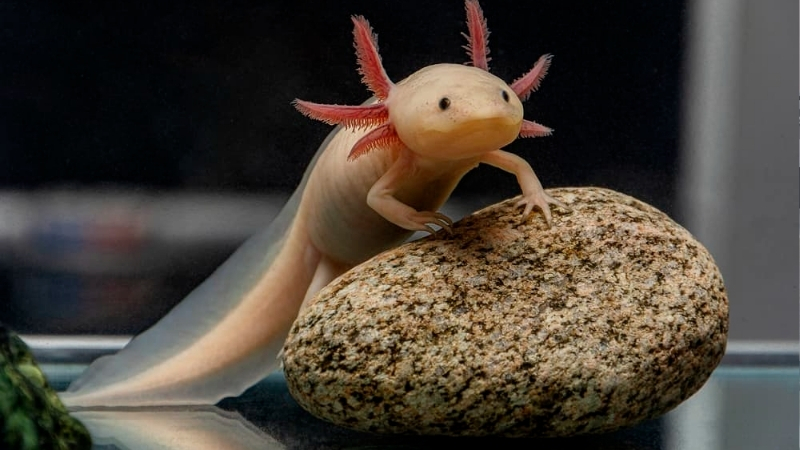
Very fine sand is the widely cited husbandry choice because tiny grains pass more easily than swallowable gravel if ingested during feeding. Axolotl Central guidance points to sand under about 1 mm, which fits CaribSea Moonlight at 0.25-0.75 mm and UNS Controsand around 0.4-0.9 mm.
Grain that reaches or exceeds 1 mm sits at the edge of that guidance, so Crystal River at up to 1.0 mm is borderline and Peace River at 1-2 mm falls outside a conservative shortlist. Choose a product whose full range stays below the threshold rather than one that only sometimes does.
Avoid Gravel and Pebbles
Gravel and pebbles are the classic impaction hazard, because a swallowable stone can lodge in an axolotl’s gut. Since axolotls feed by suction and can draw in nearby substrate, anything large enough to swallow but too large to pass is the core risk to design out.
This is why fine sand is preferred over gravel, but do not read that as fine sand being 100% safe, because a soft texture does not prevent ingestion. The mechanism is physical size relative to the animal, so keep loose particles either very fine or absent.
Age and Size Matter
A young axolotl is more vulnerable, so timing when you introduce sand matters as much as the grain. Common husbandry guidance suggests waiting until an axolotl is at least around 15 cm, roughly 6 inches, before moving it onto sand, keeping juveniles on a safer base until then.
Smaller animals have less margin if they ingest substrate, so a bare bottom during the juvenile stage is a reasonable, cautious default. Reassess as the animal grows, and only transition to fine sand once it has reached the size the guidance describes.
Bare Bottom Remains an Option
A bare-bottom tank removes the ingestion route entirely, which is why it stays a legitimate choice for cautious keepers. With no loose particles there is nothing to swallow from the floor, and cleaning is simple because waste sits in plain view for siphoning.
The trade-offs are a less natural look and more visible waste, plus a smoother surface some keepers dislike for footing. Still, for juveniles or for anyone prioritizing risk reduction over aesthetics, bare bottom is the most conservative setup on this list.
Top Options
These options are ranked by how well they match under-1-mm husbandry guidance, not by a safety guarantee, because none is certified axolotl-safe. Prices are relative and current as of 09/2026, and the honest framing is risk reduction, so treat each as a lower-risk choice rather than a safe one.
| Option | Best For | Key Spec | Watch Out For |
|---|---|---|---|
| CaribSea Moonlight Sand | Best match to under-1 mm guidance | 0.25-0.75 mm; pH-neutral smooth grains | No maker certifies axolotl-safe |
| UNS Controsand Bora | Extra-fine white option | ~0.4-0.9 mm; 3 L bag | Small bag; buy enough for footprint |
| UNS Controsand Morocco | Natural darker option | ~0.4-0.9 mm; 3 L bag | Small bag; buy enough for footprint |
| Bare bottom | No-loose-particle setup | No substrate; $0 substrate cost | Less natural look; more visible waste |
CaribSea Moonlight Sand – Best Match to Under-1 mm Guidance
Moonlight Sand fits the guidance most cleanly, with a 0.25-0.75 mm grain that stays well below the 1 mm threshold and pH-neutral smooth natural grains. It sells as a 20 lb bag around $20 as of 09/2026, giving enough coverage for a typical axolotl footprint at a low cost.
The important caveat is that CaribSea does not certify it as axolotl-safe, because no substrate maker does, so this is a best match to guidance rather than a safe guarantee. Even at this grain, feeding still carries some ingestion risk, so target-feed to reduce substrate contact.
UNS Controsand Bora – Extra-Fine White Option
Controsand Bora is an extra-fine natural sand around 0.4-0.9 mm, keeping it under the 1 mm guideline while offering a lighter, whiter look. It comes in a 3 L bag around $30 as of 09/2026, so estimate your footprint and buy enough bags to cover it at a shallow depth.
Its small bag size means larger tanks need several, so plan the quantity before ordering. As with any loose sand, it reduces rather than removes risk, so keep feeding controlled and avoid mixing in any coarser grit that would raise the hazard.
UNS Controsand Morocco – Natural Darker Option
Controsand Morocco matches the Bora grain at roughly 0.4-0.9 mm but in a darker, more natural tone that suits keepers who prefer a muted bed. It also ships as a 3 L bag around $30 as of 09/2026, with the same need to buy enough for your footprint.
The darker color can make axolotls and their food easier to see against the substrate, which helps target-feeding. Like the white variant it is fine loose sand, so it lowers ingestion risk relative to gravel without being certified safe by the manufacturer.
Bare Bottom – No-Loose-Particle Setup
A bare-bottom setup is the most conservative option because it removes the loose-particle ingestion route entirely, with no substrate to swallow during suction feeding. It costs nothing in substrate and makes cleaning straightforward, since waste is fully visible for siphoning.
The downsides are cosmetic and practical: a less natural look, more obvious waste, and a smoother floor. For juveniles under about 15 cm, or for keepers who prioritize risk reduction, bare bottom is a sensible default until the animal is large enough for fine sand.
Frequently Asked Questions
Axolotl-substrate questions focus on grain size, juveniles, gravel, and bare bottom versus sand. Each answer leads with the direct call, then the safety caveat that no loose substrate removes ingestion risk entirely, only reduces it.
What Grain Size Is Safer for Axolotls?
Very fine sand under about 1 mm is the widely cited choice, since small grains pass more easily than swallowable gravel if ingested during suction feeding. That points to products like Moonlight at 0.25-0.75 mm or Controsand around 0.4-0.9 mm, whose full stated range stays below the 1 mm threshold.
Grain that reaches 1 mm or more sits at or past the edge of that guidance, so it is a less conservative choice for a species that feeds off the floor. Remember that fine sand reduces risk but is not 100% safe, because a soft texture does not prevent ingestion when an axolotl draws in nearby substrate.
What About Baby Axolotls?
Keep juveniles on a bare bottom until they reach the size the guidance describes, commonly around 15 cm or 6 inches, before you introduce any sand. Younger, smaller animals have less margin if they ingest substrate, so removing loose particles entirely is the cautious default during the vulnerable growth stage.
Bare bottom also makes it much easier to monitor feeding and waste while a young axolotl grows. Transition to fine sand only once the animal has reached the described size, and even then keep feeding controlled and carefully targeted to limit how much substrate contact happens at mealtimes each day.
Can I Use Gravel for Axolotls?
Gravel is generally discouraged because swallowable stones are the classic impaction hazard for axolotls that suction-feed near the floor. A stone large enough to swallow but too large to pass can lodge in the gut, which is exactly the outcome fine sand under 1 mm is chosen to help avoid in the first place.
If you want a substrate rather than bare bottom, very fine sand under 1 mm is the safer direction, not gravel or pebbles of any size. The core issue is particle size relative to the animal, so keep any loose material either very fine or absent, and never mix a coarse grit into a fine-sand bed.
Bare Bottom or Fine Sand?
Bare bottom is the more conservative choice because it removes the ingestion route entirely, while fine sand offers a more natural look with reduced but not zero risk. For juveniles or the most cautious setups, bare bottom wins; for grown adults, fine sand under 1 mm is a reasonable and popular option.
Neither is a guarantee, since even fine sand can be ingested during feeding when an axolotl suctions in food. Choose based on how much you value a natural look versus maximum risk reduction, and target-feed with tongs or a dish in either case to minimize contact with the substrate.
Final Thoughts
The best substrate for axolotl tank safety is very fine sand under about 1 mm, such as Moonlight or Controsand, or a bare bottom for cautious setups, since fine sand reduces impaction risk relative to gravel without making it zero. No maker certifies a substrate as axolotl-safe, so match the grain and the animal’s size to guidance, target-feed to limit contact, and treat loose substrate as lower-risk, not risk-free.
As an Amazon Associate we earn from qualifying purchases at no extra cost to you. Prices and availability are accurate as of the date shown and are subject to change.
Ready to decide? Our #1 pick for 2026 is the CaribSea Moonlight Sand.
Live price & availability on Amazon.
Related Reviews & Guides
How to Choose a Pond Pump: Trusted Expert Step-by-Step Guide
Best Aquarium Canopy For Large Display Tanks: Top Compared