Last Updated: September 10, 2026
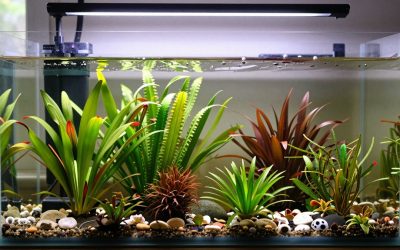
The best filter for a 20-gallon planted aquarium fits the tank, supports the intended filtration tasks and remains practical to maintain. Nominal capacity is only part of that decision. The animals, planting layout, available space and access for cleaning also matter.
Start with the actual tank dimensions and proposed stocking, then compare filter designs. Two tanks with the same stated capacity can leave different amounts of room for an intake, outlet or filter body. This guide compares setup requirements rather than presenting laboratory test results.
Understand the jobs inside a filter
Tetra’s overview of aquarium filtration distinguishes mechanical, biological and chemical filtration. Mechanical media capture particles. Biological filtration provides a setting for bacteria involved in processing nitrogen waste. Chemical media have particular uses, depending on the material and the problem being addressed.
A filter description should explain the media it accepts and how those media are maintained. Do not assume that every cartridge performs every task, or that clear-looking water establishes suitable conditions for livestock. A filter is part of aquarium care, alongside appropriate monitoring and maintenance.
Compare the physical approaches
Internal filters
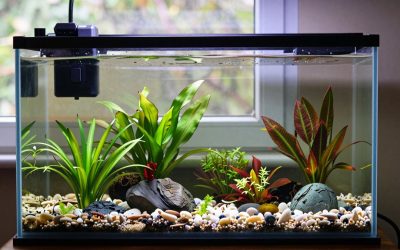
An internal filter occupies space inside the aquarium. Check its dimensions, mounting arrangement and the room needed to remove media. In a planted layout, consider whether plants or decoration would obstruct access or the intended movement of water.
Hang-on-back filters
A hang-on-back design needs compatible space at the tank edge and behind the aquarium. Check the fit with the rim and lid, the intake position and the manufacturer’s operating requirements. Measure the actual location rather than assuming that a product photograph matches your tank.
Canister filters
A canister arrangement requires space for the unit and its connections. Think about the route of the hoses and how the equipment will be accessed for service. A model that is difficult to reach in its intended location may make routine maintenance less manageable.
Sponge filters
For a sponge-filter option, check how the exact model is driven and which supporting components are included or required. Consider the space occupied in the tank and how the sponge will be accessed. Do not assume that the listed filter alone includes every component needed for operation.
Read flow information in context
A published flow figure helps identify a model, but it does not by itself establish suitability for every aquarium of a given size. Review the manufacturer’s intended application, available adjustments and setup instructions. Consider the needs of the planned livestock rather than choosing the largest number automatically.
For a planted aquarium, think through where the intake and outlet will sit relative to the layout. Avoid treating a generic turnover rule as a substitute for evaluating the actual setup. If you are unsure about the needs of a species, obtain reliable species-specific guidance before selecting equipment.
A filter option for your shortlist
As an Amazon Associate we earn from qualifying purchases.
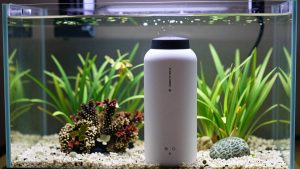
The Tetra Whisper IQ 130 GPH filter is one filter option to assess against your 20-gallon planted setup. Confirm the exact version, fit, media requirements and instructions, including its intended tank application. The flow figure alone does not establish suitability for your livestock or layout.
Keep the model number in your shortlist, since a family name may cover several sizes. Check which replacement media and service parts are available for that version rather than assuming all products in the range share the same components.
Plan maintenance before installation
- Identify how to reach the media without disturbing the whole layout.
- Read the model’s instructions for cleaning and replacing components.
- Check what maintenance supplies are needed and where they will be stored.
- Allow room to handle removable parts and follow electrical safety instructions.
- Keep a record of the exact media and replacement parts used.
A new filter does not automatically establish a mature biological system. Follow appropriate aquarium setup and monitoring guidance rather than treating installation as an instant guarantee of safe water. Do not replace all media on an arbitrary schedule borrowed from a different filter; use instructions appropriate to the actual system.
Choose the design that meets your tank’s requirements and that you can maintain consistently. Equipment fit, documented operation and accessible media give you a practical basis for comparing the options and keeping the planted layout manageable.

Aquascape Tweezers Scissors Curved Tool
Betta Fish Planted Tank Setup: Step by Step