Last Updated: September 25, 2026
Most first aquascapes look busy because they mix four styles at once. The best aquascaping layout ideas for beginners come down to a handful of composition habits, such as sloping the substrate, placing one focal point off-center, and grouping hardscape in odd numbers, then executing a single style cleanly.
As an Amazon Associate we earn from qualifying purchases.
By David Nguyen
Quick answer: For most people in 2026, the best aquascaping layout ideas for beginners is the Substrate slope — our #1 rated choice. See the full ranked comparison, alternatives and buying advice below.
How Aquascaping Layouts Work
Good beginner layouts are built from a few repeatable rules rather than talent: raise the substrate toward the back for depth, set one focal point off the midline, group stones or wood in odd numbers, and design so you can actually maintain it. Four styles apply these well, and the sections below cover each in practice.
Substrate Slope and Depth
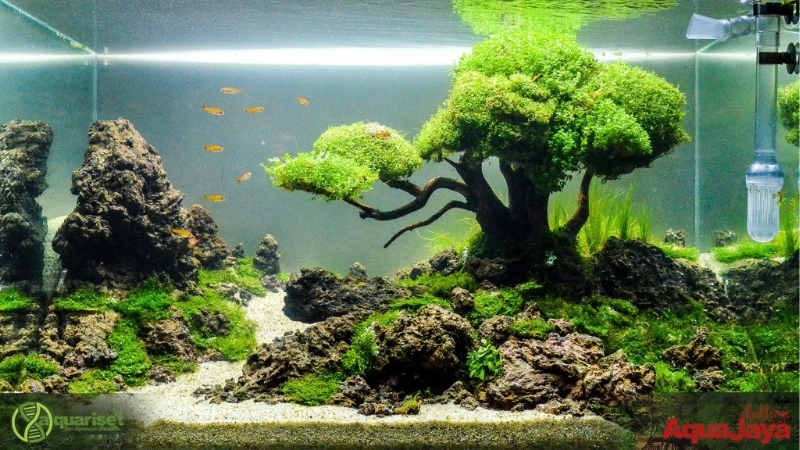
A rising substrate is the simplest way to create perceived depth, since a bed that climbs toward the back reads as distance. Tropica suggests roughly 3-4 cm at the front rising to 6-8 cm at the rear as a design guide, which is about twice as deep at the back, though it is a perspective choice, not a biological minimum.
The rear rise creates visual depth and perspective; it does not add root nutrition, so do not over-deepen the back expecting better growth. Fine substrate at 6-8 cm can also compact, so keep some flow or stir occasionally, and terrace with rock or wood if a steep slope keeps sliding flat.
Off-Center Focal Point
Placing the main feature off-center is what separates a composed scape from a symmetrical wall. A common approximation borrows the rule of thirds, putting the dominant stone or wood near one-third of the tank width, which gives the eye a clear entry point and room to travel.
Treat thirds as a starting approximation, not a mandatory grid, since strong scapes break it deliberately. Avoid a dead-center focal mass, which tends to feel stiff and static, and let open substrate or a path lead toward the feature rather than crowding it against the glass.
Odd Hardscape Groups
Grouping hardscape in odd numbers is a long-standing convention because odd sets avoid the mirror-symmetry the eye reads as artificial. Iwagumi layouts typically use odd stone counts such as 3, 5, or 7 with one clearly dominant stone, but that is a style convention, not a rule every aquascape must follow.
The point is a clear hierarchy, one main mass with supporting pieces, rather than a specific number. Even a two-stone scape can work if one dominates; what fails is several same-size pieces spaced evenly, which reads as a row rather than a composition.
Designing for Maintenance
The layout you can maintain beats the ambitious one you cannot, so build in access from the start. The Tropica Layout 115 example runs a 35 L tank with no CO2 and only 0.5-1 hour of maintenance per week, but that figure belongs to that specific low-demand scape and does not generalize to dense, high-light layouts.
Leave room to reach the glass and substrate, and favor slower plants near hardscape you do not want to disturb. Dense stem scapes and carpets demand far more trimming than a simple nature layout, so match the style to the time you will realistically give it each week.
What It Looks Like in Practice
Four beginner-friendly styles put these composition rules to work, each with a different level of effort and equipment. Pick one and execute it cleanly rather than blending all four into a single crowded tank, which is the most common and most avoidable first-scape mistake.
| Factor | Normal Range | Watch-out Threshold | What to Do |
|---|---|---|---|
| Substrate slope | Front ~3-4 cm, rear ~6-8 cm | A near-flat bed reads with no depth | Raise the rear gradually toward the back glass |
| Iwagumi stones | Odd counts like 3, 5, or 7 | Even, same-size groups look static | Use an odd count with one dominant stone |
| Focal placement | Main mass near one-third width | A dead-center focus feels stiff | Offset the main stone or wood off the midline |
| Dutch planting | ~1 species per 10 cm; ~80-90% planted | Too many species reads as clutter | Limit species and keep most substrate planted |
Simple Low-Tech Nature Layout
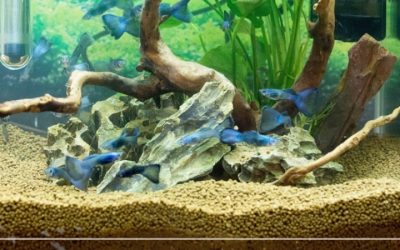
This is the most forgiving start: a gentle slope, one wood or stone focal point off-center, and hardy plants like Anubias, java fern, and crypts. It can run without CO2, and a low-demand scape near 35 L may need only about half an hour to an hour of upkeep a week, similar to the Tropica Layout 115 example.
The trade-off is patience, since slow plants fill in gradually and the scape looks sparse for the first month. Resist adding more species to fill gaps; instead let the chosen plants spread, which keeps maintenance low and the composition coherent.
Nature or Island Layout
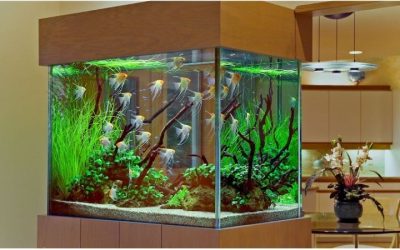
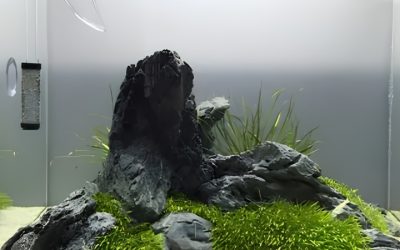
An island (or single-mound) layout concentrates hardscape and planting into one off-center mass with open substrate around it, which reads as depth in a shorter tank. Keep the mound near one-third of the width and slope the substrate up into it so the island feels anchored rather than floating.
The common beginner error is letting the island grow until it fills the tank and loses the open-space contrast that makes it work. Trim outward growth back toward the mound, and use a fine, open foreground sand or low carpet to preserve the negative space.
Iwagumi Stone Layout
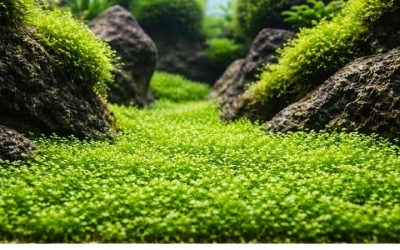
Iwagumi is a minimalist stone composition, typically an odd count such as 3, 5, or 7 with one dominant stone and a simple carpet. It is visually clean but less forgiving, because the open layout leaves algae and imperfect stone placement nowhere to hide.
Carpets in an Iwagumi usually want strong light and often CO2, so this is a step up in demand from a low-tech nature scape. Set the main stone first at roughly one-third width, angle supporting stones toward it, and commit to the placement before planting.
Beginner Dutch-Inspired Layout
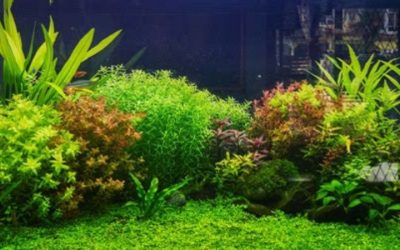
A simplified Dutch-inspired scape leans on plants rather than hardscape, using groups of stems in contrasting textures and colors. Style guidelines suggest roughly one species per 10 cm of tank length and around 80-90% planted substrate, but treat those as composition guides, not fixed thresholds.
Full Dutch layouts are trimming-intensive and demand steady dosing, so beginners should start with fewer species and accept a looser interpretation. Keep streets and height terracing simple, and expand the plant list only once you can keep the first few groups healthy.
Frequently Asked Questions
Beginner layout questions usually cover the easiest style to start with, how to slope the substrate, how many stones an Iwagumi uses, and whether a Dutch layout is realistic. Each answer leads with the direct call, then the practical exception that changes it.
What Is the Easiest Aquascape Layout for Beginners?
A simple low-tech nature layout is the easiest place to start, because hardy plants like Anubias, java fern, and crypts tolerate mistakes and the scape can run without CO2. A modest low-demand tank may need only about 0.5-1 hour of weekly upkeep, close to the Tropica Layout 115 example at 35 L.
The catch is speed, since slow plants take weeks to fill in and the tank looks bare at first. Resist the temptation to overplant for instant coverage, because crowding raises maintenance and muddies the composition, and let the chosen plants spread into the gaps on their own instead.
How Should I Slope the Substrate?
Rise the substrate toward the back, roughly 3-4 cm at the front to 6-8 cm at the rear, to create perceived depth in the scape. That is about twice as deep at the back, but treat it as a perspective guide rather than a rule you must hit exactly, since tank height and viewing angle change it.
The slope adds visual depth, not nutrition, so do not over-deepen the rear expecting faster growth from the extra substrate. If a steep slope keeps sliding flat, terrace it with rock or wood, or use a slightly coarser substrate that holds its angle better over the first few months.
How Many Stones Does an Iwagumi Use?
Iwagumi conventionally uses an odd number of stones, such as 3, 5, or 7, with one clearly dominant piece anchoring the composition. The odd count is a style convention that avoids mirror symmetry, not a hard requirement that every layout must follow in order to look intentional.
What matters more than the exact number is hierarchy: one main stone with subordinate supporters angled toward it. Even a small two-stone scape works if one clearly dominates, while several equal stones spaced evenly in a row tend to read as static rather than composed.
Is a Dutch Layout Good for Beginners?
It can be, in a simplified form, but a full Dutch style is one of the more demanding layouts because of heavy trimming and steady dosing. Guidelines of about one species per 10 cm of length and 80-90% planting are composition targets, not thresholds you must meet to call a tank Dutch.
Start with a handful of species and a looser interpretation, then add complexity as you keep the first groups healthy and dense. If weekly trimming time is scarce, a nature or island layout delivers more visual payoff for less ongoing work than a true Dutch scape.
Final Thoughts
The best aquascaping layout ideas for beginners are less about talent than about a few repeatable habits: slope the substrate for depth, place one focal point off-center, group hardscape in odd numbers, and design for the maintenance time you actually have. Choose a single style, whether nature, island, Iwagumi, or a simplified Dutch, and execute it cleanly rather than blending several into a crowded tank.
As an Amazon Associate we earn from qualifying purchases at no extra cost to you. Prices and availability are accurate as of the date shown and are subject to change.

AQUASCAPING DESIGN IDEA: A Practical Handbook for Aquascaping Enthusiasts Featuring Nature Aquarium Styles, Nano Aquascapes, River Layouts, Moss Designs, and Creative Aquarium Landscaping Ideas.
Selected for "Best Aquascaping Layout Ideas for Beginners: Proven Guide": this listing is aquarium equipment (AQUASCAPING DESIGN IDEA: A Practical Handbook for Aquascaping Enthusia), matching the equipment this article covers.
View on Amazon
AQUASCAPING HANDBOOK: The Aquascaper’s Bible: Mastering Layouts, Water Chemistry, Aquatic Plants, and Fish for Vibrant Aquariums.
Selected for "Best Aquascaping Layout Ideas for Beginners: Proven Guide": this listing is aquarium equipment (AQUASCAPING HANDBOOK: The Aquascaper’s Bible: Mastering Layouts, Water), matching the equipment this article covers.
View on Amazon
Mastering Aquascaping for First-Time Hobbyists: Step-by-step guide for freshwater aquarium builds with visual layout ideas, maintenance schedules and practical tools for your first planted tank
Selected for "Best Aquascaping Layout Ideas for Beginners: Proven Guide": this listing is tanks (Mastering Aquascaping for First-Time Hobbyists: Step-by-step guide for), matching the equipment this article covers.
View on Amazon
Aquascaping: A Step-by-Step Guide to Planting, Styling, and Maintaining Beautiful Aquariums
Selected for "Best Aquascaping Layout Ideas for Beginners: Proven Guide": this listing is aquarium equipment (Aquascaping: A Step-by-Step Guide to Planting, Styling, and Maintainin), matching the equipment this article covers.
View on AmazonReady to decide? Our #1 pick for 2026 is the Substrate slope.
Live price & availability on Amazon.
Related Reviews & Guides


Best LED Strip Lights for Planted Aquariums (2026)
Java Fern Care Guide: How It Grows and What to Watch For