Last Updated: October 4, 2026
- Top Pick: Crystalpro Flora Multi Minerals All-in-One Aquarium Plant Fertilizer – Plant Food for Fast Root & Leaf Growth – Safe for Fish, Shrimp & Snails (4.2 Oz / 125ml)
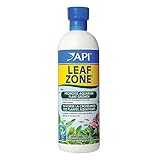
- Best Value: API LEAF ZONE Freshwater Aquarium Plant Fertilizer 18-Ounce Bottle White
- Premium Choice: Thrive Planted Aquarium Fertilizer -All in One Planted Tank Liquid Fertilizers – Micro & Macro Nutrient Rich Food for Aquatic Plants – Highly Concentrated for 2500 Gallons of Water – Handy Pump Bottle

TL;DR
Bottom line: Liquid aquarium plant fertilizer delivers macro and micro nutrients directly into the water column — essential for stem plants, mosses, and floating plants that feed primarily through their leaves. Seachem Flourish and Tropica Specialised are the two most proven all-in-one options. Dose lightly and consistently rather than in large weekly dumps; plants uptake nutrients continuously, not in bursts.
As an Amazon Associate we earn from qualifying purchases at no extra cost to you.




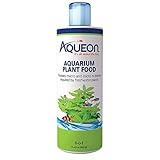

Best Aquarium Plant Fertilizer Liquid: Dosing Guide for Lush Planted Tanks (2026)
A healthy planted aquarium is not just about light and CO2 — nutrition is the third leg of the triangle. Aquarium plant fertilizer in liquid form addresses the micronutrient and macronutrient deficiencies that show up as yellowing leaves, stunted growth, and holes in older foliage even in tanks with excellent lighting and carbon supplementation. Understanding what your plants actually need, and how different fertilizer formulations deliver it, is what separates a thriving scape from a tank full of struggling stems.
This guide covers the difference between macro and micro fertilizers, how to read deficiency symptoms, which liquid fertilizer products work best in different tank setups, and the Estimative Index dosing method that many aquascapers use to eliminate guesswork entirely. Whether you are running a low-tech Walstad bowl or a high-tech CO2-injected Dutch scape, the nutrient principles are the same.
🛒 Best Price Today on Amazon
Prime members get fast, free shipping on everything above, plus member-only deals. New members get a 30-day free trial — cancel anytime.
Start 30-Day Prime Free Trial →See Today’s Amazon DealsTop 3 liquid aquarium plant fertilizers




As an Amazon Associate we earn from qualifying purchases. Product prices and availability are accurate as of the date/time indicated.


As an Amazon Associate we earn from qualifying purchases. Product prices and availability are accurate as of the date/time indicated.



As an Amazon Associate we earn from qualifying purchases. Product prices and availability are accurate as of the date/time indicated.
Liquid fertilizer formulations compared
| Product | Type | NPK included? | Trace metals | Best for |
|---|---|---|---|---|
| Seachem Flourish | Comprehensive micro | No (micro only) | Chelated Fe, Mn, Zn, B, Mo | All planted tanks, supplement to root tabs |
| Seachem Flourish Comprehensive | All-in-one macro+micro | Yes (low NPK) | Full chelated suite | Low-to-medium light, low fish load |
| Tropica Specialised | All-in-one macro+micro | Yes (higher NPK) | Full chelated suite | High light, CO2, heavy plant mass |
| NilocG Thrive | All-in-one macro+micro | Yes | Full chelated suite | High value, community favorite |
| DIY PMDD | Custom macro+micro | Customizable | Custom | Advanced hobbyists, large tanks |
Macros vs micros: what plants actually need
Plants require two categories of nutrients. Macronutrients — nitrogen (N), phosphorus (P), and potassium (K) — are needed in relatively large quantities and are typically the limiting factor in high-light, fast-growing tanks. Micronutrients (trace elements) — iron, manganese, zinc, boron, molybdenum, copper — are needed in tiny amounts but are just as critical for specific metabolic processes. A deficiency in any single trace element can halt growth or cause visible leaf damage even when all other parameters are optimal.
In a community tank with a moderate fish load, fish waste provides meaningful amounts of nitrogen and phosphorus — sometimes enough that you only need to supplement micronutrients (Seachem Flourish alone covers this). In a lightly stocked or shrimp-only planted tank, you will need a complete macro and micro fertilizer to supply everything plants need without fish waste as a nutrient source.
Iron is the micronutrient most commonly deficient in planted tanks. The symptom is interveinal chlorosis on young leaves — the leaf veins stay green while the tissue between them turns pale yellow. This is almost always an iron or manganese deficiency and responds quickly to increased liquid iron dosing. Unlike nitrogen deficiency (which shows first on older leaves), iron deficiency appears on new growth first because iron is not mobile within plant tissue.
How to dose liquid fertilizer correctly
The most common mistake is under-dosing out of algae fear. Liquid fertilizer itself does not cause algae — nutrient imbalance does. A tank with strong light, CO2, and insufficient fertilizer will grow algae on struggling plants because the plants are not healthy enough to outcompete algae for available nutrients. The solution to algae in a planted tank is almost always more plants and correct fertilization, not less fertilizer.
The Estimative Index (EI) method, developed by Tom Barr, solves the guesswork problem by dosing macro and micro fertilizers at deliberately high levels throughout the week and doing a 50% water change at the week’s end to reset. This keeps nutrients consistently above deficiency thresholds without accumulation. EI targets are roughly: NO3 at 5–30 ppm, PO4 at 1–3 ppm, K at 10–30 ppm, and Fe at 0.1–0.5 ppm. For high-tech tanks with CO2 and strong lighting, EI is straightforward and reliable.
For low-tech tanks without CO2, scale fertilization back significantly — plants grow more slowly and consume nutrients proportionally less. Tropica Premium (low NPK) or Seachem Flourish at half dose works well for low-tech setups. Overdosing macros in a low-light, no-CO2 tank will cause algae because there is not enough plant growth to consume the nutrients quickly enough.
Root tabs vs liquid fertilizer
Root tabs deliver nutrients directly to substrate-rooting plants — swords, crypts, vallisneria, and heavy-rooted stem plants all benefit from root tabs alongside liquid column fertilization. Stem plants and mosses that anchor to hardscape feed primarily through their leaves and respond mainly to water column dosing. A complete approach for a heavily planted tank uses both: root tabs under heavy root feeders, and liquid fertilizer dosed regularly into the water column for all plants.
For planted tank setups, also see our low-tech planted tank setup guide for a substrate and lighting approach that works without CO2. If you are building a full aquascape with hardscape, our aquarium driftwood and rocks guide covers material selection and preparation. For CO2 supplementation alongside liquid fertilizer in high-tech setups, see our CO2 aquarium system guide.
FAQ
How often should I dose liquid aquarium plant fertilizer?
For high-tech tanks (CO2 + strong lighting): dose macros three times per week and micros three times per week on alternating days. For low-tech tanks: once or twice per week at reduced rates. Daily dosing at very low rates is also effective and mimics how nutrients are naturally delivered in slow-moving natural bodies of water. Consistency matters more than the exact schedule — plants benefit from stable, predictable nutrition rather than large irregular dumps.
Can liquid plant fertilizer cause algae in an aquarium?
Fertilizer causes algae when nutrient levels significantly exceed plant uptake capacity — usually in tanks with insufficient light or plant mass to consume what is dosed. A densely planted tank with healthy fast-growing stem plants will absorb large fertilizer doses without algae issues. The algae-fertilizer link is most often a symptom of weak plant health rather than a direct cause. Fix the plants (light, CO2, healthy roots) and algae typically recedes even with full fertilization.
Is liquid fertilizer safe for fish and shrimp?
Yes, at standard dosing rates. Seachem Flourish and Tropica Specialised are both safe for fish, shrimp, and snails at recommended doses. The trace amounts of copper in comprehensive fertilizers are sometimes cited as a concern for sensitive invertebrates, but at the concentrations used in planted tank dosing they are within safe limits. If you are keeping very sensitive dwarf shrimp (Crystal Red, Taiwan Bee), use a copper-free iron supplement like Seachem Flourish Iron for trace metal supplementation as a precaution.
What are the signs of nitrogen deficiency in aquarium plants?
Nitrogen deficiency shows as uniform yellowing (chlorosis) starting on the oldest leaves first, with progressive yellowing moving toward newer growth as the plant remobilizes nitrogen from older tissue. Plants may also show stunted growth and thin, pale new leaves. In a community tank this is rare with a reasonable fish load, but shrimp-only and very lightly stocked tanks often need supplemental nitrogen. A complete liquid fertilizer with NPK addresses this directly.
Do I need liquid fertilizer if I have a nutrient-rich substrate?
Active substrates like ADA Aquasoil, Fluval Stratum, and similar volcanic ash substrates release macronutrients heavily for the first two to four months and then gradually deplete. Most planted tank hobbyists find that micronutrient supplementation (liquid iron and trace elements) is beneficial even with fresh active substrate, and full liquid fertilization becomes necessary after the substrate’s initial nutrient release period ends — typically by the six-month mark. Treating the substrate as temporary nutrition and building a consistent liquid dosing routine from the start is good practice.
Frequently Asked Questions
What nutrients does a liquid fertiliser supply?
A complete product covers macros, meaning nitrogen, phosphorus and potassium, plus micros such as iron, manganese, boron, zinc, copper and molybdenum. Many popular all-in-one bottles are deliberately low in nitrate and phosphate on the assumption fish waste supplies them, so a tank of hungry stems often needs a separate macro dose.
How do I know which nutrient is missing?
Read the plants. Yellowing between the veins of new leaves points to iron or magnesium, uniformly pale older leaves suggest nitrogen, pinholes and ragged edges on older leaves are classic potassium deficiency, and stunted twisted new growth often means calcium or boron. Change one variable at a time.
Can I dose on the day of a water change?
Yes, dosing straight after the change is standard practice because you are resetting to a known baseline. Add dechlorinator first, let the filter mix the tank for fifteen or twenty minutes, then dose. Avoid dosing right before a large change, which simply exports what you paid for.
Is more fertiliser better for faster growth?
No. Growth is limited by whichever factor is shortest, usually light or CO2 rather than fertiliser. Once nutrients are sufficient, extra does nothing for the plants and simply accumulates. Overdosing iron in particular can trigger algae and stain silicone, so dose to label and adjust from plant response.
Is liquid fertiliser safe with shrimp?
Generally yes at label dose. Copper in the micro blend is the concern, so dose at the low end, split the weekly amount into smaller daily doses, and never combine it with copper-based medications or snail killers. Shrimp-specific or copper-reduced fertilisers exist for expensive caridina colonies.
Ready to decide? Our #1 pick for 2026 is the Seachem Flourish.
Live price & availability on Amazon.
Related Reviews & Guides

Java Moss for Aquariums: How to Grow and Use This Versatile Aquatic Plant
Java Fern Care Guide: How It Grows and What to Watch For