Last Updated: October 4, 2026
Substrate is one of those foundational decisions that planted tank hobbyists often underestimate — until they try to change it six months into a scape and realize the disruption involved. The substrate you choose affects root development, nutrient availability, water chemistry, aesthetic, and even bacterial colonization patterns in the tank. Gravel, capped soil, and dedicated planted substrates each have legitimate use cases, and the right choice depends as much on your plant list and maintenance philosophy as it does on budget. Here’s a clear-eyed look at the best options available.
🛒 Best Price Today on Amazon
Prime members get fast, free shipping on everything above, plus member-only deals. New members get a 30-day free trial — cancel anytime.
As an Amazon Associate we earn from qualifying purchases.




Quick Picks
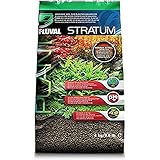
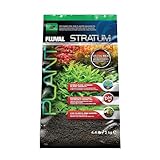
Fluval Plant and Shrimp Stratum
- Volcanic soil promotes root development
- Slightly acidic — ideal for most plants and shrimp
- Porous structure supports beneficial bacteria


As an Amazon Associate we earn from qualifying purchases. Product prices and availability are accurate as of the date/time indicated.
ADA Aqua Soil Amazonia
- Industry benchmark for planted tank soil
- Rich in organic nutrients for demanding plants
- Lowers and stabilizes pH naturally


As an Amazon Associate we earn from qualifying purchases. Product prices and availability are accurate as of the date/time indicated.
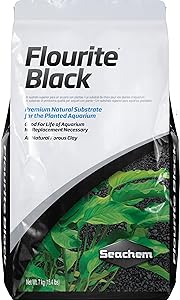
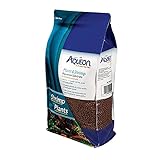
Seachem Flourite Black Sand
- Stable clay gravel — never needs replacing
- Inert base works with root tabs
- Natural dark aesthetic for aquascaping




As an Amazon Associate we earn from qualifying purchases. Product prices and availability are accurate as of the date/time indicated.
Why Trust Our Picks
Our team has built and maintained planted aquascapes across the full spectrum — from low-tech, low-maintenance community tanks to high-tech CO2-injected Nature Aquarium style displays with demanding foreground carpets. We evaluate substrates on nutrient content and longevity, particle size and root penetration, impact on water chemistry, aesthetic in a planted context, ease of planting and replanting, and compatibility with shrimp and sensitive species. We’ve run each of these substrates for at least one full tank cycle before recommending them.
Best Aquarium Substrates for Planted Tanks: In-Depth Reviews
1. Fluval Plant and Shrimp Stratum — Best Overall
Fluval’s Plant and Shrimp Stratum threads the needle between performance and accessibility better than almost anything else in its price range. Made from volcanic soil harvested from the slopes of Mount Aso in Japan, it has a naturally porous structure that does two important things simultaneously: provides excellent root anchorage and nutrient uptake pathways for plants, and creates ideal habitat for the nitrifying bacteria that form the biological filter backbone of any healthy aquarium.
The slightly acidic pH it imparts (typically settling around 6.5–7.0) is ideal for most tropical plants and is particularly well-suited to neocaridina and caridina shrimp, which thrive in soft, slightly acidic conditions. Unlike ADA Amazonia, the Stratum doesn’t release a significant ammonia spike on setup — which means you can often stock fish sooner after cycling. The dark, natural-looking granules photograph beautifully in aquascapes and don’t compact to the point of suffocating roots over time.
- Pros: Volcanic soil structure, root-friendly, shrimp-safe pH range, lower ammonia spike than ADA, porous for beneficial bacteria, great aesthetic
- Cons: Nutrient reserves deplete after 12–18 months (supplement with root tabs thereafter); granules can be disturbed by vigorous digging fish
2. ADA Aqua Soil Amazonia — Runner-Up
ADA Aqua Soil Amazonia is the substrate that defined the modern planted tank hobby — developed by Takashi Amano and refined over decades, it remains the benchmark against which all other planted substrates are measured. Its extraordinarily rich organic nutrient content provides an almost soil-like growing medium for demanding plants: foreground carpets like Hemianthus callitrichoides, stem plants with high root-feeding tendencies, and technically demanding species all respond to Amazonia with noticeably faster growth than on inert substrates.
The significant caveat — and it is significant — is the ammonia spike. Fresh Amazonia releases substantial ammonia into the water column during the first two to four weeks, requiring either a fishless cycle, very aggressive water changes, or dry start method setup before livestock can be safely introduced. For experienced aquascapers who plan their setup carefully, this is a manageable inconvenience. For beginners eager to add fish quickly, it’s a genuine barrier. The premium price also reflects its professional-grade positioning.
- Pros: Industry-benchmark nutrient richness, outstanding plant growth, natural pH lowering, proven track record with demanding species
- Cons: Significant initial ammonia spike requires extended fishless cycle; premium price; nutrient depletion after 12–24 months
3. Seachem Flourite Black Sand — Best Budget
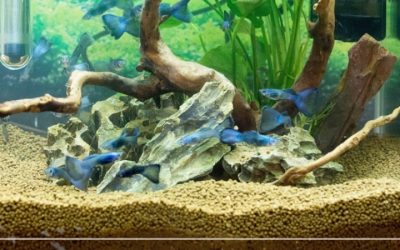
Seachem Flourite Black Sand occupies a fundamentally different category from the volcanic soils above — it’s a fired clay substrate that is chemically inert, meaning it doesn’t leach nutrients into the water and doesn’t affect pH. What it does offer is an exceptionally stable, long-lived substrate that never needs replacing — unlike nutrient-rich soils that exhaust their reserves and require periodic supplementation or full replacement every few years.
Used with root tabs (Seachem’s own Flourish Tabs work excellently), it can support a surprisingly diverse range of plants — including moderate root feeders — at a running cost that’s lower long-term than premium soils. The deep black color is striking in aquascapes and makes fish colors pop in a way that lighter substrates don’t. It requires thorough rinsing before use (it’s notoriously dusty out of the bag), but once settled it stays put and looks excellent indefinitely.
- Pros: Never needs replacing, chemically inert (won’t affect pH), beautiful dark aesthetic, pairs well with root tabs, long-term economy
- Cons: No intrinsic nutrients — requires root tabs for planted success; very dusty out of the bag and requires extended rinsing; less ideal for carpeting plants
Buyer’s Guide: Choosing Substrate for a Planted Tank
Nutrient-Rich Soil vs. Inert Substrate: Nutrient-rich soils (Fluval Stratum, ADA Amazonia) give plants a head start and support demanding species without additional fertilization for the first year. Inert substrates (Flourite, sand, gravel) are more stable long-term but require root tabs and liquid fertilizers to support heavy plant growth.
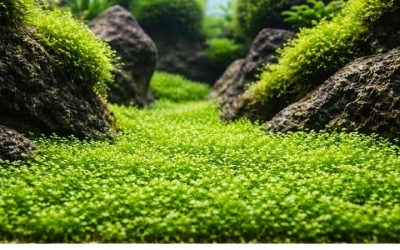
Particle Size and Carpeting Plants: Fine-particle substrates (sand, fine soil) are essential for carpeting plants like HC Cuba and dwarf hairgrass — their shallow roots can’t anchor in coarse gravel. Stem plants and rhizome species like anubias are less fussy about particle size.
pH Impact: Volcanic soils typically lower pH — beneficial for soft-water species and most shrimp but potentially problematic for African cichlids or hard-water community fish. Always consider your fish stocking list when choosing substrate.
Depth: Aim for at least 2–3 inches of substrate depth for rooted plants — shallower substrate starves roots of the growing medium they need. For large aquascapes with significant hardscape, you can save money by using inert filler (like pool filter sand) beneath a thinner top layer of premium soil.
Frequently Asked Questions
Can I use regular aquarium gravel for a planted tank?
Plain gravel can work for undemanding plants (java fern, anubias, cryptocorynes) when supplemented with root tabs and liquid fertilizers. For carpeting plants or high-growth aquascapes, a dedicated planted substrate will produce significantly better results.
How deep should substrate be in a planted tank?
A minimum of 2 inches, with 3 inches preferred for rooted plants. Aquascapers often slope substrate — shallower at the front, deeper at the back — to create perspective and provide adequate root depth for background plants.
How long does planted tank substrate last?
Nutrient-rich soils (ADA Amazonia, Fluval Stratum) typically provide meaningful nutrition for 12–24 months before requiring root tab supplementation. Inert substrates like Flourite last indefinitely — they never “run out” because they never contained nutrients to begin with.
Is black substrate better for planted tanks?
Aesthetically, dark substrates make fish colors more vivid and plant greens more saturated — which is why aquascapers tend to favor them. There’s no functional benefit to color itself; what matters is particle size, nutrient content, and chemical properties.
Can I mix different substrates?
Yes — layering is common. A nutrient-rich base layer capped with sand or fine gravel gives you the rooting nutrition of a soil substrate with the aesthetics and practicality of a sand surface. Just ensure the cap layer is dense enough (at least 1 inch) to prevent the soil beneath from clouding the water column.
Final Verdict
For most planted tank hobbyists — whether running a casual community tank with live plants or a serious aquascape — Fluval Plant and Shrimp Stratum delivers the best balance of plant nutrition, shrimp safety, ease of use, and value. For demanding high-tech setups where maximum plant growth is the priority, ADA Aqua Soil Amazonia is worth the premium and the extended cycle time. And for those who want a permanent, never-replaced substrate that rewards a fertilization-focused approach, Seachem Flourite Black Sand is the most economical long-term choice. Whatever you select, commit to adequate depth — roots need room to work.
Related Reviews & Guides


Quick Picks: Aquarium Plant Java Fern & Anubias
Black Beard Algae Treatment: Stability Beats Every Product