Last Updated: October 21, 2026
- Driftwood Types: What You’re Actually Getting
- Top Picks at a Glance
- Preparing Driftwood: The Non-Negotiable Steps
- Rock Selection: What Leaches and What Doesn’t
- Aquascape Composition: The Rules That Actually Work
- Attaching Plants to Hardscape
- Low-Tech Hardscape Aquascaping
- Frequently Asked Questions
- Related Articles

TL;DR: Driftwood and hardscape rocks aren’t just decoration — they affect pH, KH, dissolved tannins, bacterial colonization, and plant anchoring. This tutorial covers wood selection, prep, aquascape composition principles, and species compatibility so your hardscape improves water quality instead of destabilizing it.
Aquarium Driftwood Aquascape Tutorial: Selecting, Preparing & Placing Wood and Rocks
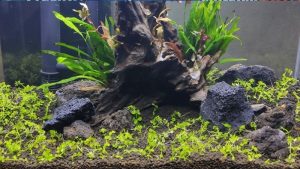
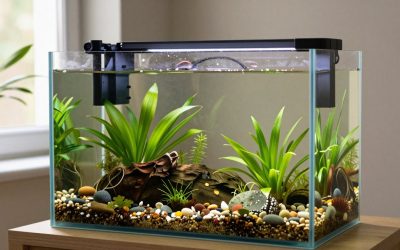
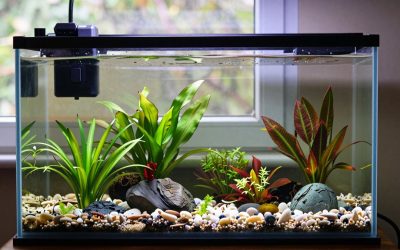
Aquascape hardscape is the skeleton your entire layout hangs on. Get the wood and rock selection right and you create stable pH buffering, biofilm-rich surfaces for beneficial bacteria and shrimp, and natural flow channels that make filtration more effective. Get it wrong and you’re fighting tannin overload, pH crashes, or rocks that leach calcium carbonate into a soft-water Amazonian setup.
As an Amazon Associate we earn from qualifying purchases.

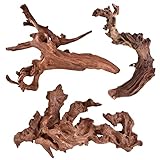


Hardscape interacts directly with substrate chemistry. If you’re planning a planted aquascape, read our aquarium substrate planted tank guide first — the substrate layer you choose determines which wood and rock types are compatible with your target water parameters.
🛒 Best Price Today on Amazon
Prime members get fast, free shipping on everything above, plus member-only deals. New members get a 30-day free trial — cancel anytime.
Start 30-Day Prime Free Trial →See Today’s Amazon DealsDriftwood Types: What You’re Actually Getting
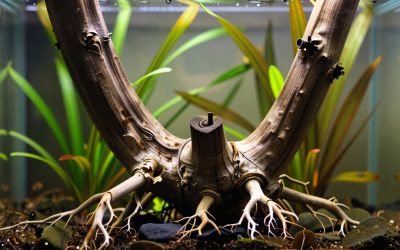
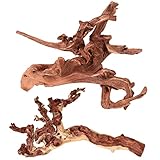
Not all driftwood sold for aquariums behaves the same in water. The species and density matter:
| Wood Type | Tannin Release | Sinks Naturally? | pH Effect | Best For |
|---|---|---|---|---|
| Mopani | High (weeks–months) | Yes (dense) | Moderate acidification | African cichlid, blackwater |
| Spiderwood (Azalea root) | Moderate | No (needs weighting) | Mild acidification | Nano aquascape, shrimp tanks |
| Malaysian driftwood | Moderate–high | Yes | Moderate acidification | Planted tanks, Amazonian setups |
| Cholla wood | Low | No (hollow, lightweight) | Minimal | Shrimp, egg-layer caves |
| Bogwood (pre-soaked) | Low (if cured) | Yes | Low after curing | General community tanks |
| Spider (Pacific driftwood) | Low–moderate | No initially | Mild | Scaping, epiphyte attachment |
Top Picks at a Glance

Ultum Nature Systems Controsoil - Freshwater Aqua Soil Substrate for Fish, Shrimp, Live Plant Propagation and Aquascaping - 6.8pH Low Ammonia, Volcanic Ash - Black, Extra Fine (3 Liter)

hygger 16W Full Spectrum Aquarium LED Light with 10 Levels Brightness, White Blue Red Green LEDs,6H8H12H Timer,RGB Light for 16~24IN Freshwater Fish Tank, Aquatic Plants Tropical Ornamental Fish

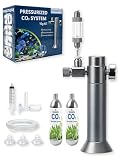
FZONE Aquarium CO2 Regulator 12V DC Solenoid Valve
As an Amazon Associate we earn from qualifying purchases. Product prices and availability are accurate as of the date/time indicated.
Preparing Driftwood: The Non-Negotiable Steps
Skipping prep is how you get white fungal blooms, pH spikes, and floating wood on day one. The full prep sequence:
- Boil for 1–2 hours if the piece fits a pot — kills pathogens, drives out air (helps sinking), and accelerates tannin leaching. For large pieces, sustained soaking in boiling water in batches works.
- Soak in a bucket for 1–2 weeks, changing water daily until it runs clear-ish. Tannin release will never fully stop for dense hardwoods, but soaking reduces the initial surge that can crash pH in low-KH tanks.
- Scrub with a stiff brush (no soap) to remove loose bark, mold patches, or substrate debris from crevices.
- Test your tank pH and KH before adding — if KH is below 4 dKH, even moderate tannin release can swing pH. Use our water test kit guide to establish your baseline.
The white fuzzy biofilm that appears on new driftwood in the first 2–4 weeks is harmless saprophytic fungus processing residual organics. It’s unsightly but not dangerous. Otocinclus, nerite snails, and amano shrimp will consume it. Alternatively, spot-treatment with a toothbrush during water changes removes it mechanically.
Rock Selection: What Leaches and What Doesn’t
The calcium carbonate test: pour white vinegar on any rock you’re considering. Fizzing = carbonate content = pH and KH buffering upward over time. This is exactly what you want for African Rift Lake cichlids (target pH 7.8–8.5) and catastrophic for blackwater Amazonian or soft-water planted tanks (target pH 6.0–6.8).
- Inert rocks (safe for all tanks): Seiryu stone (ironically, lightly carbonate — controversial), lava rock, dragon stone, slate, granite, basalt, quartz
- Carbonate rocks (raise pH/KH): Limestone, tufa, coral rock, Texas holey rock, marble
- Rocks to avoid entirely: Anything painted or sealed, pyrite-bearing rocks (sulfur leaching), unknown colored rocks from outdoor sources
Lava rock earns special mention: its porous structure hosts 3–5x more beneficial bacteria per square inch than smooth hardscape. In a high-bioload tank, a single large lava rock formation is meaningful biological filtration surface area. Pair with a quality canister like the our fluval 207 canister filter review for a complete biological filtration strategy.
Aquascape Composition: The Rules That Actually Work
Three compositional frameworks dominate successful aquascapes:
- Golden ratio / rule of thirds: Primary focal point at one of the four intersections of a 3×3 grid overlay. The eye reads off-center compositions as more dynamic and natural.
- Concave layout: Substrate and hardscape rise toward both sides with a lower center valley — creates depth illusion, plants frame the opening naturally.
- Iwagumi (rock-only): Odd number of rocks, one dominant “oyaishi” (father stone), two subsidiary stones, all angled along the same geological strike line to imply a single formation rather than random placement.
The rule most beginners violate: all rocks in a composition should look like they came from the same geological event. Mixing round river stones with sharp volcanic rock breaks the naturalism entirely. Pick one rock type and vary the size.
Attaching Plants to Hardscape
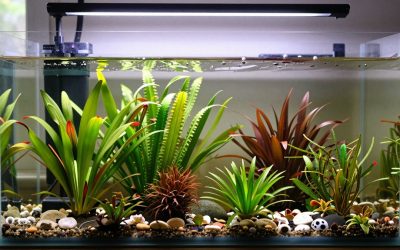
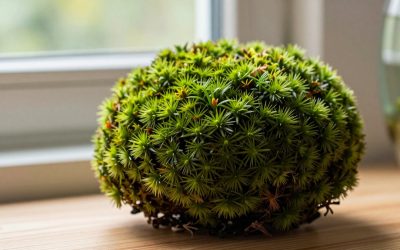
Epiphyte plants (anubias, java fern, bucephalandra, bolbitis) attach to hardscape rather than rooting in substrate. Attachment method:
- Fishing line or cotton thread: Tie rhizome loosely to wood — not the leaves, the rhizome. Cotton degrades in 4–6 weeks by which time roots grip; fishing line can be removed or left.
- Superglue gel (cyanoacrylate): Apply small dot to dry surface, press plant, hold 30 seconds. Fully aquarium-safe when cured. Fastest method for moss and small plants.
- Zip ties: Overkill but extremely reliable for large anubias barteri on heavy driftwood.
Lighting intensity determines how quickly attached plants establish. For CO2-injected planted aquascapes, our see aquarium led light planted comparison covers PAR requirements for epiphytes vs. carpeting plants — getting this balance right prevents algae on your hardscape before plants outcompete it.
Low-Tech Hardscape Aquascaping
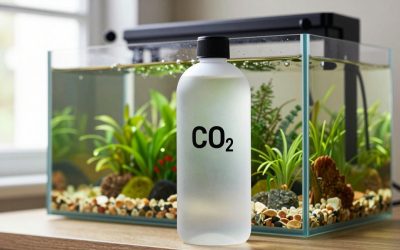
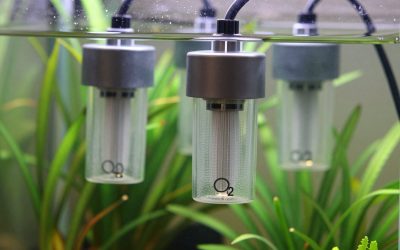
CO2 injection is not required for a stunning hardscape aquascape. Anubias, java fern, cryptocoryne, and moss work in low-tech setups with LED lighting around 25–35 PAR at substrate level. The low-tech planted tank setup guide covers the full no-CO2 approach that pairs well with natural hardscape aesthetics.
Frequently Asked Questions
How do I stop driftwood from floating in my aquarium?
Three methods: (1) Extended soaking — most wood saturates and sinks after 1–4 weeks of waterlogging; (2) Attach to a base slate with aquarium-safe silicone or drill and use stainless steel screws to attach to a heavy flat rock; (3) Wedge securely between rocks in your hardscape — the weight of surrounding stones holds it down while it saturates. Avoid drilling through wood for decorative centerpieces as it compromises structural integrity over time.
Is driftwood safe for all fish species?
Safe for most soft-water and neutral-pH species. Problematic for hard-water species (African cichlids, livebearers, goldfish) if you’re trying to maintain pH above 7.5 — tannin release works against you. In those tanks, use inert rock hardscape without wood, or use very well-cured bogwood in minimal quantities. For shrimp, driftwood tannins are beneficial — check our shrimp tank setup guide for tannin-target parameters.
Can I collect driftwood from nature for my aquarium?
Yes, with significant prep. Collect only wood that has been naturally dried and shows no sign of rot, fungal colonization, or pest infestation. Avoid resinous woods (pine, cedar, spruce) — resins leach toxins. Hardwoods (oak, maple, manzanita in dry climates) work well. Boil thoroughly, soak for 2–4 weeks with water changes, and test your tank parameters before adding. Always err toward over-soaking for wild-collected wood.
Why does my driftwood turn the water brown?
Tannins — polyphenolic compounds leaching from lignin as it hydrates. Chemically similar to tea. Entirely non-toxic and actually beneficial at moderate concentrations (mild antimicrobial properties, reduces stress in blackwater species). Clear it by: (1) longer pre-soaking, (2) activated carbon in your filter for 2–4 weeks (removes tannins but also chelated minerals — remove carbon once water clears), or (3) simply wait 4–8 weeks for natural reduction.
Which rocks are safe for planted aquariums?
Dragon stone, lava rock, slate, basalt, and granite are all inert and safe for planted tanks targeting soft, slightly acidic water. Seiryu stone is debated — it has measurable carbonate content that slowly raises KH, which can be a benefit or a problem depending on target parameters. Test any unknown rock with white vinegar: no fizz = safe for soft-water planted tanks.
9 Best Planted Aquarium Fertilizers for Lush Growth
CO2 for Planted Aquariums: Do You Need It and How Systems Work