Last Updated: October 4, 2026
- Top Pick: 4Pcs Aquascaping Tools, Jeimier Aquascape Kit, Long and Strong Aquarium Tweezers, Scissors, Algae Scraper, Aquarium Plant Tools, Fish Tank Plant Trimming Kit
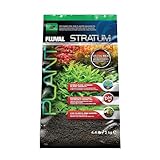
- Best Value: Fluval 12694 Plant and Shrimp Stratum for Freshwater Fish Tanks, 8.8 lbs.
- Premium Choice: Ohtomber 4PCS Aquascape Tool Aquarium Kit with Tweezers Scissors Scraper
🛒 Best Price Today on Amazon
Prime members get fast, free shipping on everything above, plus member-only deals. New members get a 30-day free trial — cancel anytime.
Choosing the Right Aquarium Substrate
Aquarium substrate is the material that covers the bottom of your tank. It serves multiple purposes beyond aesthetics: it anchors plants, provides beneficial bacteria with surface area to colonize, affects water chemistry, and creates a more natural environment for bottom-dwelling fish. The right substrate depends on your tank type — fish-only tanks, planted tanks, and species-specific setups all have different requirements.
As an Amazon Associate we earn from qualifying purchases at no extra cost to you.





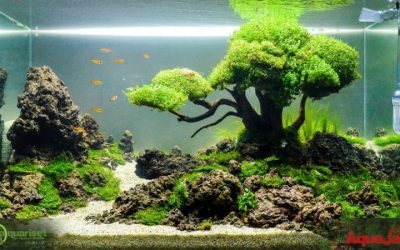
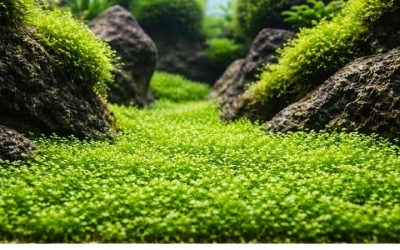
For planted tanks, a nutrient-rich aqua soil or capped substrate provides the foundation for healthy plant growth. For fish-only or breeding tanks, smooth sand or fine gravel is often preferred. Substrate depth matters too — planted tanks typically need 2–3 inches, while fish-only tanks can get by with 1–2 inches.
Fluval Plant and Shrimp Stratum
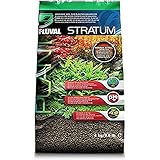
Fluval Plant and Shrimp Stratum is one of the most popular aqua soils for planted tanks. Made from volcanic soil collected from the foothills of Mount Aso in Japan, it provides essential nutrients for plant growth right out of the bag. It slightly lowers pH and softens water, making it ideal for planted tanks with soft-water species like tetras, discus, and dwarf cichlids. The porous granules also provide excellent surface area for beneficial bacteria and are perfect for shrimp tanks. It does cloud the water initially, so a slow fill is recommended.
CaribSea Eco-Complete Planted Aquarium Substrate
CaribSea Eco-Complete is a basalt volcanic substrate packed with iron, calcium, magnesium, potassium, and sulfur — all essential plant nutrients. Unlike some aqua soils, Eco-Complete does not significantly alter pH, making it more versatile across a range of fish species. It comes pre-rinsed and packed in a conditioning liquid that contains live heterotrophic bacteria to help cycle the tank faster. The dark, coarse grain adds a dramatic look to planted aquascapes.
Seachem Flourite Black Clay Gravel
Seachem Flourite Black is a porous clay gravel specifically designed for planted aquariums. It does not alter water chemistry and never needs replacement — it is a permanent substrate that provides a stable, nutrient-retaining foundation for plant roots. The black color enhances the vibrancy of fish and plant colors. Flourite is denser than aqua soils and does not compact over time, preventing anaerobic dead spots. Rinse thoroughly before use to reduce initial cloudiness.
What to Look For in Aquarium Substrate
- Planted vs. fish-only: Nutrient-rich aqua soils for planted tanks; inert sand or gravel for fish-only setups.
- Water chemistry impact: Some substrates lower pH (aqua soils); others are neutral (Flourite, Eco-Complete).
- Grain size: Fine grains suit bottom-dwelling fish and rooted plants; coarser grains allow better water flow.
- Depth: 2–3 inches for planted tanks; 1–2 inches for fish-only tanks.
- Rinse before use: Most substrates require rinsing to prevent severe cloudiness.
- Color choice: Darker substrates reduce fish stress and make colors pop; lighter substrates show detritus more easily.
Matching Substrate to Your Plants and Fish
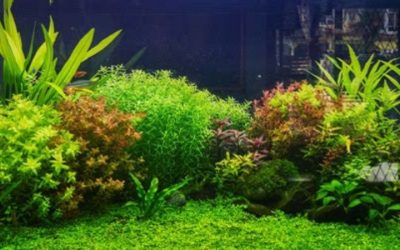
The right substrate does more than look good; in a planted tank it anchors roots, stores nutrients, and influences water chemistry. Nutrient-rich aquasoils are designed for demanding rooted plants and often lower pH and hardness slightly, which suits species like crypts, swords, and most stem plants as well as shrimp. Inert substrates such as gravel or sand do not feed plants directly, so they pair well with root tabs and liquid fertilizers for plants that draw nutrients from their roots.
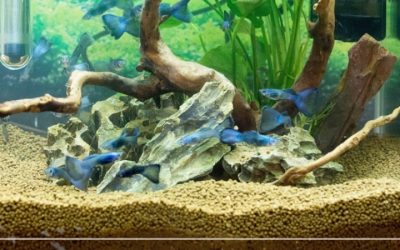
Grain size matters too. Fine sand looks natural and is ideal for corydoras and other fish that sift the bottom, but it can compact over time. Small gravel allows good water flow around roots and is easy to vacuum. Many aquascapers use a layer depth of two to three inches in planted areas so roots have room to spread, sloping it slightly higher at the back for visual depth. Always rinse inert substrates thoroughly before use; aquasoils, by contrast, should not be rinsed, as that washes away the nutrients you are paying for.
Setup, Cycling, and Long-Term Care
Fresh aquasoils commonly leach ammonia for the first few weeks, which is actually helpful for cycling a new tank but means you should fully cycle before adding livestock and perform extra water changes early on. When planting, fill the tank slowly by pouring water onto a plate or bag to avoid disturbing the substrate and clouding the water. Heavily rooted plants benefit from being planted firmly so they do not float free.
Over time, nutrient-rich substrates gradually deplete, so supplement with root tabs every few months to keep heavy root feeders thriving. Avoid deep-cleaning aquasoil with a gravel vacuum, since stirring it releases trapped nutrients and breaks down its structure; instead, hover the vacuum just above the surface to remove debris. With inert gravel or sand, you can vacuum more aggressively. A capping layer of sand or fine gravel over a nutrient base is a popular technique that keeps soil in place while still feeding roots, giving you the best of both worlds in a long-lasting planted layout.
Frequently Asked Questions
How deep should aquarium substrate be for plants?
Aim for about two to three inches of substrate in planted areas so roots have room to spread and anchor. Sloping it deeper toward the back of the tank adds visual depth and gives larger root systems more space.
Do I need special substrate for a planted tank?
Heavy root feeders thrive in nutrient-rich aquasoil, but many plants do well in inert gravel or sand supplemented with root tabs and liquid fertilizer. The best choice depends on the plants you want to grow.
Should I rinse aquarium substrate before adding it?
Rinse inert gravel and sand thoroughly to remove dust and prevent cloudy water. Do not rinse nutrient-rich aquasoils, as rinsing washes away the very nutrients that feed your plants.
Can I use sand in a planted aquarium?
Yes, sand works in planted tanks and looks very natural, though it holds fewer nutrients than aquasoil and can compact over time. Pair it with root tabs and gently stir it occasionally to keep it healthy.
How long does planted aquarium substrate last?
Nutrient-rich substrates typically provide strong fertility for a year or more before depleting, after which root tabs keep heavy feeders supplied. Inert substrates last indefinitely since their job is structural rather than nutritional.
Final Thoughts
The right substrate sets the foundation for a thriving aquarium. Fluval Stratum and CaribSea Eco-Complete are outstanding choices for planted tanks, while Seachem Flourite Black is a permanent, chemistry-neutral option that never needs replacement. Match your substrate choice to your fish species, plant ambitions, and water chemistry goals, and you will build a stable, beautiful aquarium from the ground up.
Related Reviews & Guides


Blue Green Algae Aquarium Treatment: Flow, Blackout, Speed
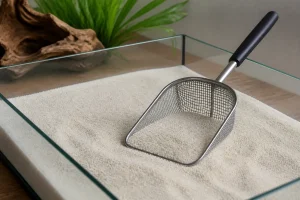
Aquarium Substrate for Sand Sifters: Best Options on Amazon