Last Updated: October 21, 2026
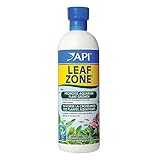
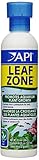
- Top Pick: API LEAF ZONE Freshwater Aquarium Plant Fertilizer 18-Ounce Bottle White
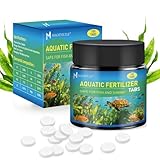
- Best Value: Crystalpro Flora Multi Minerals All-in-One Aquarium Plant Fertilizer – Plant Food for Fast Root & Leaf Growth – Safe for Fish, Shrimp & Snails (4.2 Oz / 125ml)
- Premium Choice: API LEAF ZONE Freshwater Aquarium Plant Fertilizer 8-Ounce Bottle

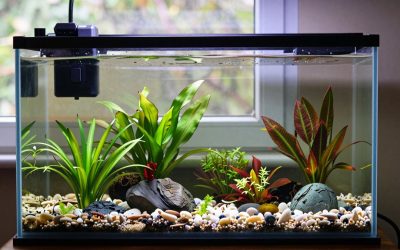
Healthy, thriving aquarium plants don’t happen by accident. Like any living organism, aquatic plants need a balanced supply of macro and micronutrients to grow, stay green, and outcompete algae. In most aquariums, the water column and substrate alone cannot supply everything plants need — especially in tanks with inert substrates like gravel or sand, or in high-light setups where plants grow quickly and deplete nutrients fast. That’s where aquarium plant fertilizers — both liquid and root tab varieties — become essential. This guide covers the best options on Amazon for fertilizing planted tanks of all sizes and plant densities.
🛒 Best Price Today on Amazon
Prime members get fast, free shipping on everything above, plus member-only deals. New members get a 30-day free trial — cancel anytime.
As an Amazon Associate we earn from qualifying purchases at no extra cost to you.



Quick Picks: Best Aquarium Plant Fertilizers (Liquid and Root Tabs)
Why Trust Our Picks
Our fertilizer recommendations draw from the collective knowledge of the planted tank community, including major forums like The Planted Tank and r/PlantedTank, peer-reviewed aquatic plant research, and thousands of Amazon reviews from planted tank hobbyists ranging from beginners with low-tech setups to advanced aquascapers running high-CO2 systems. We evaluated each product on nutrient completeness, dosing simplicity, compatibility with fish and invertebrates, value per dose, and real-world plant growth results reported by users across diverse tank setups.
Best Aquarium Plant Fertilizers: In-Depth Reviews
1. Seachem Flourish Comprehensive Supplement – Best Overall
Seachem Flourish is the benchmark liquid fertilizer against which all others in the hobby are measured. Its formula provides a comprehensive blend of macro and micronutrients including nitrogen, phosphorus, potassium, iron, calcium, magnesium, and a full spectrum of trace elements — everything aquatic plants need in a single bottle. Unlike fertilizers that focus only on iron or only on macros, Flourish addresses the complete nutritional picture, making it particularly useful for tanks where you don’t want to manage multiple dosing products.
The recommended dose is just 5ml per 250 liters (66 gallons) once or twice weekly, making even a 500ml bottle last months in smaller tanks. It is completely safe for fish, shrimp, and snails at recommended doses. Seachem also produces targeted supplements — Flourish Iron, Flourish Excel (carbon source), Flourish Potassium, and Flourish Nitrogen — for advanced aquascapers who want to fine-tune individual parameters using the Estimative Index or PMDD dosing methods.
- Pros: Complete macro and micro coverage, fish and invertebrate safe, long-lasting bottle, works with all tank types
- Cons: May not provide enough of individual nutrients (especially nitrogen) for heavily planted high-light tanks, requires supplementation with targeted products for advanced setups
2. API Leaf Zone Aquarium Plant Fertilizer – Runner-Up
API Leaf Zone takes a more focused approach, delivering a high-concentration blend of potassium and chelated iron designed to rapidly correct the two most common deficiencies in freshwater planted tanks. Potassium deficiency shows as holes in older leaves (potassium is a mobile nutrient that plants strip from old growth to support new growth). Iron deficiency manifests as yellowing between the veins of new leaves while veins stay green — a distinctive pattern called interveinal chlorosis.
Because API Leaf Zone focuses on these two specific nutrients rather than trying to be a complete fertilizer, it works exceptionally well as a standalone product for low-tech tanks with fish — fish waste provides sufficient nitrogen and phosphorus, leaving potassium and iron as the primary deficiencies to address. The simple weekly dosing schedule (5ml per 10 gallons) requires no calculation or measurement precision, making it the most beginner-friendly liquid fertilizer option on this list.
- Pros: Targets most common deficiencies, simple dosing, great for low-tech fish tanks with moderate planting
- Cons: Does not cover full micronutrient spectrum, insufficient for heavy or fast-growing plant setups without supplementation
3. Aqueon Plant Food Root Tabs – Best Budget
Root tabs address a fundamentally different aspect of aquatic plant nutrition than liquid fertilizers. While liquid ferts dissolve into the water column and are absorbed through plant leaves, root tabs are pressed nutrient capsules buried in the substrate that release nutrients directly into the root zone — exactly where heavy root-feeding plants like Amazon swords, cryptocorynes, vallisneria, and stem plants anchor and feed most actively.
Aqueon root tabs offer an excellent price-per-tab compared to the more expensive Flourish Tabs alternative, and they last approximately three months per application before the nutrients are depleted and tabs need replacing. For tanks with inert substrates (plain gravel, sand, or bare-bottom sections) where root feeders are planted, these tabs transform struggling plants into vigorous growers. They’re the easiest way to add substrate nutrition without switching to an expensive active substrate like ADA Aqua Soil.
- Pros: Direct root-zone nutrition, excellent for swords and crypts, long-lasting (3 months), great value per tab
- Cons: Ineffective for column-feeding mosses and floating plants, must be buried correctly to prevent premature dissolution
Buyer’s Guide: Choosing the Right Aquarium Plant Fertilizer
Liquid vs. root tabs — understanding the difference: Aquatic plants are divided into two broad feeding strategies. Column feeders (mosses, ferns like java fern and anubias, hornwort, water sprite) absorb nutrients primarily through their leaves from the water column. Root feeders (Amazon swords, cryptocorynes, vallisneria, most stem plants) absorb the majority of their nutrients through root systems in the substrate. Most planted tanks benefit from using both liquid fertilizer and root tabs simultaneously for comprehensive coverage.
The three macronutrients — NPK: Nitrogen (N), Phosphorus (P), and Potassium (K) are the primary macronutrients plants need in the largest quantities. In tanks with fish, nitrogen and phosphorus are generally supplied by fish waste in adequate quantities for moderate planting levels. Potassium is rarely supplied in sufficient quantities by fish waste and is almost always the first macro deficiency to appear — which is why potassium-focused products like API Leaf Zone are often sufficient for lightly planted fish tanks.
Micronutrients and trace elements: Iron, manganese, zinc, boron, copper, and molybdenum are needed in tiny quantities but are essential for enzyme function and chlorophyll production. Iron deficiency is the most commonly observed micronutrient deficiency in planted tanks. Chelated iron (iron bound to an organic molecule that keeps it stable and bioavailable) is the form used in quality liquid fertilizers. Standard tap water contains negligible quantities of most micronutrients.
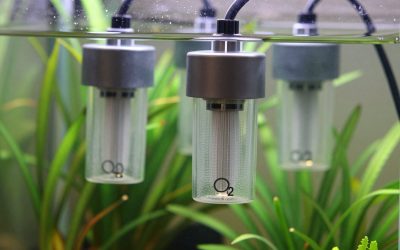
CO2 and fertilizer interaction: In high-tech planted tanks with injected CO2, plant growth accelerates dramatically — which means nutrient demand increases proportionally. Fertilizer doses that are adequate in a low-tech tank can become severely deficient in a CO2-injected system. If you add CO2 and notice increased algae rather than faster plant growth, insufficient nutrients are likely the cause. Increase fertilizer dosing to match the elevated growth rate.
Avoiding overdose: More fertilizer is not always better. Excess phosphate and nitrate from over-fertilizing contributes to algae blooms. Follow recommended doses and observe plant response over 2–4 weeks before adjusting. Yellow leaves indicate deficiency; dark green plants with normal growth rate indicate adequate nutrition; algae bloom suggests excess nutrients relative to plant uptake capacity.
FAQ: Aquarium Plant Fertilizers
Will fertilizers harm my fish or shrimp? At recommended doses, all three products listed here are safe for fish. Shrimp are more sensitive — copper in trace element blends is toxic to shrimp at elevated concentrations. Seachem Flourish at normal dosing is generally shrimp-safe, but reduce dosing by 50% initially when shrimp are present and observe behavior. If shrimp show distress, perform a water change and switch to a copper-free fertilizer like Seachem Flourish Excel or Tropica Specialised Fertilizer.
Do I need fertilizer if I have an active substrate like ADA Aqua Soil? Active substrates like Aqua Soil contain nutrients that support root feeders for 12–18 months. After this period, root tabs become necessary. Liquid fertilizer for column feeders and micronutrients is still beneficial even with active substrates, particularly in high-light or CO2-injected setups where plant demand exceeds substrate supply.
My plants are yellowing — is it definitely a nutrient deficiency? Not necessarily. Yellowing has multiple causes: iron deficiency (new leaves yellow between veins), nitrogen deficiency (old leaves yellow uniformly), insufficient light (plants can’t use nutrients without adequate light energy), temperature stress, or root rot. Diagnose by leaf pattern and age before adding fertilizer — throwing more nutrients at a lighting or temperature problem won’t help.
How do I insert root tabs without disturbing my substrate? Use a chopstick or thin dibber to create a channel in the substrate, drop the root tab in, then push substrate back over it. The tab should sit 1–2 inches below the surface, near but not directly against plant roots. Burying them fully prevents premature water-column dissolution and concentrates the nutrients where roots will access them.
Final Verdict
For the most complete and flexible planted tank fertilization approach, Seachem Flourish Comprehensive Supplement is the liquid fertilizer of choice — pair it with root tabs for any heavy root feeders and you cover virtually every nutritional base. If you have a lightly planted community fish tank and want the simplest possible routine, API Leaf Zone corrects the most common deficiencies with one product and one dose per week. And for the substrate nutrition that no liquid fertilizer can replace, Aqueon Plant Food Root Tabs deliver exceptional value for sword and crypt keepers. Use liquid and root fertilizers together for the healthiest, fastest-growing planted tank possible.
Frequently Asked Questions
Do I need liquid fertiliser or root tabs?
Water column feeders such as stem plants, mosses and epiphytes like anubias and java fern take most nutrients through their leaves, so they want liquid dosing. Heavy root feeders including Amazon swords, cryptocoryne and vallisneria benefit from tabs pushed under the crown. Most mixed planted tanks end up using both.
How often should I dose?
Low-tech tanks usually need liquid ferts once or twice weekly at roughly half the bottle dose. High-light CO2 tanks often dose macros and micros on alternate days or in small daily amounts. Root tabs last about three to four months. Dose liquids right after the weekly water change for a clean baseline.
Will fertiliser cause algae?
Algae are normally triggered by too much light relative to available CO2, or by ammonia from an unstable tank, not by properly dosed nutrients. Starving plants of nitrate and phosphate makes them decay, which actually feeds algae. Keep nitrate around 10 to 20 ppm and match light intensity to plant demand.
Are plant fertilisers safe for shrimp and snails?
Most are, but check the copper content. Micronutrient blends contain trace copper that is harmless at label dose yet risky if overdosed in a shrimp tank. Dose at the low end, split the weekly amount into smaller doses, and never use algaecides or snail treatments containing copper alongside invertebrates.
Do I still need fertiliser if I have plenty of fish?
Fish waste supplies ammonia and phosphate but is usually short on potassium, iron and trace elements, which shows as pinholes, yellowing and stunted new growth. A comprehensive liquid fills those gaps. Heavily stocked tanks may only need potassium and micros rather than a full nitrogen dose.
Best Canister Filter for Planted Tank Setups: Flow and CO2
Best Aquascaping Scissors in 2026: Compared and Ranked