Last Updated: October 9, 2026
- Top Pick: Java Fern and Anubias Aquarium Plant Bundle – Live Freshwater Plants for Aquascaping, Low Maintenance, Easy Beginner Friendly Decor for Fish Tank
- Best Value: Java Fern Microsorum Pteropus Easy Low Light Live Aquarium Plant – Buy 2 Get 1
- Premium Choice: Marcus Fish Tanks – 3X Java Fern Microsorum Pteropus Easy Live Aquarium Plants Aquatic Fish Tank Plants
🛒 Best Price Today on Amazon
Prime members get fast, free shipping on everything above, plus member-only deals. New members get a 30-day free trial — cancel anytime.
Why Java Fern Is the Perfect Beginner Aquarium Plant
Java fern (Microsorum pteropus) is one of the most popular and forgiving aquarium plants in the hobby. Native to Southeast Asia, it thrives in a wide range of water conditions and requires very little light — making it ideal for tanks without specialized plant lighting. Its slow growth means minimal maintenance, and its tough, leathery leaves are rarely eaten by fish, including notoriously plant-destroying species like goldfish and cichlids.
As an Amazon Associate we earn from qualifying purchases at no extra cost to you.
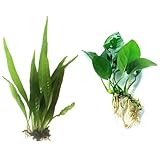


Unlike most aquatic plants, java fern must be attached to hardscape — driftwood, rocks, or decorations — rather than planted in substrate. Burying the rhizome (the horizontal stem from which leaves and roots grow) will kill the plant. Simply tie it to driftwood with thread or a rubber band, and the roots will attach themselves within a few weeks. Java fern propagates naturally by growing baby plants along the edges of older leaves, making it easy to expand your planting over time.
Java Fern on Driftwood (Pre-Attached)
For the easiest possible setup, java fern already attached to a piece of driftwood is a perfect option. You simply drop it into the tank and it is ready to go — no attaching, no planting, no waiting for it to anchor. These pre-attached pieces are widely available online and in stores and come in various sizes. They are ideal for beginner planted tanks or betta tanks where you want an instant, natural-looking aquascape.
Microsorum Pteropus Java Fern Potted Plant
Potted java ferns are sold with the roots wrapped in rockwool inside a small plastic pot. To use, remove the plant from the pot, gently rinse off the rockwool, and attach the rhizome to driftwood or rock with cotton thread or plant-safe glue. This option gives you a larger, more established plant than a bare-root cutting and is often a better value for setting up multiple spots in the tank.
Java Fern Windelov Variety
The Windelov variety of java fern is a cultivar with beautifully branched, finely divided leaf tips that create a delicate, lacy appearance in the tank. It grows and cares for exactly like standard java fern but offers more visual interest. The Windelov variety stays slightly smaller than the standard form, making it ideal for mid-ground placement in nano tanks and betta aquariums.
What to Look For When Buying Java Fern
- Healthy rhizome: The rhizome should be firm and green or brownish-green, not mushy or black.
- Multiple leaves: Choose plants with at least 3–5 mature leaves for faster establishment.
- Never bury the rhizome: Always attach to hardscape; buried rhizomes rot and kill the plant.
- Low light requirements: Java fern thrives under standard aquarium LED lighting; no special grow lights needed.
- Liquid fertilizer: A weekly dose of all-in-one liquid fertilizer supports healthy growth in low-tech tanks.
- Brown spots are normal: Older leaves develop brown spots with baby plantlets — this is healthy propagation, not disease.
Planting and Attaching Java Fern Correctly
The single most important rule with java fern is to never bury its rhizome, the thick horizontal stem from which leaves and roots grow. If you plant the rhizome in substrate it will rot and the plant will slowly die. Instead, attach java fern to driftwood, rocks, or decorations using cotton thread, fishing line, or a small dab of aquarium-safe super glue gel. Within a few weeks the plant anchors itself with tough little roots, and you can remove any thread you used.
Java fern is famously undemanding when it comes to light and nutrients. It actually prefers low to moderate lighting, and intense light often encourages algae to grow on its slow-developing leaves. It draws nutrients directly from the water column, so a balanced liquid fertilizer is helpful in sparsely stocked tanks but rarely essential. Because it grows slowly, patience is key; expect new leaves to unfurl gradually over weeks rather than days.
Propagating and Troubleshooting Java Fern
Java fern propagates itself with very little effort. Mature plants produce tiny plantlets on the undersides and tips of their leaves, complete with miniature leaves and roots. Once these baby plants are an inch or so across, you can gently detach them and attach them to new hardscape to start additional plants. You can also divide a large rhizome into sections, making sure each piece has several leaves and healthy roots.
- Browning leaves: Some older leaves naturally die back; trim them at the base to keep the plant tidy.
- Black spots: Small black bumps on leaves are usually plantlets or spores, not disease, and are a normal sign of propagation.
- Melting after planting: New java fern sometimes sheds leaves as it adjusts; leave the rhizome intact and new growth will follow.
Java Fern in the Planted Aquascape
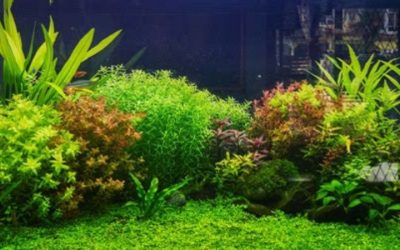
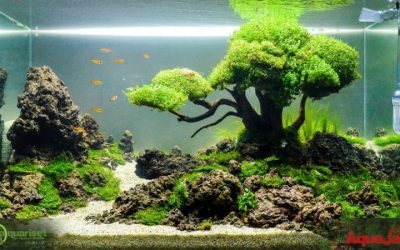
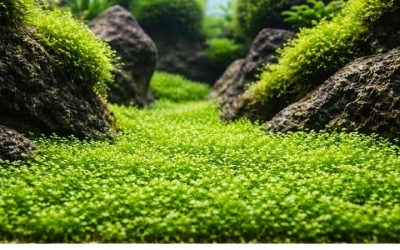
Java fern’s versatility makes it a staple in aquascaping. Its upright, textured leaves create a lush midground or background, and because it attaches to hardscape you can position it exactly where you want a splash of green. It pairs beautifully with driftwood and stone, softening hard edges and adding a natural, mature look to a layout. Several varieties exist, from narrow-leaf forms to the distinctive Windelov with its frilly leaf tips, giving aquascapers plenty of options. Because it is so hardy and slow to outgrow its space, java fern is forgiving for beginners learning to compose a planted tank while still looking impressive in advanced layouts.
Frequently Asked Questions
Can I plant java fern in the substrate?
No, you should never bury the rhizome in gravel or sand, as it will rot. Attach the plant to driftwood or rock instead, leaving the rhizome exposed to the water while the roots grip the surface.
How much light does java fern need?
Java fern thrives in low to moderate light and does not need a high-output planted-tank fixture. Excessive light tends to promote algae on its slow-growing leaves rather than faster growth.
Why are my java fern leaves turning brown or black?
Occasional browning of older leaves is normal aging, and tiny black bumps are usually plantlets forming. Widespread browning can indicate the rhizome was buried or a nutrient deficiency, so check planting depth first.
How do I propagate java fern?
The easiest method is to let plantlets grow on the leaf tips and edges, then detach them once they have their own small leaves and roots. You can also divide the rhizome, keeping several leaves on each section.
Will fish eat java fern?
Java fern is one of the few plants that even notorious plant-eaters like goldfish and many cichlids usually leave alone, thanks to its tough, leathery, bitter-tasting leaves. That makes it a great choice for tanks where other plants get destroyed.
Final Thoughts
Java fern is truly one of the best plants for any aquarium, from beginner betta tanks to advanced planted setups. It is nearly indestructible, compatible with almost every freshwater species, and adds a lush, natural look to any aquascape. Whether you choose a pre-attached driftwood piece for instant results or a potted plant for a larger specimen, java fern will reward you with years of low-maintenance beauty in your tank.
Related Reviews & Guides

Best Vaccums for Planted Tank in 2026: Compared and Ranked

Quick Picks: Best Aquarium Plant Fertilizers (Liquid and…