Last Updated: October 21, 2026
- Top picks at a glance
- PAR vs. Lumens vs. Watts — The Metric That Actually Matters
- PAR Requirements by Tech Level
- Top 5 Planted Tank LED Lights — Ranked by Tech Level
- Photoperiod and Timer Setup — Critical for Algae Control
- Pros and Cons: hygger 16W Budget LED
- Frequently Asked Questions
- Related Articles
- Related Guides
TL;DR — Quick Answer
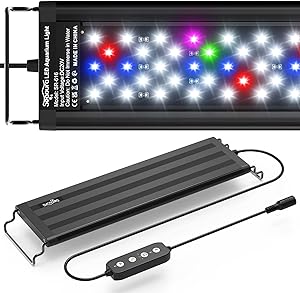
For planted tanks, you need a light with PAR (photosynthetically active radiation) output matched to your tech level: low-tech 20–40 PAR at substrate, high-tech 60–100+ PAR. The hygger 16W Full Spectrum LED for under $30 hits 10 dimming levels, full spectrum including red and blue channels, and runs on a timer — solid low-to-medium tech pick for tanks up to 20 gal.
Best Aquarium LED Light for Planted Tanks 2026: PAR Ratings, Full Spectrum vs. RGB, Top 5 Compared
Lighting is the most confusing planted tank purchase. Wattage is nearly meaningless. Lumen ratings measure human eye perception, not plant photosynthesis. PUR (Photosynthetically Usable Radiation) matters more than lumens. PAR (Photosynthetically Active Radiation, measured in µmol/m²/s) is the actual metric — and most budget lights don’t publish it. This guide ranks the top 5 planted tank LED lights by tech level, PAR output, and real-world value — including our top Amazon pick for beginners and mid-level setups.



As an Amazon Associate we earn from qualifying purchases. Product prices and availability are accurate as of the date/time indicated.
🛒 Best Price Today on Amazon
Prime members get fast, free shipping on everything above, plus member-only deals. New members get a 30-day free trial — cancel anytime.
Start 30-Day Prime Free Trial →See Today’s Amazon DealsTop picks at a glance
BEST OVERALL (Budget)
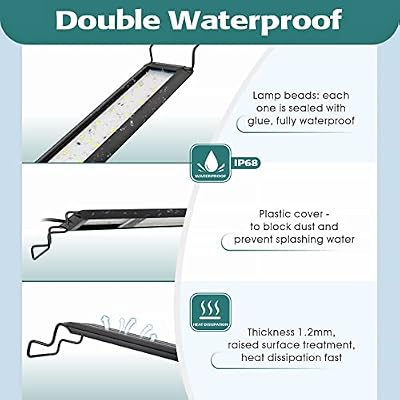
hygger 16W Full Spectrum Aquarium LED
10-level dimming, white/red/blue channels, timer-compatible, fits tanks 12–20″.
As an Amazon Associate we earn from qualifying purchases. Product prices and availability are accurate as of the date/time indicated.
RUNNER-UP
Fluval 207 Canister Filter
Pair your light upgrade with a canister — high-light planted tanks need CO2-preserving filtration.


As an Amazon Associate we earn from qualifying purchases. Product prices and availability are accurate as of the date/time indicated.
SUBSTRATE COMPANION
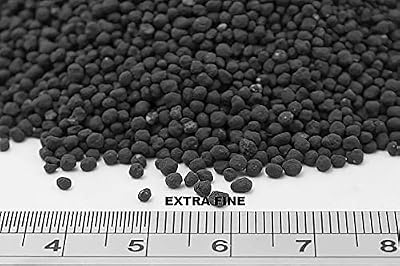
UNS Controsoil Aqua Soil
Bright lights demand root nutrition — aqua soil completes the triangle with CO2 injection.



As an Amazon Associate we earn from qualifying purchases. Product prices and availability are accurate as of the date/time indicated.
PAR vs. Lumens vs. Watts — The Metric That Actually Matters
Quick definitions before the comparison:
- Watts: Power consumption. A 10W LED can outperform a 30W fluorescent. Wattage alone tells you nothing useful about plant growth potential.
- Lumens: Human-eye perceived brightness. Plants don’t have human eyes. A light heavy in green wavelengths (which human eyes love) scores high in lumens but plants can barely use green light. Useless metric for planted tanks.
- PAR (µmol/m²/s): Measures photons in the 400–700 nm range (the actual range plants photosynthesize). This is the number. At substrate level is where it matters most — surface PAR means nothing if your tank is 18″ deep and substrate PAR is 12 µmol.
- PUR: Subset of PAR focusing on wavelengths plants actually prefer (peaks at ~430 nm blue and ~680 nm red). A light can have high PAR but low PUR if it’s heavy in 500–600 nm green/yellow. Full-spectrum LEDs with visible red and blue emitters have better PUR for their PAR rating.
PAR Requirements by Tech Level
| Tech Level | PAR at Substrate (µmol/m²/s) | CO2 Required? | Typical Plants |
|---|---|---|---|
| Low-tech | 20–40 | No | Java fern, anubias, crypts, mosses |
| Medium-tech | 40–80 | Optional (recommended) | Vallisneria, ludwigia, rotala, stem plants |
| High-tech | 80–150+ | Yes — mandatory | HC Cuba, glosso, dwarf hairgrass carpet |
| Ultra high-tech | 150–300+ | Yes + Excel | Competition aquascape foreground carpets |
Warning: more light without CO2 = algae. This is the most common beginner mistake. The light × CO2 × nutrient triangle must be balanced. Turning up a light without injecting CO2 gives algae a growth advantage over plants (algae is more efficient at low CO2). The hygger 16W at 10 dimming levels lets you start low and dial up as you add CO2 and fertilization.
Top 5 Planted Tank LED Lights — Ranked by Tech Level
#1. hygger 16W Full Spectrum LED — Best Budget Low/Medium Tech
| Spec | Value |
|---|---|
| Power | 16W |
| Spectrum | Full spectrum (white + red + blue channels) |
| Dimming levels | 10 |
| Tank fit | 12–20″ (adjustable mounting bracket) |
| Timer compatibility | Yes (connect to outlet timer) |
| Estimated PAR at 12″ depth | ~45–60 µmol/m²/s (medium-tech range) |
| Price (2026) | under $30 |
| Amazon ASIN | B0BQM8658Z |
Who it’s for: Beginners setting up a 10–20 gal planted tank. Low-tech planted setups (java fern, crypts, anubias) at level 5–7. Medium-tech with CO2 at level 8–10. The red and blue emitters significantly improve PUR over single-white-channel budget lights — you’ll see visible color improvement in red-stem plants (rotala, ludwigia) within 2 weeks of switching from a white-only fixture.
Limitation: 16W caps PAR below what high-tech carpet plants need. Don’t expect HC Cuba to carpet at 12+ inch depth on this light. For carpets, move to rank #3 or #4 below.
#2. Chihiros WRGB 2 — Best Mid-Range Full Control
| Spec | Value |
|---|---|
| Power | 30–60W (size dependent) |
| Channels | White, Red, Green, Blue (independent control) |
| App control | Bluetooth via Chihiros app |
| Estimated PAR (30cm depth) | 80–120 µmol/m²/s |
| Price range | $80–$150 |
Who it’s for: Aquarists who want per-channel color control and programmable sunrise/sunset cycles. WRGB control lets you dial in PUR by boosting red and blue independently. The Bluetooth app is genuinely useful for scheduling — set slow ramp-up over 30 min to reduce fish stress. PAR range puts it solidly in medium to high-tech territory.
#3. Current USA Satellite Plus Pro — Best Timer-Integrated US Brand
| Spec | Value |
|---|---|
| Power | 18–32W (size dependent) |
| Channels | White + RGB (separate remote control) |
| Timer | Built-in 24-hour programmable |
| Estimated PAR (at 12″ depth) | 50–80 µmol/m²/s |
| Price range | $70–$120 |
Who it’s for: US-based buyers who want built-in timer (no separate outlet timer needed), US warranty and customer support, and a slide-mount that fits most standard tanks without adapter brackets. PAR hits medium-tech with CO2 — good for stem plant tanks with moderate demand.
#4. Fluval Plant 3.0 — Best High-Tech Choice
| Spec | Value |
|---|---|
| Power | 46W (36″), 59W (48″) |
| Channels | White, Red, Blue, RGB (app controlled) |
| App control | Bluetooth, programmable daily schedule |
| Estimated PAR (20cm depth) | 120–200 µmol/m²/s |
| Price range | $160–$220 |
Who it’s for: High-tech planted tanks running CO2 injection with carpet plants (HC Cuba, dwarf hairgrass, glosso). The 120–200 PAR range at substrate is what competition aquascape foreground growth actually needs. App scheduling creates legitimate sunrise/sunset ramps. This is the highest PAR:price ratio in its class among brand-name US-available lights. Pairs directly with the Fzone CO2 system from our co2 aquarium system beginner setup.
#5. ONF Flat One+ — Best Premium Nano Option
| Spec | Value |
|---|---|
| Power | 12–18W (nano sizes) |
| Design | Ultra-slim aluminum, pendant/clip mount |
| Spectrum | Full spectrum tuned for planted tanks |
| Estimated PAR (15cm depth) | 80–120 µmol/m²/s in nano tanks |
| Price range | $90–$140 |
Who it’s for: 5–15 gal nano planted tanks where aesthetics matter as much as function. The ultra-slim aluminum body is visually minimal — no visible housing when tank-mounted. PAR is excellent for tank depth, and the tuned spectrum handles both carpets and delicate red plants well. Premium price but genuinely premium build quality.
Photoperiod and Timer Setup — Critical for Algae Control
Light duration is as important as intensity. The recommended photoperiod for planted tanks:
- Low-tech: 6–8 hours per day
- Medium-tech with CO2: 8–9 hours
- High-tech with CO2: 8–10 hours
Never run lights 12+ hours — this is the fastest way to grow green spot algae and thread algae. Start new tanks at 6 hours for the first 2 weeks, even with CO2, to let plants establish before algae pressure kicks in. Increase by 30 minutes per week until you reach target photoperiod.
Plug the hygger light (or any non-integrated light) into a basic outlet timer — a $10 mechanical timer is fine. Set it and forget it. CO2 should be on a separate timer starting 1 hour before lights and ending at lights-off — see our learn about co2 aquarium system beginner setup for solenoid timer wiring. Full planted tank setup also needs the right substrate — see our aquarium substrate planted tank guide — and appropriate filtration from our Fluval 207 Canister Filter Review.
Pros and Cons: hygger 16W Budget LED
Pros
- under $30 — lowest cost entry with full-spectrum (white + red + blue) channels
- 10 dimming levels let you match light intensity to plant demand
- Adjustable bracket fits most standard tank widths 12–20″
- Red and blue emitters meaningfully improve PUR vs. white-only budget lights
- Compatible with standard outlet timers for automated photoperiod
Cons
- 16W limits PAR — not suitable for high-tech carpet plants at depths over 10″
- No built-in timer or app control — external timer required
- Bracket reach limited — doesn’t span tanks wider than 20″
- PAR data not officially published — third-party measurements vary
- Single channel (all on or all off per level) — no independent red/blue control
Frequently Asked Questions
How many hours should I run my aquarium light for planted tanks?
Start at 6–7 hours daily, regardless of your light or tech level, for the first 4–6 weeks. This low photoperiod lets plants establish while starving opportunistic algae of the light it needs to explode. After 4–6 weeks with stable CO2 and fertilization, increase to 8 hours. High-tech setups with heavy CO2 can go to 9–10 hours — but if algae appears at any stage, cut back 30 minutes before adjusting anything else.
Is the hygger 16W LED strong enough for a planted tank?
Yes for low-to-medium tech plants in tanks up to 15 gal: java fern, anubias, crypts, vallisneria, basic stem plants. No for high-demand carpets like HC Cuba, dwarf hairgrass, or glosso in tanks deeper than 10″. At full brightness (level 10), estimated PAR at 12″ depth is approximately 45–60 µmol/m²/s — adequate with CO2 for moderate plants, insufficient without CO2 for demanding species.
Do planted tanks need red and blue light?
Yes — these are the primary photosynthesis wavelengths. Chlorophyll A absorbs strongest at ~430 nm (blue) and ~680 nm (red). A white-only LED can work if it has a broad spectrum including those peaks, but lights with dedicated red and blue emitters deliver better PUR per watt. The hygger’s red and blue channels visibly improve stem plant coloration — red rotala goes deeper red, and carpet plants show more compact, pearling growth under lights with blue component.
What’s the best light for a betta planted tank?
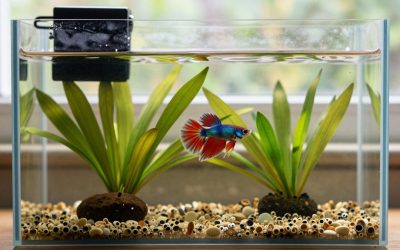
The hygger 16W is an excellent match for betta planted tanks (5–20 gal). Bettas prefer subdued lighting — run at level 5–7 (not max), 7–8 hours daily. The dimming function lets you create a calm environment while still growing plants. Floating plants (frogbit, water lettuce) naturally diffuse light and create betta-preferred shadowed areas — these grow well under the hygger without needing CO2.
Will LED lights cause algae in my aquarium?
Light doesn’t cause algae — imbalance causes algae. Too much light without CO2 and nutrients for plants gives algae a competitive advantage. Too long a photoperiod (10+ hours for a new tank) lets algae exploit off-peak hours when plant photosynthesis has already saturated. The fix: start at 6 hours, use CO2 or Seachem Excel, dose fertilizers, and add fast-growing plants (hornwort, guppy grass) to outcompete algae for nutrients in the early weeks.

Quick Picks: Best CO2 Regulators for Planted Tanks at a…
6 Best Pressurised Co2 System Aquariums 2026