Last Updated: October 21, 2026
- Top Picks at a Glance
- What “Low Tech” Actually Means
- The Walstad Method vs. Standard Low Tech
- Substrate Selection
- Lighting for Low Tech — The Single Most Important Variable
- Plant Selection — What Actually Works Without CO2
- Filtration and Flow
- Fertilization in Low Tech
- The First 8 Weeks — What to Expect
- Upgrading Later: The Path to CO2
- Frequently Asked Questions
- Related Guides
- Related Articles
- Related Guides
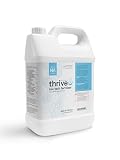
- Top Pick: ThriveC Aquarium Plant Fertilizer, All‑in‑One 500ml for Low‑Tech Tanks
- Best Value: Thrive C Liquid Aquarium Plant Fertilizer – All in One Plant Food – 4000ml – Specialized Fertilizer for Low Tech Tanks – Comprehensive nutrients – Aquarium Nutrition
- Premium Choice: Beautiful Low-Tech Aquascape: A Beginner's Step-by-Step Guide to Creating Stunning Planted Tanks Without CO2
TL;DR: A low tech planted tank skips CO2 injection and relies on slow-growing plants, good substrate, and patient lighting schedules. Results are lower maintenance and surprisingly beautiful. The trade-off is slower growth and a more limited plant selection. Perfect setup for beginners and shrimp keepers.
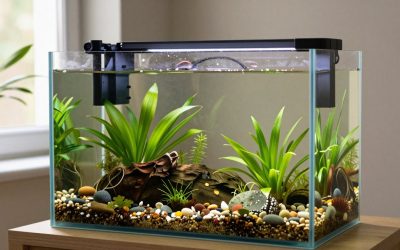
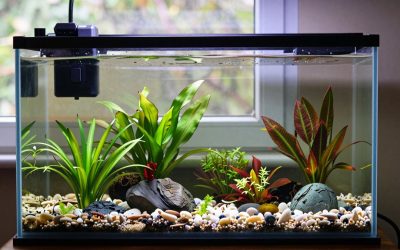
Low Tech Planted Tank Setup Guide: No CO2, No Drama
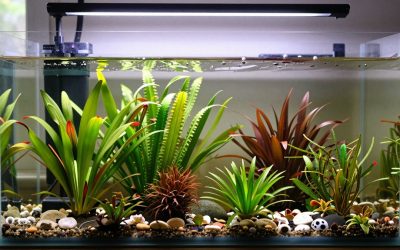
The planted tank hobby has a reputation for complexity — CO2 systems, ferts dosing regimens, PAR meters, substrate layering. And yes, a high-tech Takashi Amano-style aquascape requires all of that. But a low tech planted tank doesn’t. Some of the most beautiful natural tanks running today have no CO2, minimal dosing, and a $40 substrate. This guide shows you how to build one that actually grows plants and doesn’t collapse into an algae mess three weeks in.
As an Amazon Associate we earn from qualifying purchases at no extra cost to you.




🛒 Best Price Today on Amazon
Prime members get fast, free shipping on everything above, plus member-only deals. New members get a 30-day free trial — cancel anytime.
Start 30-Day Prime Free Trial →See Today’s Amazon DealsTop Picks at a Glance
Best Substrate



As an Amazon Associate we earn from qualifying purchases. Product prices and availability are accurate as of the date/time indicated.
Best LED for Low Tech



As an Amazon Associate we earn from qualifying purchases. Product prices and availability are accurate as of the date/time indicated.
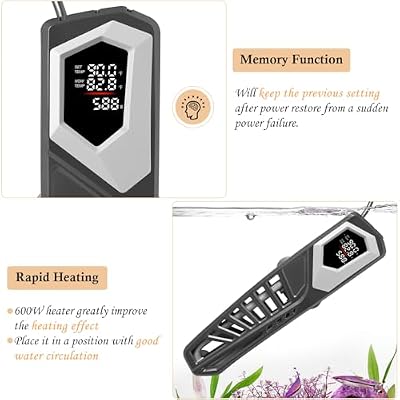
Best Heater




As an Amazon Associate we earn from qualifying purchases. Product prices and availability are accurate as of the date/time indicated.
What “Low Tech” Actually Means
Low tech = no pressurized CO2 injection. That’s it. You still use good substrate, appropriate lighting, and some fertilization. The key difference is you’re not artificially elevating CO2 concentration in the water, so you need plants that do well at ambient CO2 levels (roughly 3–5 ppm) rather than the injected levels (25–30 ppm) high-tech tanks run.
This limits your plant selection somewhat — carpeting plants like Hemianthus callitrichoides (HC Cuba) won’t carpet properly without CO2 — but opens up a genuinely diverse palette of slow-growing, low-demand species that look stunning in a natural aquascape.
The Walstad Method vs. Standard Low Tech
Two main approaches to low tech planted tanks exist:
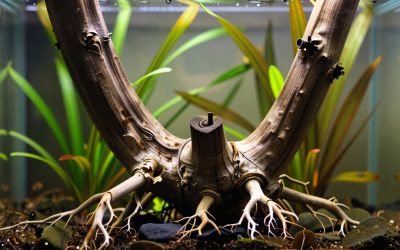
Walstad Method — Diana Walstad’s approach uses organic soil capped with a plain sand layer. The soil provides nutrients for plants through the substrate directly, reducing or eliminating water column dosing. Slower to set up, produces excellent long-term results with minimal intervention, relies on heavy planting from day one to consume nutrients before algae can.
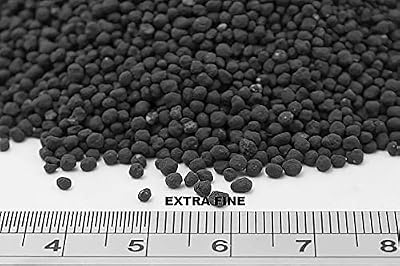
Standard low tech — Use a quality aquasoil substrate with built-in nutrients (the approach covered here), add root tabs for heavy root feeders, dose water column fertilizers at low frequency. More control, easier to adjust. The Ultum Nature Systems substrate is a good starting point — it provides initial nutrients without the sharp ammonia spikes of some competing brands.
Substrate Selection
Low tech tanks live or die by substrate. Since you’re not supplementing CO2, you need plants to get maximum nutrition from the root zone. An inert gravel substrate with only root tabs works but produces slow, underwhelming results. A nutrient-rich aquasoil gives plants what they need from the bottom up.
The full breakdown is in our Aquarium Substrate Planted Tank Guide, but for low tech specifically:
- Aquasoil (Ultum, ADA Amazonia, Fluval Stratum) — best for low tech, provides buffering + nutrients
- Mineralized organic soil + sand cap (Walstad) — excellent long-term, higher setup effort
- Inert substrate + root tabs — workable for low-tech with root feeders; less effective for carpeting or dense planting
Layer depth: 3 inches minimum at the back, tapering to 2 inches at the front creates depth and allows for sloped hardscape. Shallow substrate in a low-tech tank leads to nutrient deficiencies faster as roots can’t spread.
Lighting for Low Tech — The Single Most Important Variable
Wrong lighting causes more low tech failures than any other factor. Too much light + no CO2 = algae, every time. Without CO2 injection, plants can only photosynthesize as fast as ambient CO2 allows. Excess light energy that plants can’t use gets absorbed by algae instead.
The solution is to match light intensity to the plants’ actual capacity at ambient CO2. For low tech, this means:
- Low to moderate PAR — 20–50 PAR at substrate level for most low-tech plants
- 6–7 hour photoperiod maximum to start — increase only if plants show deficiencies (not algae growth)
- Avoid high-output reef lights on planted tanks without CO2 — they’re 3–5x too intense
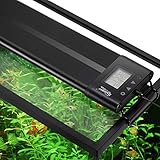
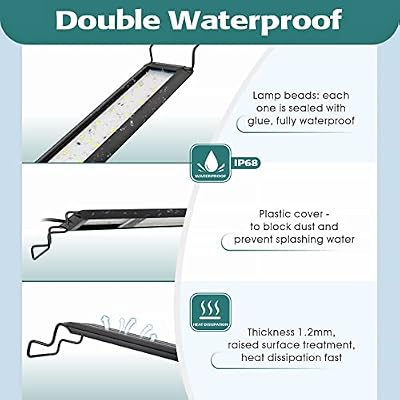
The hygger 16W LED (B0BQM8658Z) is well-matched for low tech — it produces adequate spectrum for plant growth without the excessive intensity that triggers algae explosions in CO2-free tanks. See our full aquarium led light planted comparison for PAR data on multiple units.
Plant Selection — What Actually Works Without CO2
| Plant | Growth Rate | Light Need | Notes |
|---|---|---|---|
| Anubias (all species) | Very slow | Low | Rhizome plant, tie to hardscape — never bury in substrate |
| Java fern (Microsorum) | Slow | Low–Medium | Same — rhizome plant, attach to wood or rock |
| Bucephalandra | Very slow | Low | Incredible variety, produces biofilm shrimp love |
| Cryptocoryne (Wendt, Beckettii, etc.) | Slow–Medium | Low–Medium | Expect “crypt melt” when transitioning; they recover |
| Vallisneria | Fast | Medium | Background grass effect, spreads via runners |
| Sagittaria subulata | Medium | Low–Medium | Creates natural carpeting effect at low light without CO2 |
| Pogostemon stellatus octopus | Fast | Medium | Easy stem plant, great for midground |
| Hornwort (Ceratophyllum) | Very fast | Low | Floating or planted, excellent nitrate sponge |
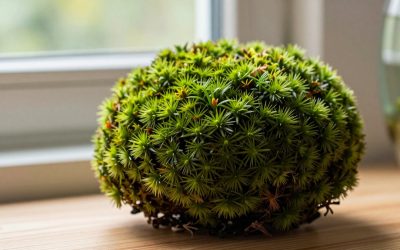
| Java moss | Medium | Low | Attach anywhere, excellent biofilm for shrimp/fry |
Plants to avoid without CO2: HC Cuba, Glossostigma, Lilaeopsis carpets, most stem plants demanding high light. They’ll grow slowly and get outcompeted by algae on their decaying leaves.
Filtration and Flow
Low tech tanks don’t need extreme filtration. A HOB filter running at 4–6x tank volume turnover is standard. Canister filters (like the detailed fluval 207 canister filter review) are excellent for larger setups — they move water slowly and gently, which suits the lower-energy low tech aesthetic and doesn’t stress plants with excessive current.
One key difference from high-tech: don’t direct filter outflow to create heavy surface agitation. In CO2-injected tanks, strong surface agitation is acceptable because you’re constantly replacing outgassed CO2. In a low tech tank, you actually want to preserve ambient CO2 — gentle subsurface return flow is better. Just enough surface movement to prevent stagnation.
Fertilization in Low Tech
Keep it simple. The “estimative index” (EI) high-dosing method is designed for CO2-injected tanks with fast growth — it’s too aggressive for low tech and encourages algae.
Low tech approach:
- Substrate provides the base — aquasoil handles root feeding for the first year
- Root tabs for heavy root feeders (Echinodorus, Cryptocoryne, Val)
- Minimal water column dosing — 1/4 the recommended dose of a comprehensive fertilizer like Seachem Flourish, twice weekly
- Increase only if you see clear deficiency signs (yellowing, holes in leaves) — not on a schedule
Overdosing fertilizers in a low tech tank with slow plant growth means the excess feeds algae. Less is more until plants are established and growing consistently.
The First 8 Weeks — What to Expect
| Weeks | What’s Happening | Action |
|---|---|---|
| 1–2 | Substrate nutrients leaching, possible cloudiness | Run filter, light cycle 6 hrs/day, no fish |
| 2–4 | Cycling, plants settling. Some leaf melt normal | Test every 3 days, remove decaying leaves |
| 3–5 | Algae may appear (diatoms typical) — normal | Don’t panic. Add Otocinclus when cycle completes |
| 5–6 | Diatoms typically outcompeted by plants | Cycle complete — add fish in small groups |
| 6–8 | Plants showing new growth, tank maturing | Increase photoperiod to 7 hrs if growth looks slow |
Upgrading Later: The Path to CO2
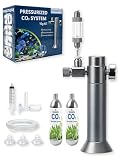
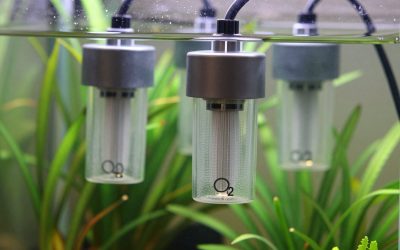
Low tech is a great starting point and a permanent option for many hobbyists. But if you find yourself wanting faster growth, a denser carpet, or more demanding plant species, adding CO2 is the logical next step. Our Co2 Aquarium System Beginner Setup covers the full process — the Fzone regulator (B09MW1JB1G) is a solid entry point that doesn’t require upgrading as your system grows.
Frequently Asked Questions
Can I grow a carpet without CO2?
Yes, but with limited species. Sagittaria subulata creates a grass-like carpet at low to medium light without CO2. Marsilea species (four-leaf clover) grows slowly but forms a low carpet. Monte Carlo (Micranthemum Tweediei) can work with moderate light and no CO2 but grows very slowly and may not fill in densely. Avoid HC Cuba without CO2 — it will fail or turn into a mess.
What causes algae in a low tech tank?
Almost always an imbalance between light and nutrient availability. Too much light for the number of plants, or too much fertilizer with not enough plant mass to consume it. Solutions: reduce photoperiod first, add more fast-growing stem plants to compete with algae, add cleanup crew (Otocinclus for diatoms, Amano shrimp for hair algae).
How long does aquasoil last in a low tech tank?
Most aquasoils provide good nutrient levels for 12–18 months. After that, buffering capacity depletes and the substrate becomes essentially inert. Supplement with root tabs at that point. The physical structure of the substrate remains useful for root development for 3–5 years before compaction becomes an issue requiring a full rescape.
Do I need to dose fertilizers in a low tech tank with fish?
With fish, you have a constant supply of ammonia (which plants use as a nitrogen source) and phosphate from fish waste. In a lightly stocked tank with fast-growing plants, you may not need any additional fertilization beyond substrate. Test and observe — if plants grow well without dosing, don’t add what isn’t needed.
Is a low tech planted tank suitable for shrimp?
Extremely suitable. Low tech tanks with moss, Anubias, and Bucephalandra develop rich biofilm that shrimp constantly graze on. No CO2 means no pH swings from CO2 injection — a genuine advantage for sensitive shrimp species. See our full shrimp freshwater tank setup guide for the complete picture.
Related Guides
- aquarium substrate planted tank guide
- the head-to-head breakdown
- see co2 aquarium system beginner setup
Live Planted Fish Tank Setup Guide: Best Aquariums for Beginners 2026
Amazon Sword Plant Care: How It Grows and What to Watch