Last Updated: October 4, 2026
TL;DR: Aquarium carpet plant seeds — primarily sold as Monte Carlo and HC Cuba — are a low-cost entry point for foreground carpets, but results depend entirely on CO2 supplementation, substrate, and light intensity. Without CO2, most seeds fail to carpet. With proper setup, Monte Carlo seeds germinate in 7–14 days and carpet in 4–8 weeks. HC Cuba is more demanding and slower. Best pick: ASIN B09NNM76FQ.
Best Aquarium Carpet Plant Seeds: Monte Carlo vs HC Cuba 2026
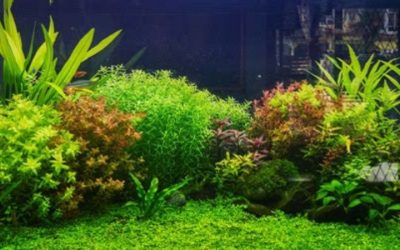
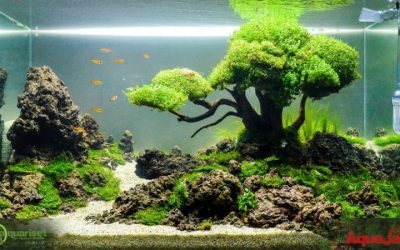
Carpet plants are the most visually impactful foreground element in an aquascape — a dense, uniform lawn of green that transforms a bare substrate into a naturalistic landscape. Historically, achieving a carpet required purchasing tissue culture or potted plants at considerable cost, planting individual stems with aquascaping tweezers, and waiting weeks for runners to spread. Aquarium plant seeds — primarily marketed as Monte Carlo (Micranthemum tweediei) and HC Cuba (Hemianthus callitrichoides) — emerged as an alternative entry point, offering the promise of a full carpet from a small sachet of seeds at a fraction of the cost of tissue culture plants. The reality is more nuanced: aquarium plant seeds can absolutely produce beautiful carpets, but they require conditions just as demanding as mature plants, and the failure rate for underprepared tanks is high. This guide covers the science, the setup requirements, and the honest comparison between Monte Carlo and HC Cuba for carpeting success.
As an Amazon Associate we earn from qualifying purchases at no extra cost to you.




🛒 Best Price Today on Amazon
Prime members get fast, free shipping on everything above, plus member-only deals. New members get a 30-day free trial — cancel anytime.
Start 30-Day Prime Free Trial →See Today’s Amazon DealsMonte Carlo vs HC Cuba: Key Differences
Both species are popular aquarium carpet plants, but they differ meaningfully in difficulty and appearance:
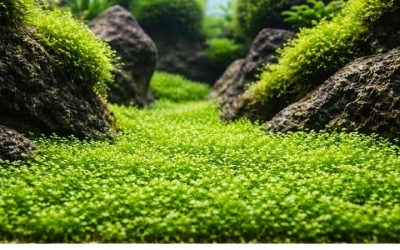
- Monte Carlo (Micranthemum tweediei): Larger leaves (2–3mm), faster growth rate, and considerably more forgiving of suboptimal CO2 or light levels than HC Cuba. Monte Carlo can produce a partial carpet in low-tech setups with strong lighting if CO2 is marginally supplemented via liquid carbon (glutaraldehyde products like Excel). It spreads via runners that root readily in fine-grain substrate. Germination from seed takes 7–14 days; carpeting density 4–8 weeks in a well-equipped tank. The more beginner-friendly of the two species by a significant margin.
- HC Cuba (Hemianthus callitrichoides): Smaller leaves (1mm), slower growth, and strictly requires pressurized CO2 at 20–30 ppm to carpet successfully. Without CO2, HC Cuba grows upward seeking light rather than spreading laterally — producing sparse, leggy growth rather than a ground-hugging carpet. A demanding species even for experienced planted tank hobbyists. From seed, germination takes 10–21 days and carpeting requires 8–16 weeks. The reward is the finest-grain carpet in the hobby, unmatched in visual density, but the tolerance for error is very low.
Top Pick: Aquarium Carpet Plant Seeds
BEST OVERALL
Greenpro Monte Carlo Live Aquarium Plant Seed Portion
BEST FOR ADVANCED
Greenpro HC Cuba Dwarf Baby Tears Aquarium Plant
BEST TISSUE CULTURE
Greenpro Monte Carlo Tissue Culture Aquarium Plant
Carpet Plant Seed Comparison: Monte Carlo vs HC Cuba
| Feature | Monte Carlo Seeds | HC Cuba Seeds | Monte Carlo Tissue Culture |
|---|---|---|---|
| Leaf size | 2–3mm | ~1mm | 2–3mm |
| CO2 requirement | Recommended (can manage low-tech) | Mandatory (pressurized) | Recommended |
| Light requirement | Medium-high | High | Medium-high |
| Germination time | 7–14 days | 10–21 days | N/A (already growing) |
| Carpeting time | 4–8 weeks | 8–16 weeks | 3–6 weeks |
| Difficulty | Beginner-intermediate | Advanced | Beginner-intermediate |
| Emersed growth start | Possible (dry start method) | Excellent (dry start) | No |
| Best substrate | ADA Aqua Soil, Fluval Stratum | ADA Aqua Soil, fine sand | ADA Aqua Soil, Fluval Stratum |
The Dry Start Method: Best Way to Grow Carpet Seeds
The dry start method (DSM) dramatically improves success rates for both Monte Carlo and HC Cuba seeds — and is the recommended approach for anyone new to carpet plants. Rather than flooding the tank immediately, you scatter seeds on damp substrate, cover the tank with plastic wrap to maintain near-100% humidity, and grow the plants emersed (in air rather than water) for 4–8 weeks before flooding. Emersed growth rates are 2–3x faster than submersed; roots establish deeply into the substrate; and carpeting density achieved before flooding is dramatically better than anything achievable by direct submersed seeding.
Spray the substrate lightly with dechlorinated water once or twice daily to maintain moisture without waterlogging. Position the light 6–8 inches above the substrate at 8–10 hours per day — CO2 is not needed during DSM as plants access atmospheric CO2 directly. After 4–6 weeks you will have a fully carpeted tank floor ready for flooding. Flood slowly over 2–3 days, monitoring for melt (normal in the transition period). The carpet establishes rapidly after flooding because the root system is already dense. For substrate selection, our planted tank substrate guide covers the options that support both seed germination and long-term root feeding, and our liquid fertilizer guide covers the nutrient regime that sustains carpet density post-flooding.
Related Guides
- Best Aquarium Plants for Low Light
- Quick Picks: Best LED Aquarium Lights for Planted Tanks
- Best Water Filter For Aquarium Tank 2026
Frequently Asked Questions
Do aquarium carpet plant seeds actually work, or are they a scam?
They work — but only with appropriate conditions. The failure rate for buyers who scatter seeds directly into a flooded, low-tech tank with inadequate light and no CO2 is very high, and negative reviews largely trace to this scenario. Seeds treated with the dry start method in a properly equipped tank with CO2, quality substrate, and adequate light produce excellent carpets at a fraction of tissue culture cost. The seed format requires more skill and patience than tissue culture plants, but the results ceiling is identical.
Can Monte Carlo carpet without CO2 injection?
Monte Carlo can grow without pressurized CO2 if several conditions are met: very high-output lighting (Fluval Plant 3.0 or similar at near-maximum intensity), liquid carbon dosing with glutaraldehyde products, and a nutrient-rich active substrate like ADA Aqua Soil. Results are slower and less dense than with pressurized CO2, but a partial carpet is achievable. HC Cuba cannot produce a dense carpet without pressurized CO2 regardless of other conditions — this is a biological limitation of the species, not a setup variable that can be worked around.
How many seeds do I need per gallon of tank volume?
Coverage is determined by substrate surface area, not tank volume. A standard portion of Monte Carlo seeds covers approximately 4–6 square inches of substrate at full carpet density. For a 20-gallon long tank (30 × 12 inch footprint), you need seeds sufficient for 360 square inches of coverage — approximately 60–90 portions depending on seed count per portion. Most commercial seed packs specify coverage area; calculate your tank footprint in square inches and purchase accordingly, adding 20% buffer for uneven germination.
What substrate is best for carpet plant seeds?
Active nutrient-rich substrates are strongly preferred: ADA Aqua Soil, Fluval Stratum, and Tropica Aquarium Soil all provide the slightly acidic pH (6.5–7.0), CEC (cation exchange capacity) for nutrient retention, and fine-grain texture that carpet plant roots colonize rapidly. Inert substrates like plain gravel or coarse sand produce significantly slower germination and sparser carpeting because seeds have less anchoring surface and roots find no nutritional reserve in the substrate itself. A 2–3 inch substrate depth gives carpet roots adequate anchoring room.
How do I prevent algae from smothering carpet seeds during germination?
The dry start method is the most effective algae prevention strategy — growing emersed eliminates all aquatic algae vectors during the critical germination window. For submersed seeding, start with short photoperiods (6 hours) at moderate intensity, dose liquid carbon (glutaraldehyde) daily to suppress algae without harming seeds, and introduce algae-grazing invertebrates (Amano shrimp, nerite snails) as soon as the seedlings have established enough root mass to resist disturbance — typically 2–3 weeks post-germination. Avoid excess nutrients during germination; seeds require minimal fertilization until the first true leaves develop. Once the carpet is established, a quality liquid fertilizer dosed according to the Estimative Index method keeps carpets dense and vibrantly green — see our planted aquarium LED light comparison to confirm your lighting is paired correctly to the fertilizer load you plan to run.
Ready to decide? Our #1 pick for 2026 is the Leaf size.
Live price & availability on Amazon.
Related Reviews & Guides


Amazon Sword Plant Care Guide: The Ultimate Centerpiece for Planted Tanks

4 Best Aquarium Plants for Low Light