Last Updated: November 19, 2026
- Top Picks Reviewed
- Single-Stage vs Dual-Stage Regulators
- Why a Solenoid and Needle Valve Matter
- Setting a Safe Bubble Rate
- Matching the Regulator to Your Cylinder
- CO2 Delivery Methods Compared
- Drop Checkers and Monitoring Your CO2 Levels
- Which Regulator Fits Your Tank
- Common Mistakes That Lead to CO2 Problems
- Paintball and Disposable CO2 Tanks: A Compatibility Reality Check
- Inline vs In-Tank Diffusers: Matching Diffusion to Your Regulator’s Output
- Regulator Maintenance: O-Rings, Seals, and When to Service a Solenoid
- Why Your Working Pressure Reading Drifts With Temperature and Fill Level
- Frequently Asked Questions
- Related Articles
- Related Guides
A reliable CO2 regulator is the heart of any pressurized planted-tank setup. It steps the high pressure inside a CO2 cylinder down to a safe, adjustable working pressure and, with a solenoid, lets you automate injection on a timer with your lights. A good regulator delivers a stable bubble rate that keeps your plants supplied with carbon without dangerous pH swings. This guide compares five regulators suited to planted aquariums, from advanced dual-stage units to dependable value options. If you want the full picture of a CO2 build, our aquarium CO2 system guide walks through diffusers, tubing, and cylinders that pair with the regulators below.
Top Picks Reviewed
1. CO2Art Pro-Elite Series Dual Stage Regulator
The CO2Art Pro-Elite is positioned as the brand’s most advanced aquarium regulator. As a dual-stage design, it is built to deliver a more consistent output pressure even as the cylinder empties, which reduces the risk of end-of-tank dump. For demanding high-tech planted tanks where stability matters most, it is the flagship choice in this lineup. Check it on Amazon
2. CO2Art PRO-SE Series Dual Stage Regulator with Solenoid
The PRO-SE is CO2Art’s popular workhorse dual-stage regulator with an integrated solenoid for timer control. It offers much of the stability of the Pro-Elite in a more accessible package, making it a strong everyday pick for planted-tank hobbyists who want dependable, automated injection. Check it on Amazon
3. AQUATEK Premium CO2 Regulator with Cool-Touch Solenoid
AQUATEK regulators are long-time favorites for planted tanks on a sensible budget. The Premium model features a cool-touch electronic solenoid, dual gauges, and a precision needle valve for fine bubble-rate control. It is a well-rounded option for aquarists who want solid automation without the premium price of a flagship unit. Check it on Amazon
4. AQUATEK Basic CO2 Regulator with Cool-Touch Solenoid
The Basic AQUATEK regulator covers the essentials: a cool-touch industrial solenoid, dual gauges, and a precision needle valve, and it commonly includes a bubble counter with an integrated check valve. For a first pressurized CO2 setup, it provides the core functions needed to inject CO2 safely and on a timer.
5. VENO CO2 Elite Aquarium CO2 Regulator (Dual Stage)
The VENO CO2 Elite is a dual-stage regulator that stands out for its two bubble counters and CGA320 connection, letting it feed two aquariums from one cylinder. For hobbyists running multiple planted tanks, that built-in splitting capability is a practical, space-saving feature. Check it on Amazon
Single-Stage vs Dual-Stage Regulators
Single-stage regulators are simpler and cheaper but can suffer from end-of-tank dump, where output pressure spikes as the cylinder runs low, sending a flood of CO2 into the tank. Dual-stage regulators step the pressure down in two stages, holding output far more stable as the cylinder empties. If you run a heavily planted, livestock-sensitive tank, the extra safety of a dual-stage unit like the CO2Art Pro-Elite is worth it.
Why a Solenoid and Needle Valve Matter
A solenoid is an electric valve that shuts CO2 off when power is cut, so you can put injection on a timer that matches your photoperiod and avoid wasting gas or gassing fish at night. A quality needle valve lets you fine-tune the bubble rate precisely and hold it steady. Together they are what turn a raw pressure regulator into a usable planted-tank tool. For more on building out a planted system, see our live planted fish tank guide.
Setting a Safe Bubble Rate
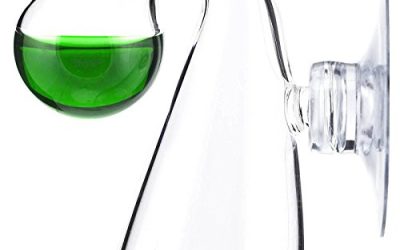
Start low, around one bubble per second on a typical mid-size tank, and increase gradually over days while watching your fish and a drop checker. A drop checker that reads green indicates a healthy CO2 level; blue means too little and yellow warns of too much. Always run CO2 on the same timer as your lights and turn it off at night. Pair stable CO2 with consistent upkeep from our aquarium maintenance schedule, and avoid the pitfalls in our common planted tank mistakes guide.
Matching the Regulator to Your Cylinder
Before buying, check how your regulator connects to your CO2 cylinder. In the US, most refillable aluminum and steel CO2 cylinders use a CGA320 valve, which is what regulators like the VENO CO2 Elite are built for. Paintball-style and disposable bottles use different fittings, so confirm compatibility or budget for an adapter. A larger cylinder costs more upfront but is far cheaper per refill and needs filling less often, which is worth considering for medium and large planted tanks. Also think about where the regulator and cylinder will live: many aquarists tuck them inside the stand, so a compact regulator body and a tidy run of CO2 tubing up to the tank make for a cleaner install. Plan the CO2 gear alongside the rest of your equipment using our complete fish tank setup guide so everything fits together from the start.
CO2 Delivery Methods Compared
A regulator is only one piece of the delivery chain. How the CO2 actually enters the water column changes how evenly it dissolves and how much maintenance the setup needs.
| Method | Best For | Maintenance Load |
|---|---|---|
| Regulator + inline diffuser | Tanks with a canister filter already in line | Low once set; clean diffuser disc periodically |
| Regulator + in-tank diffuser | Smaller tanks without external filtration | Moderate; visible bubble counter needs regular glass cleaning |
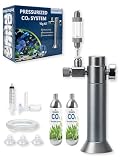
| Complete CO2 kit (regulator + cylinder bundle) | First-time pressurized setups | Low to start; cylinder swap or refill still required |
| Paintball-style small cylinder regulator | Nano and desktop tanks | Higher; small cylinders need more frequent refills |
Drop Checkers and Monitoring Your CO2 Levels
A drop checker uses a pH-sensitive reagent and a reference solution to show, through color, whether dissolved CO2 is in a safe range for livestock while still being enough for plants. Green generally indicates a workable middle ground, blue signals too little CO2 for strong plant growth, and yellow signals a concentration that can stress fish and other tank inhabitants. Because the color change lags the actual water chemistry by several hours, a drop checker is best read first thing before the lights turn on, when CO2 has had all night to either build up or off-gas, giving the clearest picture of the lowest point in the daily cycle.
Which Regulator Fits Your Tank
- Largest planted tanks with the most precise control: the CO2Art Pro-Elite Series Dual Stage holds working pressure steady even as the cylinder empties, which matters most on bigger setups with long bubble-rate runs.
- Automated on/off with lighting: both CO2Art PRO-SE and the AQUATEK Premium include a solenoid, letting a timer cut gas flow when the lights are off without manual valve adjustments.
- Smaller tanks on a tighter budget: the AQUATEK Basic drops the solenoid, which is a reasonable trade-off if the cylinder is easy to reach and manually shutting off valves at night is not a hassle.
- Straightforward dual-stage reliability: the VENO CO2 Elite covers the same dual-stage fundamentals as the pricier picks without extra add-ons.
Common Mistakes That Lead to CO2 Problems
- Setting the bubble rate once and never rechecking it. As a cylinder empties, pressure can drift, which shifts the actual bubble rate even with the needle valve untouched.
- Running CO2 on the same schedule as the lights with no buffer. Starting gas injection right when lights turn on, rather than 1-2 hours earlier, means plants are oxygen- and carbon-starved during the brightest part of the day.
- Skipping a check valve. Without one, tank water can siphon back into the regulator line, especially after a power outage stops an inline diffuser’s one-way flow.
- Trusting a bubble counter alone for safety. Bubble size varies by diffuser type, so a bubble count that is safe on one setup is not automatically safe on another; a drop checker or pH monitoring catches what the bubble counter cannot.
- Ignoring solenoid wear over time. A solenoid that sticks open after months of daily cycling can let gas flow during lights-off hours unnoticed unless the tank is checked periodically.
Paintball and Disposable CO2 Tanks: A Compatibility Reality Check
Hobbyists running small or nano tanks sometimes look at a spare paintball CO2 tank and wonder whether it can replace a standard aquarium cylinder. The gas inside is identical, but the valve is usually not. Most aquarium regulators are built around a CGA320 connection, while paintball tanks typically use a pin valve or a different threaded fitting, so a direct swap is rarely possible without an adapter rated for the pressures involved. Disposable cartridges sold for soda makers or bar systems raise the same issue: the thread and flow rate they are designed for do not match what a planted-tank regulator expects.
Where a rated adapter exists, the swap can work for short-term or travel setups, but the smaller volume of a paintball tank means far more frequent refills than a standard five or ten pound cylinder. Treat any adapter joint as a point where a leak is more likely than at a factory connection, and check it with a soapy-water test before trusting it unattended overnight.
Inline vs In-Tank Diffusers: Matching Diffusion to Your Regulator’s Output
A regulator only controls how much CO2 leaves the cylinder; how well that gas actually dissolves into the water depends on the diffuser downstream. In-tank diffusers sit inside the aquarium and rely on a ceramic disc to break gas into fine bubbles that rise through the water column, which works well in shorter tanks where bubbles have less distance to dissolve before reaching the surface. Inline diffusers sit in the filter tubing outside the tank and hold the gas in contact with moving water for longer, which tends to dissolve CO2 more completely in taller or heavily stocked tanks where in-tank bubbles would otherwise reach the surface unused.
A regulator set to a steady, low bubble rate pairs better with either diffuser type than one pushed to a high rate to compensate for poor dissolution elsewhere in the system. If drop checker readings stay low despite a reasonable bubble count, the diffuser and its placement relative to the water flow are usually the first thing worth checking, not the regulator itself.
Regulator Maintenance: O-Rings, Seals, and When to Service a Solenoid
A regulator is a mechanical device with seals that age even when it is barely used. The O-ring at the cylinder connection is the most common failure point, and a hiss or the smell of escaping gas at that joint usually means it needs replacing rather than simply tightening further. Manufacturers that sell the regulator typically sell a matching O-ring and seal kit, and keeping a spare on hand avoids a tank sitting without CO2 while a replacement ships.
Solenoids wear differently: they are electromechanical valves that open and close every time a timer or controller cycles the CO2 on and off, and a solenoid that starts clicking without actually stopping gas flow, or that fails to shut off at lights-out, is usually at the end of its service life rather than in need of adjustment. Checking that the solenoid fully closes at night, by watching for bubbles after shutoff, is a simple habit that catches a failing unit before it overdoses a tank and stresses fish overnight.
Why Your Working Pressure Reading Drifts With Temperature and Fill Level
A regulator’s working pressure gauge is not a fixed number once it is set; it shifts in small ways as the cylinder empties and as room temperature changes with the seasons. CO2 behaves differently from inert gases stored at pressure because a cylinder that still contains liquid CO2 holds a fairly steady pressure for most of its working life, then that pressure begins to drop more noticeably near the end as the liquid runs out and only gas remains. A tank that was dialed in correctly a month ago but now seems to be under-gassing the same bubble rate is often simply running low, not malfunctioning.
Temperature plays a smaller but real role too: a cylinder stored somewhere that gets noticeably warmer or colder through the day, such as near a window or an exterior wall, can show working pressure that drifts enough to change the bubble rate slightly without anyone touching the needle valve. Keeping the cylinder in a stable-temperature spot away from direct heat sources reduces this drift and makes the bubble rate more predictable from one day to the next, which matters more for a tank running CO2 on an automated light-synced timer than one dosed by hand.
Frequently Asked Questions
What does a CO2 regulator actually do?
It reduces the very high pressure inside a CO2 cylinder to a low, adjustable working pressure, and with a needle valve and solenoid it lets you deliver a precise, automated bubble rate to your planted tank.
Do I need a dual-stage regulator?
Not always, but dual-stage regulators resist end-of-tank dump, where pressure spikes as the cylinder empties. For sensitive livestock or larger investments in plants, dual-stage is the safer choice.
What is a solenoid and do I need one?
A solenoid is an electric valve that turns CO2 off when power is cut. It lets you run CO2 on a timer with your lights, saving gas and protecting fish at night. Most planted-tank aquarists consider it essential.
How do I know if I’m adding too much CO2?
Use a drop checker as a visual guide: green is good, yellow means too much. Watch your fish for gasping at the surface, which signals excess CO2. Always start low and increase slowly.
Best Aquarium Light for Planted Tank: PAR, Depth and Cost

Low Tech Planted Tank Setup Guide: No CO2, No Drama