Last Updated: October 4, 2026
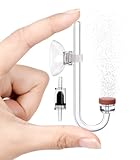
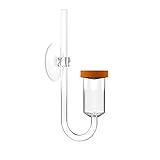
- Top Pick: Ultum Nature Systems CO2 Diffuser for Planted Aquariums – White Ceramic Disc with Fine Bubble Diffusion, Clear Acrylic Atomizer with U-Clip and Suction Cups for Rimless Tank Setup – Medium
- Best Value: Fzone Neo CO2 Diffuser with Customized Ceramic from South Korea(S-13mm)
- Premium Choice: Clscea CO2 Diffuser for Aquarium Plant Mini CO2 Atomizer, U-Shaped-S
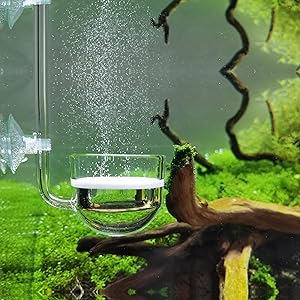
TL;DR: A quality CO2 diffuser is the single highest-leverage upgrade for a planted tank — poor CO2 dissolution wastes gas and stunts plant growth regardless of how good your light or fertilizer is. Fine ceramic disc diffusers produce bubble sizes under 1mm for near-complete dissolution before rising. Inline diffusers eliminate surface clutter entirely. Best pick: ASIN B08PHMPG9D.
Best Aquarium CO2 Diffuser for Planted Tanks 2026
CO2 supplementation is the catalyst that separates a planted tank that grows slowly and algae-prone from one that thrives with lush, fast-growing stems and carpets. But the diffuser — the component that actually dissolves CO2 gas into your water column — is where most setups lose efficiency. A poor diffuser allows large bubbles to rise and vent at the surface without dissolving, wasting expensive CO2 and delivering inconsistent carbon to your plants. A quality diffuser breaks gas into bubbles under 1mm — small enough to dissolve completely within a 12-to-18-inch water column rise, giving your plants a steady, efficient carbon supply at the correct concentration (20–30 ppm is the target for most planted setups).
As an Amazon Associate we earn from qualifying purchases at no extra cost to you.





🛒 Best Price Today on Amazon
Prime members get fast, free shipping on everything above, plus member-only deals. New members get a 30-day free trial — cancel anytime.
Start 30-Day Prime Free Trial →See Today’s Amazon DealsTypes of CO2 Diffuser: Which Should You Choose?
Three diffuser types dominate the planted tank hobby, each with distinct trade-offs:
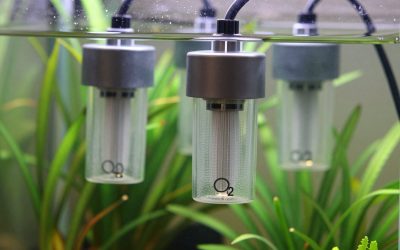
- Ceramic disc diffuser (in-tank): Most common. A fine-pore sintered ceramic disc produces a mist of micro-bubbles when CO2 passes through under pressure. Quality matters enormously — cheap discs have inconsistent pore sizes that produce large, inefficient bubbles. Top-tier ceramic discs (Fzone, UP Aqua, Atomic) run pore sizes of 0.3–0.5 microns and require only 15–30 PSI working pressure. Mount near the filter intake to maximize dissolution path length.
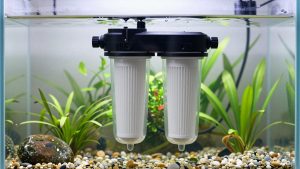
- Inline diffuser (external): Installed on the return line from a canister filter. CO2 is injected into the water flow before it re-enters the tank — the turbulence inside the diffuser body ensures near-complete dissolution. No visible hardware in the tank; zero surface clutter. Requires a canister filter with accessible tubing. Best choice for aquascapers prioritizing aesthetics.
- Reactor (external): CO2 is trapped in a chamber where it contacts water until fully dissolved — essentially 100% efficiency. More complex installation, larger footprint, but truly no CO2 waste. Used by serious planted tank hobbyists running high-tech setups at 2+ bubbles per second.
Top Pick: CO2 Diffuser for Planted Tanks
BEST OVERALL
Fzone Aquarium CO2 Diffuser Ceramic Disc
BEST INLINE
UP Aqua Inline CO2 Diffuser for Canister Filter
BEST BUDGET
Rhinox 2000 CO2 Diffuser with Check Valve
CO2 Diffuser Spec Comparison
| Spec | Fzone Ceramic | UP Aqua Inline | Rhinox 2000 |
|---|---|---|---|
| Type | In-tank ceramic disc | Inline (canister) | In-tank ceramic disc |
| Disc pore size | ~0.3 micron | N/A (turbulence) | ~0.5 micron |
| Working pressure | 15–30 PSI | 10–20 PSI | 20–35 PSI |
| Tank size rating | Up to 100 gal | Up to 130 gal | Up to 75 gal |
| Tubing fit | 4/6mm CO2 tubing | 12/16mm canister hose | 4/6mm CO2 tubing |
| Acrylic body | Yes | Yes | No (clear plastic) |
| Replaceable disc | Yes | N/A | No |
| Cleaning method | Bleach soak / H2O2 | Vinegar rinse | Replace disc |
Placement and Maintenance for Maximum CO2 Efficiency
For in-tank ceramic diffusers, placement determines dissolution efficiency as much as disc quality. Mount the diffuser low in the tank — ideally within 2–3 inches of the substrate — and position it near your filter intake. The suction draws the CO2 mist laterally through the water column before it can rise and vent. In a 75-gallon planted tank with a 24-inch water depth, a properly placed Fzone diffuser at 1.5 bubbles per second will achieve 85–90% dissolution efficiency versus 50–60% from a poorly placed diffuser of equal quality.
Clean your ceramic disc every 4–6 weeks. Calcium deposits and biofilm clog micro-pores and increase working pressure, producing larger, less efficient bubbles. A 30-minute soak in a 3% hydrogen peroxide solution or diluted bleach (1:20), followed by a thorough rinse, restores disc performance completely. If you are running a full CO2 system, pair your diffuser with a quality CO2 bubble counter to monitor injection rate precisely, and a drop checker to validate dissolved CO2 concentration in real time. For complete high-tech planted tank builds, see our CO2 system beginner setup guide.
Frequently Asked Questions
How do I know if my CO2 diffuser is working efficiently?
Two indicators: bubble size and plant pearling. Efficient diffusers produce a fine white mist — bubbles so small they appear cloudy rather than individually distinct. If you see large, clearly visible bubbles rising quickly to the surface, your diffuser is underperforming. Plant pearling (tiny oxygen bubbles streaming from leaf surfaces during the photoperiod) is the most reliable real-world indicator that CO2 is reaching plants at sufficient concentration — typically 20+ ppm dissolved CO2.
What pressure do I need to run a ceramic CO2 diffuser?
Most quality ceramic diffusers operate at 15–35 PSI working pressure. Your CO2 regulator’s working pressure (the needle valve output) should be set to match. If pressure is too low, CO2 will not pass through the ceramic membrane consistently. If too high, you over-inject gas and risk CO2 spikes that stress fish. Start at 15 PSI and increase in 5 PSI increments until you achieve a steady, fine mist at your target bubble count.
Can I use a CO2 diffuser with a pressurized and DIY CO2 system?
Yes for pressurized (cylinder + regulator) systems — ceramic disc and inline diffusers work with any pressurized CO2 source. For DIY yeast-based CO2, pressure output is lower and less consistent (typically 5–15 PSI), which means only low-resistance diffusers work reliably. Standard fine-pore ceramic discs may be too restrictive for DIY setups. A glass diffuser with a slightly coarser membrane (like the Rhinox series) or a small spiral reactor is better matched to DIY CO2 pressure output.
How often should I replace my CO2 diffuser disc?
Quality ceramic discs do not need replacement if cleaned properly — they last 2–5 years with regular maintenance. Replace only if the disc chips, cracks, or no longer produces fine mist even after thorough cleaning (indicating irreversible pore blockage or calcium fusing). Budget diffusers with non-replaceable discs should be replaced entirely every 6–12 months. Spending more on a replaceable-disc diffuser like the Fzone is cost-effective over a 2–3 year horizon.
Should I turn off my CO2 diffuser at night?
Yes — this is standard practice in planted tanks. Plants consume CO2 and produce oxygen during the photoperiod (lights on). At night, they respire and consume oxygen. Running CO2 injection after lights off builds CO2 concentration without plants consuming it, which can depress dissolved oxygen to dangerous levels for fish. Use a timer to run CO2 injection starting 1 hour before lights on and shutting off 1 hour before lights off. This timing ensures peak CO2 concentration coincides with peak plant photosynthesis demand.
Related Reviews & Guides


Staghorn Algae Aquarium Guide: Ammonia and CO2 Instability
Best Aquascaping Tool Set With Tweezers and Scissors: Top