Last Updated: October 4, 2026
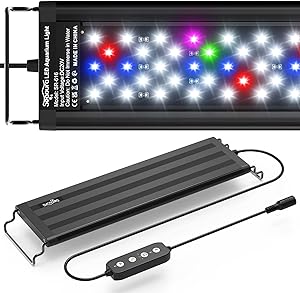
TL;DR: The Fluval Plant 3.0 LED is the benchmark mid-range planted tank light — Bluetooth programmable, full-spectrum with UV and IR, and powerful enough to grow demanding carpets and stem plants in tanks up to 36 inches. Its app-controlled sunrise/sunset, cloud, and storm simulations set it apart from fixed-spectrum competitors at similar price points. Best for hobbyists who want programmable control without DIY complexity. Best pick: ASIN B07GCCMLLP.
Fluval Plant 3.0 LED Aquarium Light Honest Review 2026
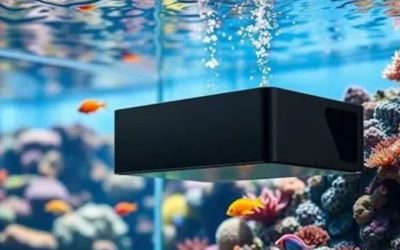
The planted tank lighting market has consolidated around a handful of genuinely capable fixtures in the mid-range price bracket, and the Fluval Plant 3.0 LED has held its ground as one of the most consistently recommended options for hobbyists growing medium to high-demand plant species. Released as an upgrade over the well-regarded Plant 2.0, the 3.0 adds Bluetooth programmability via the FluvalSmart app — a feature that sounds like a gimmick until you realize how much plant health depends on consistent photoperiod control, gradual intensity transitions, and spectrum tuning matched to the specific plants and depth of your setup. This review covers every aspect of the fixture’s real-world performance: PAR output at depth, app reliability, build quality, and how it compares to the main alternatives in its price class.
As an Amazon Associate we earn from qualifying purchases at no extra cost to you.



🛒 Best Price Today on Amazon
Prime members get fast, free shipping on everything above, plus member-only deals. New members get a 30-day free trial — cancel anytime.
Start 30-Day Prime Free Trial →See Today’s Amazon DealsFluval Plant 3.0 LED: Specifications and Light Output
The 3.0 ships in four sizes covering tank lengths from 15 to 36 inches. The LED array combines multiple diode types across the spectrum:
- Full-spectrum white LEDs: Cover the primary photosynthetic range (400–700nm PAR window) for broad plant growth support. The 6500K color temperature renders plants with accurate, vivid coloration in the tank.
- Red LEDs (660nm): Target the chlorophyll-a absorption peak, maximizing photosynthetic efficiency. The Fluval 3.0 runs a higher red channel ratio than many comparably priced fixtures, which accelerates carpeting plant growth and enhances stem plant coloration.
- Blue LEDs (450nm): Support chlorophyll-b absorption and contribute to the moonlight simulation mode. Also relevant for fluorescent pigment accentuation in certain plant species.
- UV and IR diodes: UV assists with mineral uptake signaling in some plant species; IR contributes to the Emerson enhancement effect, boosting photosynthetic efficiency at the red-far-red boundary. These are genuine additions that distinguish the 3.0 from budget fixtures that list only white and blue LEDs.
- PAR output: At 12 inches depth, the 24-inch model produces approximately 65–80 µmol/m²/s at 100% intensity — solidly in the medium-high range adequate for demanding species like Hemianthus callitrichoides (HC Cuba), Monte Carlo, and most stem plants. Not in the same tier as high-intensity fixtures like the Twinstar 600E or Chihiros WRGB II, but within the range for all but the most demanding high-tech setups.
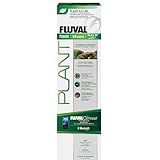
Top Pick: Fluval Plant 3.0 LED
BEST OVERALL
Fluval Plant 3.0 LED Planted Aquarium Light
RUNNER-UP
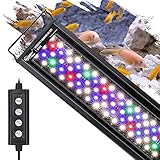
Chihiros WRGB II Slim Planted Aquarium Light
BEST BUDGET
Finnex Planted+ 24/7 HLC Aquarium LED Light
Planted Tank Light Spec Comparison
| Spec | Fluval Plant 3.0 | Chihiros WRGB II | Finnex Planted+ 24/7 |
|---|---|---|---|
| Control method | Bluetooth app (FluvalSmart) | Bluetooth app | Onboard controller |
| Spectrum | Full + UV + IR | WRGB + UV | Full spectrum |
| PAR at 12in (24in model) | ~65–80 µmol/m²/s | ~80–100 µmol/m²/s | ~45–60 µmol/m²/s |
| Sunrise/sunset sim | Yes (app) | Yes (app) | Yes (auto cycle) |
| Storm/cloud sim | Yes (app) | Yes (app) | No |
| Moonlight mode | Yes | Yes | Yes |
| Max tank length | 36 in (largest size) | 35 in | 48 in |
| Build | Aluminum housing | Aluminum housing | Aluminum rail |
FluvalSmart App: Real-World Usability
The Bluetooth app is the 3.0’s signature feature and its most debated aspect. On current firmware (2024–2026 versions), the app has stabilized considerably from its problematic early releases — connection drops and scheduling failures that plagued early adopters are largely resolved with updated firmware. The interface allows independent control of each channel (white, red, blue, UV, IR) across a 24-hour timeline with minute-level precision. Sunrise simulation ramps from 0% to your target intensity over a user-defined window of 15 minutes to 2 hours; sunset reverses the process. The storm mode randomly varies intensity and pulses blue channel to simulate cloud cover — a non-essential but genuinely enjoyable feature. Schedule reliability at the time of this review is very good: the light holds its programmed schedule even after app disconnection, storing the schedule onboard rather than requiring continuous Bluetooth proximity.
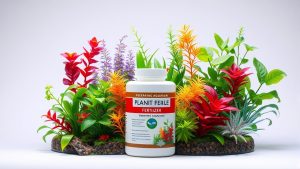
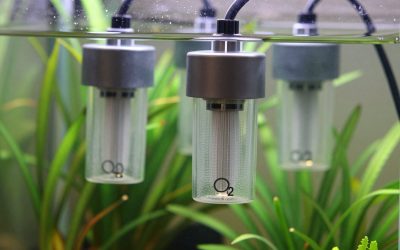
The main practical limitation is the Bluetooth-only connection — no Wi-Fi, no remote control from outside the room. For most home aquarium setups this is a non-issue, but if you want to monitor or adjust your tank’s photoperiod remotely, the Chihiros app (also Bluetooth, with some models adding Wi-Fi bridging) or a third-party smart timer for a less programmable light becomes the workaround. For complete planted tank setups pairing this light with CO2 and fertilization, the CO2 aquarium system beginner guide covers the full tech stack, and our aquarium plant fertilizer guide addresses the nutrient side of the growth equation that lighting alone cannot solve.
Frequently Asked Questions
Can the Fluval Plant 3.0 grow carpet plants like Monte Carlo and HC Cuba?
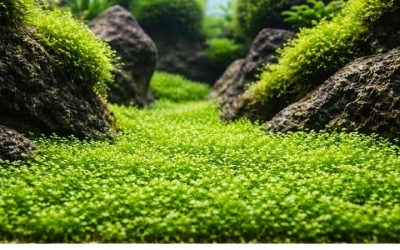
Yes, with appropriate CO2 supplementation and nutrient dosing. At 100% intensity in a tank 10–12 inches deep, the 3.0 delivers sufficient PAR for demanding carpeting species. Without CO2, Monte Carlo will grow slowly and may not form a dense carpet — no light fixes a carbon-limited planted tank. With pressurized CO2 at 20–30 ppm and comprehensive liquid fertilization, the Fluval 3.0 produces excellent carpet growth results across MC, Dwarf Baby Tears, and similar high-light groundcovers.
Does the Fluval Plant 3.0 cause algae problems?
Light duration and intensity mismatched to CO2 and nutrient availability causes algae — not the light itself. Running the 3.0 at 80–100% intensity for 8+ hours per day in a low-tech or CO2-deficient tank creates the light surplus that fuels algae growth. Start at 40–60% intensity for 6 hours per day, establish your plant biomass, confirm CO2 and nutrient balance, then gradually increase. Most algae complaints about the 3.0 trace back to this imbalance rather than any defect in the fixture. For algae identification and UV treatment strategies in planted setups, see our aquarium UV sterilizer algae guide.
What tank size is the Fluval Plant 3.0 best for?
The 3.0 is available in sizes covering 15-inch nano tanks up to 36-inch standard tanks. The 24-inch model suits 20-gallon long and 29-gallon standard tanks optimally. The 36-inch model covers 40-gallon breeders and 55-gallon standards, though PAR at the far ends of a 55-gallon may be lower than at center — a common limitation of single-fixture linear lights on wider tanks. For tanks over 36 inches, running two overlapping fixtures or upgrading to a higher-output bar light is the better solution.
How does the Fluval Plant 3.0 compare to the Fluval Plant 2.0?
The primary upgrade from the 2.0 to the 3.0 is Bluetooth programmability via the FluvalSmart app, plus the addition of UV and IR diodes. The 2.0 uses a manual rotary dial for intensity control with no scheduling capability. PAR output between the two is comparable at equivalent sizes. If you already own a 2.0 and are happy with its performance, the upgrade is only worthwhile if app control and automated photoperiod programming are features you actively want. First-time buyers should choose the 3.0 for its scheduling capabilities alone.
Is the Fluval Plant 3.0 worth the price compared to budget LED lights?
For hobbyists growing medium to high-demand plants, yes — the spectrum quality, PAR output consistency, and app programmability justify the price premium over sub-$50 budget lights. Budget lights often underperform their claimed PAR specifications, lack red-channel depth for plant growth, and offer no photoperiod control beyond an on/off timer. For low-tech tanks with easy-to-grow species (Anubias, Java fern, moss), a quality budget light is sufficient — the 3.0 is sized for planted tank enthusiasts who want reliable, consistent results with demanding plants.
Ready to decide? Our #1 pick for 2026 is the Control method.
Live price & availability on Amazon.
Related Reviews & Guides

Best Substrate for Bare Bottom vs Planted Tank: Clear Guide

Quick Picks: Best Aquarium Substrates for Planted Tanks