Last Updated: October 9, 2026
- Top Aquarium UV Sterilizers
- The UV-C Photobiology: How It Actually Works
- Sizing and Flow Rate: The Most Misunderstood Variable
- Installation Options: In-Line vs. Hang-On vs. Submersible
- Bulb Replacement and Maintenance Schedule
- What a UV Sterilizer Cannot Do
- Related Guides
- Frequently Asked Questions
- Related Articles
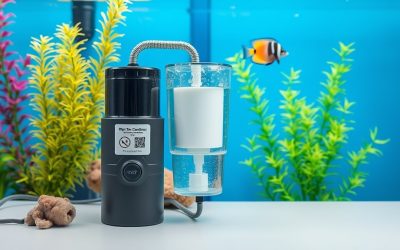
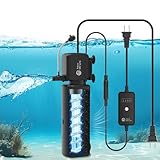
- Top Pick: hygger Aquarium U-V Light with Timer, 360° Protective Shield Clean Light for Green Water and Algae Clean, Mini Algae Control Lamp for Freshwater and Saltwater Tank (3W for 5-25 Gallon)
- Best Value: COODIA Internal Green Water Killer Aquarium Filter Tank U-V Pump
- Premium Choice: AquaMiracle Aquarium Filter with U – V Light & Filter Sponge, Fish Tank Filter with Timer for Green Water, Turtle Filter with Aeration & Rainfall Mode for Aquarium 10-30 Gallon

TL;DR: An aquarium UV sterilizer eliminates free-floating algae cells, pathogens, and suspended bacteria by exposing tank water to germicidal UV-C light (254 nm). It won’t fix nutrient problems, but it’s the fastest tool for clearing green water and reducing disease transmission between fish. Flow rate through the unit is the critical variable most hobbyists miscalculate.
Aquarium UV Sterilizer Guide: Killing Algae, Pathogens, and Green Water for Good
Green water is a chemistry failure first — excess dissolved nutrients plus light equals an algae bloom. But once the bloom is established, water changes and shading alone take weeks to resolve it. An aquarium UV sterilizer short-circuits that timeline by physically destroying the algae cells before they can reproduce, giving you a clear tank in 24–72 hours while you address the underlying cause.
As an Amazon Associate we earn from qualifying purchases at no extra cost to you.




Beyond algae, UV sterilization reduces the pathogen load in the water column — critical for quarantine systems, breeding setups, and any tank recovering from a disease outbreak. This guide covers the photobiology, correct sizing, flow rate math, and maintenance schedule to get full germicidal performance from your unit.
🛒 Best Price Today on Amazon
Prime members get fast, free shipping on everything above, plus member-only deals. New members get a 30-day free trial — cancel anytime.
Start 30-Day Prime Free Trial →See Today’s Amazon DealsTop Aquarium UV Sterilizers


As an Amazon Associate we earn from qualifying purchases. Product prices and availability are accurate as of the date/time indicated.



As an Amazon Associate we earn from qualifying purchases. Product prices and availability are accurate as of the date/time indicated.


As an Amazon Associate we earn from qualifying purchases. Product prices and availability are accurate as of the date/time indicated.
The UV-C Photobiology: How It Actually Works
UV-C radiation at 254 nm disrupts the DNA and RNA of microorganisms by forming pyrimidine dimers — covalent bonds between adjacent thymine bases that prevent DNA replication. The organism cannot reproduce and dies within one cell cycle. The lethal dose is measured in microwatt-seconds per square centimeter (µWs/cm²), and targets vary significantly:
- Green water algae (Chlorella): 22,000 µWs/cm² for 99.9% kill rate
- Ich (Ichthyophthirius) free-swimming theronts: 100,000+ µWs/cm²
- Common bacteria (E. coli, Pseudomonas): 6,600–10,000 µWs/cm²
- Velvet (Amyloodinium) dinospores: 35,000–45,000 µWs/cm²
The implication: a UV sterilizer sized for bacteria control will clear green water but fail to kill ich in its free-swimming stage without dramatically reducing flow rate. Parasite sterilization requires much longer exposure time (lower flow) than algae control.
Sizing and Flow Rate: The Most Misunderstood Variable
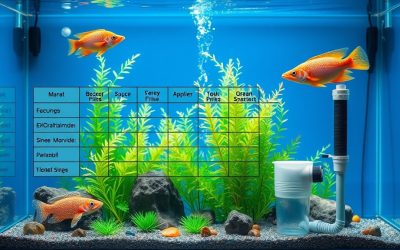
UV sterilizer wattage ratings are nearly meaningless without context. A 9W unit running 50 GPH through a tight contact chamber delivers far more germicidal exposure than a 36W unit running 400 GPH. The key formula is exposure dose = UV intensity × contact time, where contact time is determined by chamber volume divided by flow rate.
| Application | Target Organisms | Recommended Flow | Turnover |
|---|---|---|---|
| Green water clearing | Algae cells | 100–200 GPH per 9W | 2–4× daily |
| General sterilization | Bacteria, fungi | 50–100 GPH per 9W | 1–2× daily |
| Parasite control | Ich, velvet theronts | 20–40 GPH per 9W | 0.5–1× daily |
| Quarantine tank | All pathogens | 10–25 GPH per 9W | Slow pass |
The practical takeaway: reduce pump flow to the sterilizer when treating disease outbreaks. Most hobbyists run their UV at full filter pump output — fine for maintenance sterilization, inadequate for acute parasite problems. See our ich treatment guide for the full disease management protocol where UV is one layer in a multi-step approach.
Installation Options: In-Line vs. Hang-On vs. Submersible
In-line UV sterilizers install between your canister filter output and the tank return. They receive pre-filtered water — fewer particles to absorb UV before it reaches target organisms — and are completely hidden. Best option for established systems with a canister filter. Check our Fluval 207 canister filter review for compatibility notes with inline UV units.
Hang-on UV units use their own small pump to pull water from the tank. Easier to install on setups without a canister filter, but the pump adds a small heat load and the positioning is more visible. Suitable for quarantine tanks and smaller display systems.
Submersible UV sterilizers sit inside the sump or tank. Maintenance requires partial disassembly and dripping water — acceptable for low-maintenance setups but inconvenient in practice.
Bulb Replacement and Maintenance Schedule
UV-C bulbs lose approximately 40% of germicidal output by the 9,000-hour mark — even though they may still emit visible light. Running an “apparently working” bulb past its service life gives the appearance of UV sterilization with negligible actual effect. Mark the date on the unit and replace on schedule, not when the bulb visibly fails.
Quartz sleeves (the protective tube around the bulb) accumulate calcium carbonate and iron deposits in hard water systems. A fouled sleeve reduces UV transmission by 70–80%. Clean with a dilute citric acid solution (5 g/L) every 3 months, or whenever you notice the sleeve has a visible haze. Never touch the quartz sleeve with bare hands — skin oils etch the surface and create permanent transmission loss.
What a UV Sterilizer Cannot Do
UV sterilizers kill what passes through them — they do not affect algae attached to glass, hardscape, or substrate. Spot algae on decoration is a lighting/nutrient problem, not a UV failure. Similarly, UV does not remove nitrates, phosphates, or dissolved organics. It’s a supplemental tool for water clarity and pathogen load, not a replacement for proper water chemistry management or regular water changes.
UV also kills beneficial free-floating bacteria and zooplankton. In systems that rely on refugium-grown copepod populations for feeding (SPS/LPS reef), place the UV on the display tank return only — never on the refugium circuit.
Related Guides
- Air Pump in Aquarium: The Complete Buyer's Guide (2026)
- 55 Gallon Aquarium Setup Guide: Best Equipment for a Large Fish Tank
- Cloudy Aquarium Water: Causes, Fixes & Prevention Guide 2026
Frequently Asked Questions
Will a UV sterilizer clear green aquarium water overnight?
Typically 24–72 hours for significant clearing, with full resolution in 3–5 days. The sterilizer kills suspended algae cells, but dead cells remain in suspension until removed by mechanical filtration. Run fine mechanical filter media (polishing pad) alongside the UV for faster visual results. Address the nutrient cause — usually excess lighting duration or elevated phosphate — simultaneously, or the bloom will return.
How often should I replace the UV bulb?
Every 6–12 months, or at 9,000 operating hours, whichever comes first. Annual replacement is the safe baseline for tanks running UV 24/7. Higher-output bulbs (25W+) may warrant 6-month replacement cycles in disease-prone systems or quarantine setups where germicidal performance is critical.
Can a UV sterilizer harm my beneficial bacteria?
Minimal practical impact. Nitrifying bacteria (Nitrosomonas, Nitrospira) colonize biofilm on solid surfaces — filter media, substrate, hardscape — not the free water column. The tiny fraction in suspension that passes through the UV is inconsequential to the established cycle. UV does not sterilize your biological filter media.
Do I need a UV sterilizer in a planted tank?
Generally no. A well-planted tank with proper nutrient balance rarely develops persistent green water — the plants outcompete suspended algae for nutrients. UV is most useful during the initial tank cycling period before plants establish, or after a disruption (medication dose, large water change, light schedule change) that temporarily breaks the plant-nutrient balance. See our low-tech planted tank guide for nutrient management that minimizes algae without UV.
What wattage UV sterilizer do I need for a 55-gallon tank?
For general maintenance sterilization: 9–15W. For green water clearing: 15–18W run at reduced flow (50–80 GPH). For disease treatment or quarantine-level sterilization: 18–25W at 20–40 GPH flow rate. When in doubt, size up — a higher-wattage unit run at appropriate low flow is more versatile than an undersized unit run at maximum throughput. Also pair with a good quarantine tank setup for comprehensive disease prevention.
Ready to decide? Our #1 pick for 2026 is the Green water clearing.
Live price & availability on Amazon.