Last Updated: October 21, 2026
- Top Picks at a Glance
- How Air Pumps Work in an Aquarium
- When You Actually Need an Air Pump
- When You Don’t Need One
- Key Specs to Compare
- Noise: The Feature Nobody Talks About Enough
- Sizing Guide by Tank
- Air Pump vs. Powerhead vs. HOB Filter
- Installation Tips
- Compatibility With Heaters and Temperature
- Related Guides
- Frequently Asked Questions
- Related Guides
- Related Articles
- Related Guides

TL;DR: Air pumps drive surface agitation, power sponge filters, and support hospital tanks. For most setups under 40 gallons, a dual-outlet 4W unit is enough. Size up for sumps or heavily stocked tanks. Skip cheap no-brand pumps — the vibration drives you insane at 2 a.m.
Air Pump in Aquarium: The Complete Buyer’s Guide (2026)
Walk into any fish store and you’ll hear it — that low hum coming from the back room where the holding tanks live. That’s an air pump doing its job. But once you’re setting up your own tank, the question isn’t “do I need one?” — it’s “which one, and why?”
As an Amazon Associate we earn from qualifying purchases at no extra cost to you.


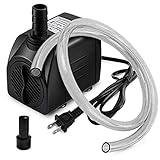
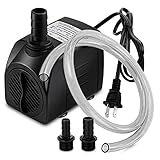

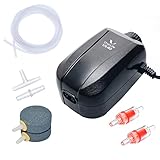
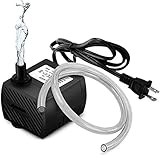
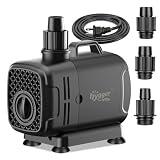
This guide covers everything: how air pumps actually work, what to look for when buying, and which setups benefit most from them. I’ll also be honest about when you don’t need one at all.
🛒 Best Price Today on Amazon
Prime members get fast, free shipping on everything above, plus member-only deals. New members get a 30-day free trial — cancel anytime.
Start 30-Day Prime Free Trial →See Today’s Amazon DealsTop Picks at a Glance
Best Budget


As an Amazon Associate we earn from qualifying purchases. Product prices and availability are accurate as of the date/time indicated.
Best Heater Combo


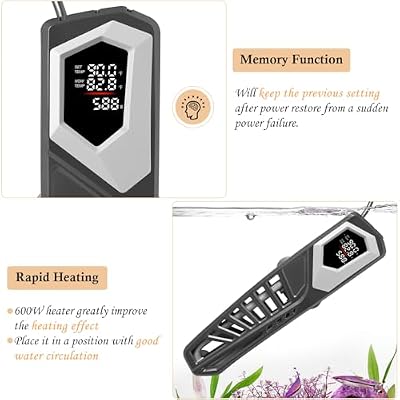


As an Amazon Associate we earn from qualifying purchases. Product prices and availability are accurate as of the date/time indicated.
Best Lighting Upgrade

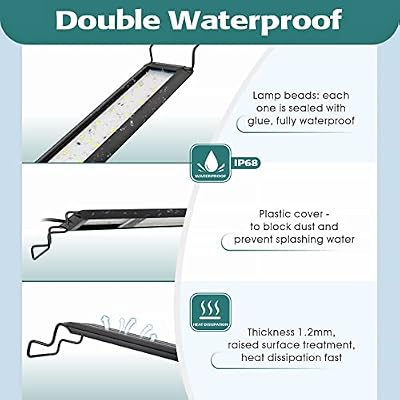


As an Amazon Associate we earn from qualifying purchases. Product prices and availability are accurate as of the date/time indicated.
How Air Pumps Work in an Aquarium
An air pump doesn’t add oxygen directly. It pushes air through airline tubing to an airstone or sponge filter, which creates bubbles. Those bubbles agitate the water surface. Surface agitation is where gas exchange actually happens — CO2 exits, O2 enters. The pump is just the mechanism that drives the movement.
This matters because it explains a common mistake: people max out air output thinking “more bubbles = more oxygen.” Not really. One moderate airstone creating good surface ripple does more than four airstones churning the bottom of the tank. What matters is the water surface moving — not bubble volume per se.
When You Actually Need an Air Pump
- Sponge filter setups — classic for breeding tanks and fry tanks, runs entirely on air
- Hospital / quarantine tanks — simple, easy to sanitize, no complex equipment
- Heavily stocked or warm tanks — warm water holds less dissolved oxygen, air pump covers the gap
- Power filter backup — if your HOB or canister fails overnight, a running sponge filter buys you time
- Decorative use — bubble walls, bubble wands, volcano decorations
When You Don’t Need One
Planted tanks with CO2 injection are the big exception. You’re paying good money (see our learn about co2 aquarium system beginner setup) to keep CO2 dissolved in the water. Running an air pump defeats that by outgassing the CO2 at the surface. Lights off, if you run a timer on the pump overnight when plants consume O2 instead of producing it, that’s a reasonable middle ground — but most planted tank setups with good circulation don’t need it.
Key Specs to Compare
| Spec | What It Means | What to Look For |
|---|---|---|
| Output (L/min) | Volume of air pushed per minute | 1–2 L/min per 10 gallons is a solid baseline |
| Power (W) | Energy draw | 2–5W covers most hobby tanks |
| Outlets | How many lines you can run | Dual outlet = one pump, two sponge filters |
| Noise level (dB) | Vibration noise at operating load | Below 40 dB = bedroom safe |
| Adjustable flow | Dial to reduce output | Essential for small/shrimp tanks |
| Max depth | Head pressure rating | Must exceed tank depth by a margin |
Noise: The Feature Nobody Talks About Enough
Budget pumps vibrate. A lot. They’ll rattle against whatever surface they’re on and the noise travels through furniture. If your tank is in a bedroom or living space you care about, this matters more than flow rate. Suspension feet (rubber pads), hanging the pump on airline tubing so it’s not touching a hard surface, or wrapping it in foam all help. Better pumps use magnetic pistons rather than diaphragms and are dramatically quieter — worth the price difference for tanks you spend time around.
Sizing Guide by Tank
| Tank Size | Recommended Output | Notes |
|---|---|---|
| Under 10 gal | 1–2 L/min | Adjustable mandatory — most pumps overpower small tanks |
| 10–30 gal | 2–4 L/min | Standard dual-outlet unit handles this fine |
| 30–75 gal | 4–8 L/min | Mid-range pump or two units |
| 75+ gal / sump | 8+ L/min | Linear piston pump territory |
Air Pump vs. Powerhead vs. HOB Filter
A HOB or canister filter (like the our fluval 207 canister filter review) creates surface agitation through its outflow — many tanks with decent filtration don’t need a separate air pump at all. A powerhead does the same. Air pumps shine when you need cheap, simple, low-maintenance aeration — quarantine tanks, breeding setups, power outage backup. For main display tanks with good filtration already running, an air pump is often optional.
Installation Tips
- Always use a check valve — if the pump loses power and sits below the water line, water siphons back and kills the pump (or floods your cabinet)
- Position pump above water level when possible — eliminates check valve dependency
- Use rigid airline holders or suction cups to keep tubing routes clean
- Replace airstones every 3–4 months — they clog with mineral deposits and reduce efficiency
- Gang valves let you split one outlet to multiple lines with individual flow control
Compatibility With Heaters and Temperature
Warm water (above 78°F / 25°C) holds noticeably less dissolved oxygen than cool water — this is basic Henry’s Law. For tropical tanks running warm for discus or altum angels, or tanks with heavy bioload, an air pump becomes more important. If you’re running a heater like the Best Betta Fish Aquarium Heater, pairing it with adequate aeration prevents oxygen depletion in the warm strata near the heater.
Related Guides
- Why Trust Our Picks
- Ich Fish Disease Treatment Guide
- Aquarium Maintenance Schedule: Daily, Weekly, and Monthly Checklist
- Quick Picks: Best Aquarium Sump Equipment at a Glance
- Best Fish Food Pellet
Frequently Asked Questions
Does an air pump replace a filter?
No — an air pump provides aeration, not filtration. A sponge filter powered by an air pump does provide biological filtration, but a bare air pump with an airstone only moves water and exchanges gas. You still need biological and mechanical filtration.
Can I run an air pump 24/7?
Yes, and in most cases you should. The exception is planted tanks with CO2 injection — run the pump at night when lights are off and plants are consuming O2, turn it off during photoperiod to preserve CO2.
Why is my air pump so loud?
Usually vibration transfer to the surface it’s sitting on. Try placing it on a folded towel or a rubber mat. Also check if the air outlet is partially blocked — back pressure forces the diaphragm to work harder and increases noise.
What’s the difference between an air pump and a powerhead?
A powerhead moves water directly using an impeller — it’s much more powerful for circulation but can’t run sponge filters or airstones. An air pump pushes air through tubing. For pure aeration of a sponge filter, an air pump is the correct tool.
How do I reduce noise from airline tubing rattling?
Use suction cup airline holders every 12 inches along the tubing run. Keep the tubing away from hard surfaces where vibration can transfer. Weighted airline tubing (slightly thicker wall) also reduces vibration chatter at the pump end.
Related Guides
- best betta fish aquarium heater
- fluval 207 canister filter review
- co2 aquarium system beginner setup
5 Best Battery Backup Air Pumps for Aquariums: Survive Any Power Outage
11 Best Aquarium Air Pumps: Top Picks for Aeration in 2026