Last Updated: October 4, 2026
🛒 Best Price Today on Amazon
Prime members get fast, free shipping on everything above, plus member-only deals. New members get a 30-day free trial — cancel anytime.
Top Aquarium Safely Raise Lower Picks for 2026
Here are our current top aquarium safely raise lower picks, compared on real Amazon owner reviews, price, and features. Live prices update below.
As an Amazon Associate we earn from qualifying purchases at no extra cost to you.


pH is one of the most discussed and most misunderstood numbers in the aquarium hobby. Beginners often panic at a reading that differs from a “textbook” value and start dumping in chemicals, only to make matters worse. This guide explains what pH actually is, what ranges different fish prefer, why stability matters more than chasing a specific number, and how to safely raise or lower pH when you genuinely need to. Most importantly, it covers the carbonate hardness connection that determines whether your pH stays put or swings dangerously.
What pH Is and Why It Matters
pH measures how acidic or alkaline the water is on a scale from 0 to 14, where 7 is neutral. Below 7 is acidic, above 7 is alkaline. Because the scale is logarithmic, each whole number represents a tenfold change — water at pH 6 is ten times more acidic than water at pH 7. That is exactly why sudden shifts are so dangerous: a swing that looks small on paper is an enormous change for a fish’s body chemistry.
Fish regulate their internal chemistry to match their environment. When pH changes abruptly, they experience a kind of physiological shock that stresses the immune system and can be fatal. This is why acclimating new fish slowly and avoiding rapid adjustments is so important.
Ideal pH Ranges by Fish Type
There is no single “correct” pH for an aquarium — it depends entirely on what you keep. The table below lists general ranges for popular groups.
| Fish Group | Preferred pH Range | Notes |
|---|---|---|
| Most community tropicals (tetras, rasboras) | 6.5 – 7.5 | Adaptable; favor soft, slightly acidic water |
| Bettas and gouramis | 6.5 – 7.5 | Tolerant of a wide range |
| Livebearers (guppies, mollies, platies) | 7.0 – 8.0 | Prefer harder, alkaline water |
| African Rift Lake cichlids | 7.8 – 8.6 | Need hard, alkaline, well-buffered water |
| Goldfish | 7.0 – 8.0 | Tolerant but prefer neutral to alkaline |
| Discus and wild-caught species | 5.5 – 7.0 | Often require soft, acidic water |
Notice the overlap. Many community fish thrive anywhere from 6.5 to 7.5, which means you rarely need to manipulate pH at all if your tap water falls in a reasonable range. Matching fish to your water is far easier than bending your water to the fish — a principle our harlequin rasbora care guide and hatchetfish care guide both emphasize.
Why Stability Beats Chasing Numbers
The most important lesson in this entire guide: a stable pH outside the “ideal” range is almost always better than a perfect number that swings up and down. Fish adapt remarkably well to a consistent pH that is slightly off from their preference. What they cannot tolerate is constant fluctuation.
Many beginners create a destructive cycle by adding a “pH down” product, watching the pH creep back up a day later, dosing again, and so on. Each correction shocks the fish. If your tap water is stable at pH 7.8 and you want to keep community fish, you are usually better off keeping species that suit 7.8 than fighting the water forever. Stable wrong beats unstable right.
The KH Buffering Connection
You cannot understand pH without understanding carbonate hardness (KH). KH is the water’s buffering capacity — its ability to resist changes in pH. Think of KH as a shock absorber.
Water with high KH holds its pH steady even when acids are introduced. Water with very low KH has little buffering, so pH can crash suddenly and without warning — one of the most common causes of unexplained overnight fish deaths. This is why attempts to lower pH often fail: if your KH is high, the buffer keeps pulling pH back up no matter how much acid you add.
The practical takeaway is that you should almost always address KH first and let pH follow, rather than targeting pH directly. Our guide to GH, KH, and how to adjust them is essential reading before you change anything. And because you cannot manage what you cannot see, a reliable liquid test kit, as covered in our complete setup guide, is non-negotiable.
How to Safely Lower pH
If you have confirmed a genuine need to lower pH — for soft-water species, for example — use gradual, natural methods:
- Driftwood: Releases tannins that gently acidify the water over time. A natural, stable approach that also benefits many fish.
- Peat or botanicals: Adding peat to the filter or using leaf litter slowly softens and acidifies water.
- Reverse osmosis (RO) water: Mixing RO water with tap water lowers both hardness and pH in a controlled way. This is the gold standard for soft-water tanks.
- Injected CO2: In planted tanks, pressurized CO2 lowers pH as a side effect. Manage it carefully, as covered in our planted tank setup guide.
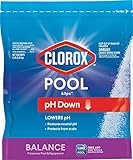
Avoid commercial “pH down” acids as a long-term solution — they fight the KH buffer and produce exactly the kind of swings you want to prevent.
How to Safely Raise pH
To raise pH, you generally add buffering minerals that also increase KH, which keeps the new pH stable:
- Crushed coral: Placed in the filter or substrate, it slowly dissolves to raise both KH and pH — ideal for African cichlid and livebearer tanks.
- Aragonite sand: Functions like crushed coral as a steady, long-term buffer.
- Baking sodium bicarbonate: Raises KH and pH quickly, but use it only as a short-term measure in an emergency, never as a daily routine, because abrupt dosing causes swings.
Whatever method you choose, make changes slowly — no more than about 0.2 pH units per day — and always pre-mix and test new water before it touches your fish. If your water is also turning cloudy during these adjustments, our cloudy water guide can help you diagnose the cause.
Frequently Asked Questions
What is the best pH for a community aquarium?
Most community fish thrive between 6.5 and 7.5. Rather than targeting an exact number, aim for a stable value within this range that matches your tap water and the species you keep.
Why does my pH keep dropping over time?
A gradual pH drop usually means your KH buffer is being depleted by biological acids. Regular water changes replenish buffering minerals; if your source water has very low KH, adding crushed coral helps stabilize it.
Are pH-adjusting chemicals safe to use?
Commercial pH adjusters can be safe in emergencies but are risky for routine use because they fight your water’s natural buffer and cause swings. Natural methods that adjust KH are far more stable.
How fast can I safely change pH?
Aim for no more than about 0.2 pH units of change per day. Larger or faster shifts can shock and kill fish, even if the destination value is technically “better” for the species.
Does the nitrogen cycle affect pH?
Yes. The biological processes of the nitrogen cycle produce acids that gradually lower pH and consume KH over time, which is another reason regular water changes and adequate buffering are important.
Related Reviews & Guides


Quick Picks: Aquarium Sump Filter DIY Guide
Axolotl Tank Setup Guide: Everything You Need for a Happy Axolotl