Last Updated: October 4, 2026
- Top Pick: F.A.T.E. – The Kind We Can Control: Using Mental Performance Techniques in the Pursuit of Everyday Success
- Best Value: kin+kind Charcoal Natural Dog Shampoo – Deep Cleaning & Odor Control – Patchouli Fragrance – 12 fl oz
- Premium Choice: kin+kind Flea & Tick Repel Coat Spray for Dogs & Cats, Lemongrass, 12 fl oz
🛒 Best Price Today on Amazon
Prime members get fast, free shipping on everything above, plus member-only deals. New members get a 30-day free trial — cancel anytime.
Top Aquarium Algae Types Identify Control Picks for 2026
Here are our current top aquarium algae types identify control picks, compared on real Amazon owner reviews, price, and features. Live prices update below.
As an Amazon Associate we earn from qualifying purchases at no extra cost to you.






Every aquarist eventually faces algae. A little is normal and even healthy, but when it coats your glass, smothers plants, or turns your water green, it signals that something in your tank is out of balance. The key to control is correct identification, because different algae have different causes and require different fixes. This guide walks through the most common aquarium algae types, explains what triggers each one, and gives practical, proven methods to bring them under control. Master the underlying balance of light, nutrients, and maintenance, and most algae problems fade on their own.
Why Algae Appears
Algae are simple photosynthetic organisms that thrive wherever there is light and dissolved nutrients, mainly nitrate and phosphate. In an aquarium those nutrients come from fish waste, uneaten food, and decaying plant matter. Algae blooms when the balance tips: too much light, too many nutrients, too few competing live plants, or inconsistent maintenance. The three biggest levers you control are lighting duration and intensity, nutrient levels, and cleaning and water-change routine. Before treating any specific algae, audit those three factors. Our water testing guide helps you measure the nitrate and phosphate that feed most outbreaks.
Algae Types, Causes, and Fixes
Green Spot Algae
These are hard, round green dots that appear on glass and slow-growing plant leaves. They are often linked to strong light and low phosphate. Fix by scraping the glass with a quality algae scraper and ensuring phosphate is not bottomed out. Our guide to the best aquarium glass cleaners and scrapers covers the tools that remove stubborn green spot.
Green Water (Algae Bloom)
Green water is caused by free-floating microscopic algae that turn the entire water column pea-soup green. It is usually triggered by excess light, often direct sunlight, combined with high nutrients. Reduce light, blackout the tank for a few days, improve filtration, and perform water changes. Note this is different from a white bacterial haze; if your water is cloudy rather than green, see our cloudy water guide.
Hair / Thread Algae
Long, stringy green strands that wrap around plants and decor. It thrives on excess nutrients and light, especially in tanks where plant growth is not keeping pace. Manually remove it by twirling it onto a toothbrush, reduce the photoperiod, and increase fast-growing plants to outcompete it.
Black Beard Algae (BBA)
BBA appears as dark, bushy tufts on plant edges, driftwood, and equipment. It is stubborn and often tied to fluctuating CO2 and unstable conditions in planted tanks. Improve flow consistency, keep CO2 and nutrients stable if you dose them, and spot-treat affected surfaces. Some aquarists use a liquid carbon or a hydrogen-peroxide spot treatment on removed hardscape. Siamese algae eaters are among the few fish known to graze it.
Brown Diatom Algae
A dusty brown film that coats glass, substrate, and decor, extremely common in brand-new tanks. It is driven by silicates and unstable conditions while a tank matures. The good news is that diatoms usually disappear on their own within a few weeks as the tank stabilizes. Wipe surfaces, keep up water changes, and be patient. If you are in your first month, our fish tank setup guide explains the maturation process driving this.
Blue-Green Algae (Cyanobacteria)
Despite the name, cyano is actually a bacteria, not true algae. It forms slimy blue-green or dark sheets that peel off in mats and have a distinct musty smell. It thrives in low-flow areas with excess nutrients and organic buildup. Fix by improving circulation, removing the mats manually, deep-cleaning the substrate, and tightening your maintenance routine. Severe cases are sometimes treated with an erythromycin-based product, but improving flow and cleanliness should come first.
Quick-Reference Algae Table
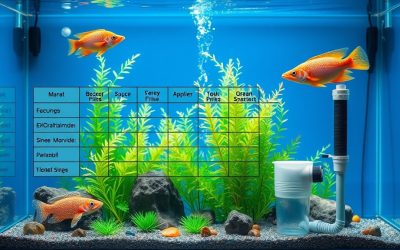
| Algae Type | Appearance | Main Cause | Primary Fix |
|---|---|---|---|
| Green spot | Hard green dots on glass | High light, low phosphate | Scrape glass, balance phosphate |
| Green water | Cloudy green water | Excess light + nutrients | Reduce light, blackout, water changes |
| Hair/thread | Long green strands | Excess nutrients/light | Manual removal, more plants, less light |
| Black beard (BBA) | Dark bushy tufts | Unstable CO2/conditions | Stabilize flow, spot-treat, algae eaters |
| Brown diatom | Dusty brown film | New tank, silicates | Wipe, wait for tank to mature |
| Blue-green (cyano) | Slimy musty sheets | Low flow, excess organics | Improve flow, clean, manual removal |
Preventing Algae Long-Term
Treating algae is reactive; preventing it is far easier. Build these habits into your routine:
- Control your lighting. Keep the photoperiod to roughly 6-8 hours and avoid direct sunlight on the tank. A timer keeps it consistent.
- Do not overfeed. Uneaten food is a major nutrient source; feed only what fish finish in a couple of minutes.
- Keep up water changes. Regular partial changes export the nitrate and phosphate that algae feed on.
- Grow healthy plants. Live plants outcompete algae for nutrients. Our planted tank guide shows how a well-planted tank suppresses algae naturally.
- Avoid overstocking. Fewer fish means less waste; see balanced stocking in our 20-gallon setup guide.
- Clean strategically. Wipe glass and vacuum substrate during maintenance using the right glass cleaning tools.
Frequently Asked Questions
Is some algae normal in a healthy tank?
Yes. A light dusting of algae on glass or decor is completely normal and even a sign of a living, balanced ecosystem. Concern is warranted only when algae grows aggressively, smothers plants, or discolors the water.
Will algae eaters solve my algae problem?
They help but rarely fix the root cause. Otocinclus, nerite snails, amano shrimp, and siamese algae eaters graze certain algae, yet if your light and nutrients remain unbalanced, algae will keep returning faster than they can eat it.
Why does my brand-new tank have brown algae?
Brown diatoms are normal in new tanks while the system matures and silicates are consumed. They typically vanish within a few weeks on their own. Keep wiping surfaces and maintaining water changes, and avoid drastic interventions.
How do I get rid of stubborn black beard algae?
Stabilize your tank’s flow and, in planted tanks, your CO2 and nutrient dosing. Manually remove affected leaves and spot-treat removable hardscape. Siamese algae eaters are one of the few species that will actually graze BBA.
Is blue-green algae dangerous?
Cyanobacteria can release compounds that stress fish and it spreads quickly, so it should be addressed promptly. Improve circulation, manually remove the mats, deep-clean the substrate, and tighten maintenance. Reserve antibiotic treatments for persistent cases.
Related Reviews & Guides



Aquarium Stocking Density & Bioload Guide: How Many Fish Can You Keep?

Nano Aquarium Setup Guide: Best Mini Tanks and Equipment