Last Updated: October 9, 2026
- Quick Picks: Best Aquarium Sump Equipment at a Glance
- Why Trust Our Aquarium Sump Reviews
- Trigger Systems Ruby Elite Sump Review
- Innovative Marine NUVO Sump System Review
- DIY Sump with Aqueon 10-Gallon Tank Review
- Aquarium Sump Setup Guide: Essential Equipment
- Related Guides
- Frequently Asked Questions
- Final Verdict
- Related Articles
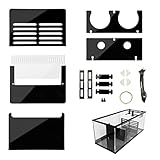
- Top Pick: LYL LEYOULAND Adjustable Sump Baffle Kit – Refugium Kit for 10 Gallon Tank – Reef Aquarium – Saltwater Aquarium Filter System- Protein Skimmer Sump
- Best Value: Aquarium Sump Refugium DIY Kit for Portein Skimmer Sump – Chamber dividers for 29 Gallon Standard Tank (Tank is not Included, Dividers Only)
- Premium Choice: LYL LEYOULAND Adjustable Sump Baffle Kit – Refugium Kit for 40 Gallon Breeder Tank – Reef Aquarium – Saltwater Aquarium Filter System- Protein Skimmer Sump
As an Amazon Associate we earn from qualifying purchases at no extra cost to you.




🛒 Best Price Today on Amazon
Prime members get fast, free shipping on everything above, plus member-only deals. New members get a 30-day free trial — cancel anytime.
Start 30-Day Prime Free Trial →See Today’s Amazon DealsQuick Picks: Best Aquarium Sump Equipment at a Glance
Why Trust Our Aquarium Sump Reviews
Our team has designed, built, and maintained sumps on aquariums ranging from 40 to 200 gallons across both freshwater and saltwater setups. We have compared purchased sumps against DIY builds, evaluated return pump flow rates under real plumbing conditions, and tracked long-term water quality outcomes. Our recommendations are grounded in years of practical sump experience, not manufacturer specifications alone.
Trigger Systems Ruby Elite Sump Review
Trigger Systems produces some of the most thoughtfully engineered purpose-built sumps available. The Ruby Elite series is constructed from cell-cast acrylic — durable, clear, and resistant to the chemical environment of saltwater. The layout provides dedicated filter sock bays (two or four depending on model), a generous mechanical filtration section, a refugium bay with a divider for chaeto or macroalgae cultivation, and an integrated bubble trap that prevents microbubbles from returning to the display tank — one of the most common frustrations with sump setups. Return pump section sizing accommodates most standard pumps. The baffle heights are professionally calculated for stable water levels across the chambers. While the price reflects its premium positioning, the quality eliminates the headaches and re-siliconing that plague cheaper or DIY alternatives.
Who it’s for: Serious reef keepers and advanced freshwater hobbyists who want a professional-grade sump that works reliably without modification or workarounds.
Innovative Marine NUVO Sump System Review
Innovative Marine’s NUVO lineup takes a different approach: rather than a separate sump under the stand, the filtration is built into a rear chamber system behind the display glass. This eliminates the need for drilling, overflow boxes, and return plumbing — making it the most accessible sump-style filtration available for intermediate hobbyists. The rear chambers hold a filter sock or floss, a protein skimmer rated for the tank volume, and a return pump. Water quality rivals traditional sump setups when the chambers are stocked with appropriate media. The main limitation is chamber volume — smaller than a true external sump, which limits refugium space and total water volume. For aquariums up to 30 gallons, this system is an excellent, tidy compromise between simplicity and filtration capacity.
Who it’s for: Intermediate hobbyists who want sump-quality filtration without the complexity of drilling, plumbing, and overflow systems; best for tanks up to 30 gallons.
DIY Sump with Aqueon 10-Gallon Tank Review
The classic beginner sump build uses a standard 10-gallon glass aquarium with three acrylic baffles siliconed inside to create distinct chambers: mechanical filtration (filter floss or sock), biological media (ceramic rings or bio balls), and a return pump section. Total cost for the tank, baffles, and silicone runs under $50 — a fraction of purpose-built sumps. The trade-off is time and precision: baffles must be cut and installed with accurate measurements to achieve proper water flow between chambers. Bubble trapping requires careful baffle height calibration. When built correctly, a DIY sump functions as well as a commercial equivalent. Excellent YouTube tutorials from established fishkeeping channels make this a realistic weekend project for most hobbyists.
Who it’s for: Budget-conscious hobbyists, DIY enthusiasts, and anyone wanting to learn sump fundamentals hands-on before committing to an expensive pre-built system.
Aquarium Sump Setup Guide: Essential Equipment
Overflow system: Water gets from the display tank to the sump via an overflow — either a drilled bulkhead with a standpipe, a reef-ready overflow box built into the tank, or a hang-on-back overflow box (HOB overflow) for non-drilled tanks. Drilled overflows are the most reliable; HOB overflows risk siphon breaks. The Eshopps and CPR overflow boxes are well-regarded HOB options.
Return pump: Pump flow should turn over the total system volume (display + sump) 5–10 times per hour. Account for head pressure loss over the return pipe length. Reliable brands include Sicce Syncra, Eheim, and Reef Octopus. Variable speed (DC) pumps allow fine flow adjustment and are significantly more energy-efficient than fixed-speed (AC) pumps.
Refugium and chaeto: A refugium section growing chaeto macroalgae provides natural nitrate and phosphate export without chemicals. Add a dedicated refugium light on a reverse daylight cycle to stabilize tank pH. Even a small refugium section meaningfully improves water quality in reef tanks.
Protein skimmer: Essential for saltwater sumps; optional for heavily planted freshwater. Size the skimmer for at least the total system water volume. Reef Octopus, Bubble Magus, and Nyos are consistently recommended brands at mid-range prices.
Related Guides
- Ich Fish Disease Treatment Guide
- Fish Tank Water Test Kit Guide
- 20 Gallon Aquarium Setup Guide: Equipment, Stocking, and Tips
- How to Do an Aquarium Water Change Correctly (Step-by-Step)
- Aquarium Water Hardness Explained: GH, KH, and How to Adjust Them
Frequently Asked Questions
What size sump do I need for my aquarium?
A sump should hold at least 20–30% of your display tank volume. Larger is always better — more water volume buffers temperature swings and dilutes waste. For a 75-gallon display, aim for a 20–30 gallon sump. Ensure your sump can handle the volume of water that will drain back from the display tank if the return pump stops — leave enough empty headspace to prevent overflow onto the floor.
Do freshwater tanks need a sump?
Freshwater tanks do not require a sump, but can benefit from one on larger setups (75 gallons or more). A sump adds total water volume, hides equipment from the display, and allows for additional biological and mechanical media. Most freshwater hobbyists use canister filters or HOB filters instead, reserving sumps for large, heavily stocked systems or those that are heavily planted and benefit from CO2 and fertilizer dosing chambers.
What is a bubble trap in a sump and why does it matter?
A bubble trap is a baffle arrangement — typically a high-low-high sequence — that forces water to flow under and over baffles, causing microbubbles to rise and dissipate before reaching the return pump section. Without a bubble trap, microbubbles return to the display tank, creating an unsightly milky appearance that stresses fish and corals. Purpose-built sumps include integrated bubble traps; DIY sump builders must calculate and install them deliberately.
Can I run a sump on a non-drilled aquarium?
Yes, using a hang-on-back overflow box. These devices create a siphon over the back of the tank rim to draw water down to the sump. The risk is siphon breakage — if the siphon breaks (due to power outage, bubble accumulation, or flow interruption), water stops draining, the return pump empties the sump, and flooding can occur. U-tube HOB overflows and modern auto-start models reduce but do not eliminate this risk. Drilling the tank is the more reliable long-term solution.
How do I prevent a flood when the power goes out with a sump?
Calculate the drain-back volume — the amount of water that will siphon back from the display tank into the sump when the return pump stops. Mark a fill line in your sump that, when water returns during a power outage, will not cause it to overflow. Always set your normal sump water level conservatively (leaving adequate headspace) when first commissioning the system. Test this scenario with the tank empty before filling with saltwater or expensive livestock.
Final Verdict
For a professional, trouble-free reef sump, the Trigger Systems Ruby Elite is worth every dollar — its engineering eliminates the frustrations that plague cheaper setups. The Innovative Marine NUVO system is the most accessible path to sump-quality filtration for hobbyists who want to avoid drilling and plumbing. If budget is the primary constraint, a DIY 10-gallon sump built with care and proper baffles delivers genuine sump performance for under $50 in materials. Whichever route you choose, size your return pump correctly, maintain your filter socks or floss weekly, and the sump will be the best upgrade your aquarium ever receives.
Related Reviews & Guides



Aquarium Water Conditioners: Comparison and Buying Guide (2026)
Aquarium Maintenance Schedule: Daily, Weekly, and Monthly Checklist