Last Updated: October 4, 2026
- Choosing the Right Nano Tank Size
- Equipment: What Nano Tanks Actually Need
- Top Nano Tank Equipment Picks
- Substrate and Hardscape for Nano Aquascapes
- Cycling a Nano Tank: The Critical First 4–6 Weeks
- Stocking a Nano Tank: The 1-Inch-Per-Gallon Rule Is Wrong
- Weekly Maintenance Routine for Nano Tanks
- Frequently Asked Questions
- Related Articles
- Related Guides

TL;DR: Nano aquariums (2.5–20 gallons) succeed or fail on filtration quality and stocking discipline. Overstock by even one fish and ammonia spikes before you can react. Get the cycle right, choose nano-appropriate species, and a 10-gallon can be the most visually striking tank in the room.
Nano Aquarium Setup Guide: Everything You Need for a Tank Under 20 Gallons
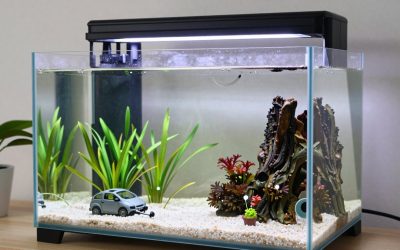
Nano tanks have exploded in popularity for good reason — they fit apartments, desks, and tight budgets. But “small tank” doesn’t mean “easy tank.” The physics work against you: less water volume means faster temperature swings, quicker ammonia buildup, and less buffer time when something goes wrong. This guide covers everything from equipment selection to stocking math to long-term maintenance, specifically calibrated for tanks in the 5–20 gallon range.
As an Amazon Associate we earn from qualifying purchases at no extra cost to you.




🛒 Best Price Today on Amazon
Prime members get fast, free shipping on everything above, plus member-only deals. New members get a 30-day free trial — cancel anytime.
Start 30-Day Prime Free Trial →See Today’s Amazon DealsChoosing the Right Nano Tank Size
The sweet spot for first-time nano keepers is 10 gallons. Below 5 gallons, you’re working against biology — ammonia concentrations spike faster than beneficial bacteria can process them, temperature follows room swings within hours, and your stocking options are limited to nano shrimp or a single betta. Ten gallons doubles your stability margin and opens up community stocking.
| Tank Size | Best Use Case | Max Fish (small species) | Stability |
|---|---|---|---|
| 2.5–5 gal | Single betta, shrimp colony | 1–2 | Low |
| 5–10 gal | Nano community, planted | 6–10 | Medium |
| 10–20 gal | Community, species tank | 10–20 | Good |
| 20 gal “nano” | Beginner community, livebearer | 15–25 | High |
Equipment: What Nano Tanks Actually Need
All-in-one nano tanks bundle filtration and lighting into the hood — convenient but often underpowered. Here’s what matters for each component:
Filtration
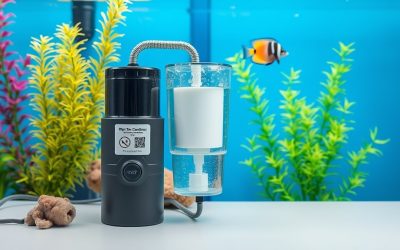
Nano tanks need filtration rated for at least 5–10× tank volume per hour turnover. A 10-gallon needs 50–100 GPH minimum. Sponge filters work excellently for shrimp tanks (gentle flow, no fry casualties) but may underperform for heavy bioloads. Internal power filters or small HOB units offer more mechanical filtration. See our canister filter review for when tanks grow beyond nano.
Heating
Tiny heaters in nano tanks are the #1 equipment failure point — their small thermal mass makes them prone to overheating or sticking on. Get a heater rated for 1.5–2× your tank volume and use a separate thermometer to verify. See our aquarium heater guide and Zacro thermometer review for specific product recommendations.
Lighting
For planted nano tanks, lighting intensity drives plant health and algae management simultaneously. Low-light plants (java fern, anubias, mosses) thrive under most stock nano LEDs. Higher-demand plants need PAR values of 50–100+ at substrate level — see our aquarium LED lighting comparison. Run lights 8 hours/day maximum on a timer to control algae.
Top Nano Tank Equipment Picks


As an Amazon Associate we earn from qualifying purchases. Product prices and availability are accurate as of the date/time indicated.



As an Amazon Associate we earn from qualifying purchases. Product prices and availability are accurate as of the date/time indicated.


As an Amazon Associate we earn from qualifying purchases. Product prices and availability are accurate as of the date/time indicated.
Substrate and Hardscape for Nano Aquascapes
Substrate choice defines your planted tank’s long-term plant health. Active substrates like ADA Amazonia or Fluval Stratum buffer pH downward (ideal for soft-water species and most aquatic plants) and release nutrients for 12–18 months. Inert gravel like standard aquarium gravel needs root tabs to feed plants (see our planted tank substrate guide).
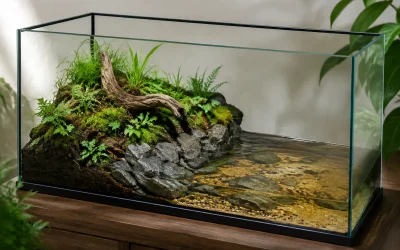
For nano aquascapes, use 1.5–2 inches of substrate — enough for root penetration without consuming too much of your limited water column. Driftwood and rocks add hardscape interest; see our aquascape hardscape guide for wood that won’t crash pH.
Cycling a Nano Tank: The Critical First 4–6 Weeks
Never skip the cycle. In a nano tank, skipping it and adding fish simultaneously leads to ammonia spikes that can hit lethal levels (0.5+ ppm) within 48 hours. The nitrogen cycle — ammonia → nitrite → nitrate — must establish before stocking. Full guide at tank cycling for beginners.
Speed the process: use a seeded sponge from an established tank, add bottled bacteria (Fritz Zyme 7, Tetra SafeStart), and dose ammonia to 2 ppm daily. Test with a liquid test kit (not strips) — see water test kit guide. Cycle is complete when 2 ppm ammonia processes to 0 ppm nitrite within 24 hours.
Stocking a Nano Tank: The 1-Inch-Per-Gallon Rule Is Wrong
The “1 inch per gallon” rule was never scientifically valid and is actively harmful in nano tanks. Bioload — the amount of waste produced — scales roughly with fish mass, not length. A 3-inch goldfish produces more waste than twenty 1-inch nano tetras. For a 10-gallon nano, realistic stocking options:
- 6–8 ember tetras or chili rasboras + 1 centerpiece fish (scarlet badis, honey gourami)
- 1 betta + 6–8 nano shrimp (if betta is shrimp-tolerant)
- 10–15 neocaridina shrimp colony with snails
- Nano species-only: 12 CPD (celestial pearl danios) or 10 green neon tetras
Shrimp tanks are ideal nano setups — see our shrimp tank setup guide for full neocaridina and caridina setup details. Feed nano fish sparingly — uneaten food is the biggest ammonia source in small tanks. See fish food comparison for nano-appropriate feeding sizes.
Weekly Maintenance Routine for Nano Tanks
Small tanks need more frequent maintenance than large tanks, not less. Weekly minimum: 20–30% water change with temperature-matched, dechlorinated water; gravel vacuum (see gravel cleaner guide); glass wipe; filter media rinse in old tank water (never tap). Test ammonia and nitrite after any death or feeding increase.
Frequently Asked Questions
What’s the easiest nano fish to keep?
Chili rasboras (Boraras brigittae), ember tetras, and white cloud mountain minnows are the most forgiving nano fish — tolerant of a wider temperature and pH range, active schoolers, and peaceful with everything. Neocaridina shrimp (cherry shrimp) are even hardier and work in tanks as small as 3 gallons once cycled.
Can I keep a planted nano tank without CO2?
Yes. Low-tech planted nano tanks using java moss, anubias, java fern, and bucephalandra thrive without CO2 injection. Use a nutrient-rich active substrate, supplement with root tabs and liquid fertilizer, and keep lighting moderate (6–8 hours). See our low-tech planted tank guide for full plant lists. CO2 injection (beginner CO2 guide) opens up carpeting plants but adds complexity and cost.
How often should I do water changes in a nano tank?
Weekly 25–30% changes are the reliable baseline. Heavily stocked nano tanks or tanks with messy eaters (goldfish, cichlids — both wrong for nano anyway) may need 2× weekly changes. Automated water change systems (auto water change guide) exist for nano tanks and reduce the maintenance burden significantly if you travel frequently.
What temperature should a nano freshwater tank be?
Most tropical nano fish thrive at 74–78°F (23–26°C). Shrimp prefer the lower end of that range (72–76°F) — higher temps accelerate metabolism and shorten lifespan. White cloud mountain minnows and endlers are “cool water” species comfortable at 65–75°F, making them suitable for unheated rooms in temperate climates. Always use a thermometer to confirm — heater dial markings are notoriously inaccurate.
Why does my nano tank get cloudy so fast?
New tank cloudiness is almost always a bacterial bloom — harmless free-floating bacteria colonizing the water column before settling onto surfaces. It resolves in 3–7 days with adequate filtration and no overfeeding. Persistent cloudiness in an established tank points to overfeeding, dead livestock decomposing unseen, or a crashed cycle. Test ammonia immediately; if elevated, do a 50% water change and cut feeding for 48 hours.
Ready to decide? Our #1 pick for 2026 is the 2.5–5 gal.
Live price & availability on Amazon.
Related Reviews & Guides

Cichlid Aquarium Setup Guide: Build the Perfect Cichlid Tank

Air Pump in Aquarium: The Complete Buyer’s Guide (2026)