Last Updated: October 21, 2026
TL;DR: A gravel vacuum siphon is the single most effective tool for removing ammonia-spiking detritus from substrate without disturbing your nitrogen cycle. This guide covers how siphons work, what specs matter, and which models suit nano tanks vs. 75-gallon setups. Maintain water quality first — everything else follows.
Aquarium Gravel Cleaner Buyer’s Guide: Best Siphon Vacuums for Every Tank Size
Detritus — decomposing fish waste, uneaten food, dead plant matter — accumulates in gravel faster than most beginners realize. Left alone, it drives up ammonia and nitrite, collapses beneficial bacteria colonies, and creates the anaerobic pockets that produce hydrogen sulfide. A quality aquarium gravel cleaner siphon is the practical answer. But not all siphons are created equal: tube diameter, flow control, gravel guard geometry, and priming mechanism all affect real-world performance.

Tetra Water Cleaner Gravel Siphon for Aquariums Up to 55 Gal | Makes Water Changes Easier, Removes Debris From Gravel, Remove 30% Of Water Every 30 Days
Included for 'Aquarium Gravel Cleaner Buyer's Guide' as a representative aquarium product in this roundup; selection reflects the product set returned for this topic.
View on Amazon
AKKEE Aquarium Vacuum Gravel Cleaner, 36W Electric Fish Tank Cleaner Vacuum, 8 in 1 Multifunctional Aquarium Cleaner for Automatic Water Change, Wash Sand, Water Circulation and Timed Off
Included for 'Aquarium Gravel Cleaner Buyer's Guide' as a representative aquarium product in this roundup; selection reflects the product set returned for this topic.
View on Amazon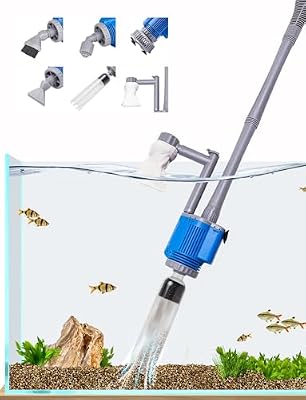
UPETTOOLS Aquarium Gravel Cleaner - Electric Automatic Removable Vacuum Water Changer Sand Algae Cleaner Filter Changer 110V/28W
Included for 'Aquarium Gravel Cleaner Buyer's Guide' as a representative aquarium product in this roundup; selection reflects the product set returned for this topic.
View on Amazon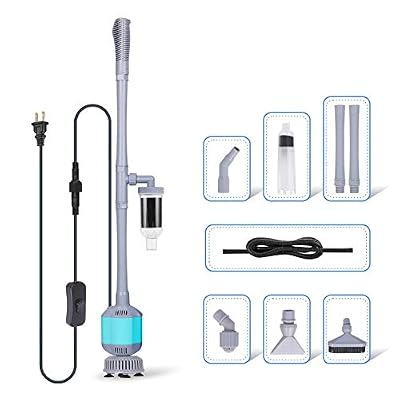
hygger 360GPH Electric Aquarium Gravel Cleaner, 5 in 1 Automatic Fish Tank Cleaning Tool Set Vacuum Water Changer Sand Washer Filter Siphon Adjustable Length 15W
Included for 'Aquarium Gravel Cleaner Buyer's Guide' as a representative aquarium product in this roundup; selection reflects the product set returned for this topic.
View on Amazon![QZQ Aquarium Gravel Cleaner Vacuum Fish Tank Cleaner Tools Kit | [2026 Edition] Water Changer with Aquarium Thermometers, Fish Net kit, Use for Fish Tank Cleaning Gravel and Sand](https://m.media-amazon.com/images/I/51S+2N20RtL._SL400_.jpg)
QZQ Aquarium Gravel Cleaner Vacuum Fish Tank Cleaner Tools Kit | [2026 Edition] Water Changer with Aquarium Thermometers, Fish Net kit, Use for Fish Tank Cleaning Gravel and Sand
Included for 'Aquarium Gravel Cleaner Buyer's Guide' as a representative aquarium product in this roundup; selection reflects the product set returned for this topic.
View on Amazon
Natural Rapport Aquarium Gravel Cleaner, No-Vacuum Waste Reducer, 4 oz | Beneficial bacteria, no vacuum, treats 240 gal - Cleans substrate - For betta, nano & small tanks
Included for 'Aquarium Gravel Cleaner Buyer's Guide' as a representative aquarium product in this roundup; selection reflects the product set returned for this topic.
View on Amazon
hygger Electric Aquarium Gravel Cleaner, 528GPH Fish Tank Vacuum, 5-in-1 Automatic Sand Washer Water Changer Cleaning Kit for Freshwater Saltwater, Adjustable Length Handle Tube,Hose, Clamp
Included for 'Aquarium Gravel Cleaner Buyer's Guide' as a representative aquarium product in this roundup; selection reflects the product set returned for this topic.
View on Amazon
Mildhug Fish Tank Cleaner - Electric Aquarium Vacuum Gravel Cleaner, Electric Fish Tank Cleaning Tools, Adjustable Water Flow Aquarium Cleaner Kit
Included for 'Aquarium Gravel Cleaner Buyer's Guide' as a representative aquarium product in this roundup; selection reflects the product set returned for this topic.
View on AmazonBefore we dive into hardware, check your baseline parameters. If you haven’t tested your water this week, our aquarium water test kit guide walks you through the fastest, most accurate testing methods so you know what you’re actually cleaning toward.
How a Gravel Vacuum Siphon Actually Works
The physics is simple: you create a pressure differential between the submerged cylinder and the discharge end (a bucket below tank level), which draws water and suspended particles through the tube. What varies is how you initiate that flow:
- Mouth-prime — cheap, unhygienic, skip it.
- Squeeze-bulb prime — standard on most starter kits; requires 3–5 pumps.
- Self-start (shake) prime — cover the tube top, shake down, remove cover; no bulb needed.
- Electric pump — battery or USB-powered impeller; most consistent flow, best for large tanks.
Tube diameter is the spec most buyers overlook. A 1.5-inch (38 mm) cylinder suits sub-20 gallon tanks with fine gravel. For 40+ gallon tanks with coarse substrate or deep sand beds, you want 2 inches (51 mm) minimum — the wider bore prevents clogs and moves more volume per pass.
Top Picks at a Glance

Petbank LCD Digital Aquarium Thermometer Fish Tank Water Terrarium Temperature
Included for 'Aquarium Gravel Cleaner Buyer's Guide' as a representative aquarium product in this roundup; selection reflects the product set returned for this topic.
View on Amazon
Fluval 207 Perfomance Canister Filter for Aquariums up to 45 Gallons | Aquarium Canister Filter
Included for 'Aquarium Gravel Cleaner Buyer's Guide' as a representative aquarium product in this roundup; selection reflects the product set returned for this topic.
View on Amazon
HITOP 600W Titanium Aquarium Heater: Digital Fish Tank Heater with External Controller, Submersible Aquarium Heater with Over-Temperature Protection for Saltwater and Freshwater 75-150Gallon
Included for 'Aquarium Gravel Cleaner Buyer's Guide' as a representative aquarium product in this roundup; selection reflects the product set returned for this topic.
View on AmazonNote: while the Fluval 207 and ZACRO thermometer above aren’t gravel cleaners, they pair directly with a siphon-maintenance routine — healthy filtration and accurate temp monitoring are prerequisites for stable water chemistry.
Key Specs Comparison
| Feature | Nano Siphon (<20 gal) | Standard Siphon (20–55 gal) | Heavy-Duty (>55 gal) |
|---|---|---|---|
| Cylinder diameter | 1–1.5 in (25–38 mm) | 1.5–2 in (38–51 mm) | 2–2.5 in (51–64 mm) |
| Tube length | 24–36 in | 36–48 in | 48–72 in |
| Flow rate | ~50–80 GPH | ~80–150 GPH | 150–250 GPH |
| Priming method | Bulb or self-start | Bulb or electric | Electric preferred |
| Gravel guard | Fine-mesh, tight spacing | Standard spacing | Wide-gap coarse guard |
| Flow control | Optional (thumb valve) | Recommended | Required |
| Suitable substrate | Fine sand to 3 mm gravel | 3–6 mm gravel | 6+ mm gravel, pebbles |
Using a Gravel Vac Without Crashing Your Cycle
The biggest mistake: vacuuming the entire substrate in one session. Beneficial bacteria live in gravel pores. Cleaning more than 25–30% of substrate per water change stresses the colony enough to cause a mini-cycle. The protocol that works:
- Divide the tank footprint into quadrants mentally.
- Vacuum one quadrant per weekly water change.
- After four weeks, every section has been cleaned once — repeat.
- Use the discharged water volume to calculate your change percentage; aim for 20–30% weekly.
If you’re running a Fluval 207 Canister Filter Review, coordinate media rinses (in tank water, never tap) on alternating weeks from substrate cleaning. Simultaneous disruption of both bacterial habitats doubles crash risk.
Gravel vs. Sand: Technique Differences
Sand requires a hover technique — hold the cylinder 1–2 cm above the surface rather than plunging it in. Surface tension plus water flow suspends the lighter waste particles while the denser sand falls back. For planted tanks over sand beds, check our aquarium substrate planted tank guide for substrate layering strategies that make cleaning easier long-term.
Coarse gravel (6+ mm) benefits from plunge-and-lift: push the cylinder 2–3 cm into gravel, let detritus lift, withdraw slightly to drop gravel while suspended waste exits. Repeat across the section methodically.
Pairing Your Siphon With Filtration
A gravel vac alone doesn’t replace mechanical filtration — it handles settled detritus that filtration can’t reach. For tanks over 40 gallons, a canister filter with fine mechanical media (polishing pads) captures suspended particles between cleanings. The Fluval 207 at 3x tank volume per hour turnover hits the mechanical efficiency sweet spot for a 40-gallon setup. For anything running CO2, keeping substrate clean also prevents CO2 demand from detritus-feeding heterotrophic bacteria — see our co2 aquarium system beginner setup for context on that interaction.
Frequently Asked Questions
How often should I use an aquarium gravel cleaner?
Weekly alongside water changes is the standard cadence. In heavily stocked tanks or tanks with messy eaters (cichlids, goldfish), twice weekly targeted spot cleaning of high-waste areas makes sense. Lightly stocked planted tanks can often get by every 2 weeks if surface agitation and filtration are strong.
Will a gravel cleaner suck up small fish or shrimp?
Yes, if you’re not careful. Nano fish (ember tetras, pygmy corydoras) and shrimp can be aspirated. Cover the cylinder opening with a coarse mesh sock (cut from a filter bag) or use a narrow-bore siphon that physically can’t pass small animals. For shrimp tanks, check our freshwater shrimp setup guide for shrimp-safe maintenance protocols.
Can I use a gravel cleaner on a planted tank without uprooting plants?
Yes. Work between plants rather than over them, and use a narrower cylinder (1–1.5 inch) for precision. Root tabs and substrate nutrients stay deeper than detritus — careful surface hovering doesn’t disturb fertilizer placement. Avoid vacuuming within 2 cm of root zones on established carpets.
What size gravel cleaner do I need for a 10-gallon tank?
A 1-inch (25 mm) cylinder with a 24-inch tube is ideal. Anything larger will drain your tank too fast; you’ll be fighting flow control the whole time. Many nano siphons include a thumb-valve or flow restrictor — this is non-negotiable on small tanks.
Do I need a gravel cleaner if I have a strong canister filter?
Yes. Even high-flow canister filters don’t reach detritus packed into gravel pores more than 1–2 cm deep. The filter handles suspended particles; the siphon handles settled waste. They’re complementary, not interchangeable. Skipping substrate cleaning in a canister-filtered tank still produces nitrate buildup and eventual hydrogen sulfide pockets.
Best Booster Pump for Low Pressure RODI Systems: Top Picks
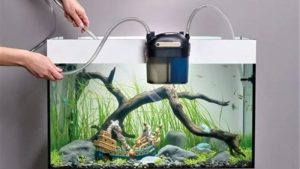
Best Aquarium Siphon: Flow Rate, Reach and Priming Method