Last Updated: October 4, 2026
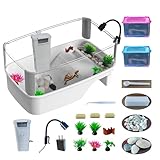
- Top Pick: MoonOrange Small Turtle Tank Kit(Tank+Light+Filter), Acrylic Turtle Tank Starter Kit with Bask Platform, Bottom Drain, Multi-Function Area for Small Reptiles.(White)
- Best Value: Small Turtle Tank Habitat Kit with Basking Platform, for Turtles, Crayfish, Crab, Aquatic Tortoise Enclosure Starter Aquarium, Pet Turtle Reptile Habitat
- Premium Choice: AZV Turtle Tank Starter Habitat Kit,Complete Aquatic Terrarium Enclosure
🛒 Best Price Today on Amazon
Prime members get fast, free shipping on everything above, plus member-only deals. New members get a 30-day free trial — cancel anytime.
Introduction
Setting up a proper turtle tank is far more involved than a typical fish aquarium — turtles require not only a large, well-filtered aquatic environment but also a dry basking area with specific UVB lighting to support their shell and bone development. Red-eared sliders and painted turtles are the most commonly kept species, and both have demanding space and filtration needs that catch many first-time owners by surprise. This guide covers the essential equipment for a healthy, functional turtle habitat.
As an Amazon Associate we earn from qualifying purchases at no extra cost to you.



What to Look For
- Tank size: The general rule is 10 gallons of water per inch of shell length, with a minimum of 40 gallons for a juvenile and 75–125 gallons for an adult. Turtles grow quickly and require genuinely large enclosures to thrive long-term.
- UVB lighting: Turtles cannot metabolize calcium without UVB exposure, leading to metabolic bone disease and soft-shell syndrome without it. A high-output UVB bulb (10.0 or ReptiSun 10.0) positioned over the basking area is mandatory, not optional.
- Powerful filtration: Turtles produce roughly three to four times the waste of a comparably sized fish. A canister filter rated for double your tank volume, combined with weekly partial water changes, is the minimum for maintaining acceptable water quality.
Top Picks
Zoo Med ReptiSun 10.0 UVB Fluorescent Bulb
The Zoo Med ReptiSun 10.0 is the industry-standard UVB bulb for aquatic turtles. It emits the high-intensity UVB radiation turtles need for proper vitamin D3 synthesis and calcium metabolism. Replace the bulb every 6 months even if it is still producing visible light — UVB output degrades well before the bulb burns out and degraded UVB contributes to metabolic bone disease over time.
Fluval FX4 Canister Filter
The Fluval FX4 is the preferred filtration solution for medium to large turtle tanks. Rated for up to 250 gallons, it handles the extreme bioload turtles generate with multi-stage filtration and a flow rate that keeps water consistently clear. The easy maintenance push-button water release and self-priming system make the frequent maintenance turtle tanks demand much less burdensome.
Tetra ReptoMin Floating Food Sticks
Tetra ReptoMin is the most widely used and trusted staple diet for aquatic turtles. These floating sticks are formulated with the precise calcium-to-phosphorus ratio turtles need, along with vitamins C and E to support immune health. The floating design encourages turtles to feed at the surface as they naturally would, and the sticks are readily accepted by even picky juvenile turtles.
Turtle Tank Size, Basking, and Heating
Aquatic turtles like red-eared sliders need far more space than most people expect, since they grow large and are active swimmers. A common guideline is roughly 10 gallons of water per inch of shell length, so an adult slider may need a 75- to 125-gallon tank or a large stock-tank style enclosure. Beyond swimming space, turtles are reptiles that need a dry basking area where they can climb completely out of the water to thermoregulate and dry off, which is essential for shell and skin health.
Temperature control is critical and differs from a fish tank. The water is usually kept around 75 to 80F with a guarded heater, while a basking spot above the dock should reach roughly 88 to 95F under a heat lamp. Just as important is UVB lighting, which turtles need to synthesize vitamin D3 and properly absorb calcium; without UVB, turtles develop metabolic bone disease and shell deformities. UVB bulbs lose output over time and should be replaced periodically even if they still emit visible light.
Filtration, Diet, and Water Quality
Turtles are extremely messy, producing far more waste than fish of comparable size, so robust filtration is non-negotiable. Many keepers use a canister filter rated for two to three times the tank’s actual water volume to keep up with the bioload. Even with strong filtration, frequent partial water changes are necessary to control ammonia and nitrate. Some keepers feed turtles in a separate container to keep the main tank cleaner, since turtles are sloppy eaters.
Diet shifts with age and species. Many aquatic turtles are omnivores: juveniles tend to eat more protein for growth, while adults need a higher proportion of leafy greens and vegetables. A quality commercial turtle pellet can form the base of the diet, supplemented with greens, the occasional protein source, and a calcium source such as a cuttlebone. Avoid overfeeding, which causes obesity and pollutes the water. Provide a secure lid or barrier, since turtles are surprising climbers, and give them the space, heat, UVB, and clean water they require, and these long-lived reptiles can thrive for decades. Because turtles are long-lived and grow large, it is wise to plan for an adult-sized enclosure from the beginning rather than upgrading repeatedly as the turtle matures.
Related Guides
- Aquarium Water Conditioner and Dechlorinator Explained
- Goldfish Tank Setup Guide: Everything You Need for a Healthy Goldfish Aquarium
- Best Fish Food Pellet
- Aquarium Gravel Cleaner Buyer's Guide
- Fish Quarantine Tank Setup: The Complete Step-by-Step Guide
Frequently Asked Questions
How big a tank does a turtle need?
A common guideline is about 10 gallons of water per inch of shell length, so an adult slider may need 75 to 125 gallons or more. Turtles are active swimmers that need far more space than people expect.
Do turtles need a basking area?
Yes. Aquatic turtles must be able to climb completely out of the water to bask, dry off, and thermoregulate under a heat lamp. A dry basking spot is essential for healthy shell and skin.
Why do turtles need UVB light?
UVB lets turtles synthesize vitamin D3 and absorb calcium properly. Without it, they develop metabolic bone disease and shell deformities, so a UVB bulb is essential and must be replaced periodically.
What temperature should a turtle tank be?
Keep the water around 75 to 80F with a guarded heater, and provide a basking spot of roughly 88 to 95F under a heat lamp. This temperature gradient lets turtles regulate their body heat.
What do aquatic turtles eat?
Most are omnivores fed a base of quality turtle pellets plus leafy greens and occasional protein. Juveniles eat more protein for growth, while adults need more vegetables, along with a calcium source like cuttlebone.
Final Thoughts
Aquatic turtles are long-lived, highly interactive reptiles that can make wonderful pets when their habitat is set up correctly from the start. The combination of proper UVB lighting, powerful filtration, and a spacious tank with a quality basking area covers the fundamental needs of most common aquatic turtle species. Commit to weekly maintenance, feed a varied diet, and your turtle can live a healthy, active life for 20 to 40 years.
Related Reviews & Guides

Aquarium Stocking Density & Bioload Guide: How Many Fish Can You Keep?
10 Gallon Aquarium Setup Guide: Best Equipment for a Small Fish Tank